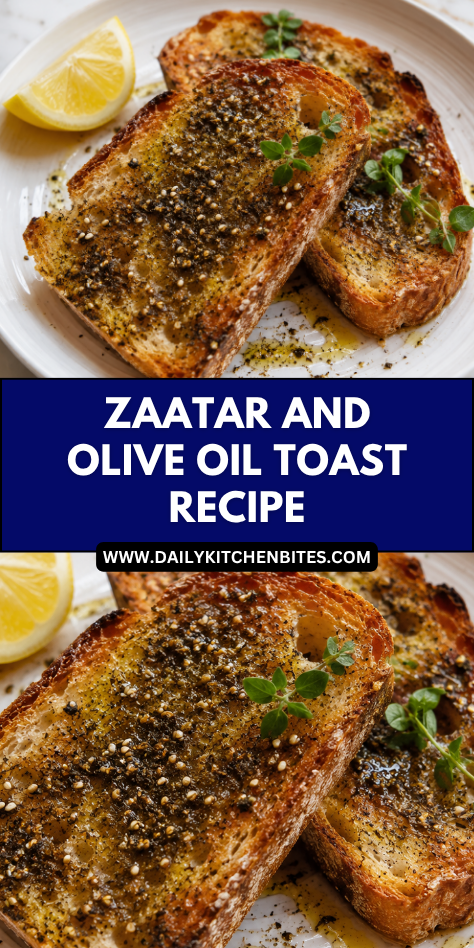
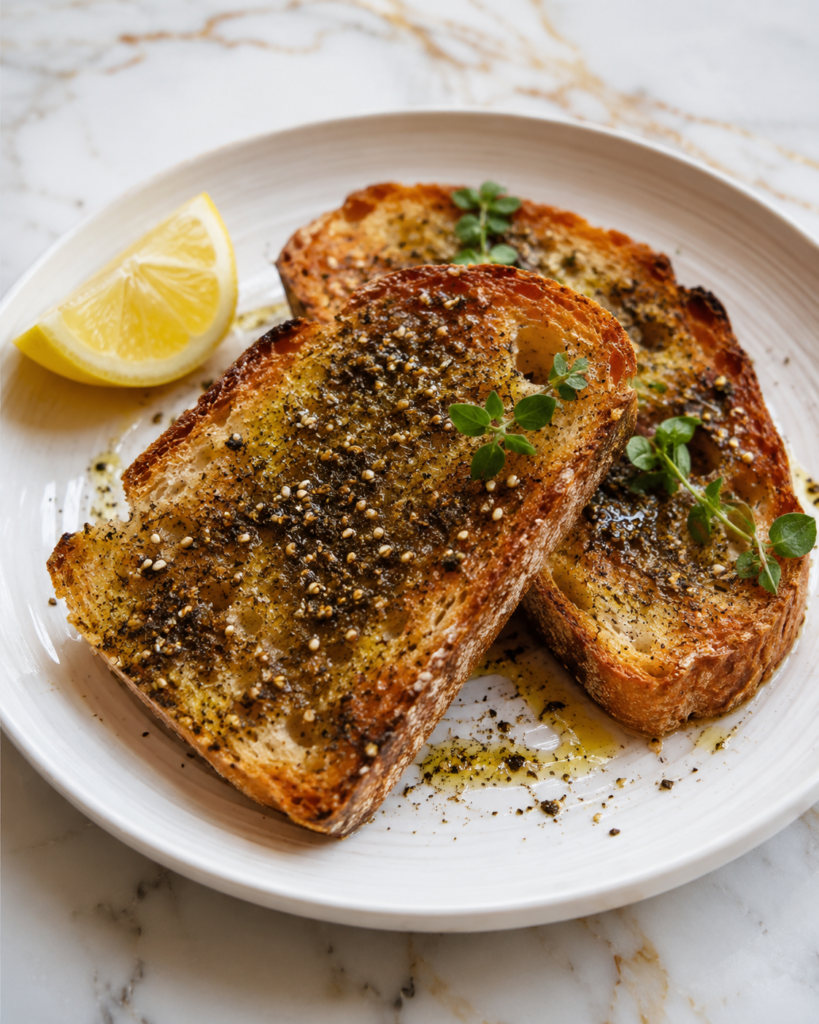
I make Za’atar and Olive Oil Toast when I want something simple, warm, and full of flavor without doing much cooking. It is crisp around the edges, soft in the middle, and covered with earthy za’atar and rich olive oil that soak into the bread just enough.
This is one of those recipes that feels comforting because it uses a few honest ingredients and still tastes special. I like it for breakfast, an after-school snack, a quick lunch, or as a side with soup, eggs, or salad.
Why You’ll Love This Recipe
Za’atar and Olive Oil Toast is quick, flavorful, and easy to make with pantry staples. The za’atar brings a savory, herby, slightly tangy flavor, while the olive oil gives the toast richness and a soft golden finish.
It is also a great family recipe because everyone can top their toast their own way. Kids may like it plain with a little cheese, while adults may enjoy tomatoes, cucumbers, labneh, feta, or a drizzle of honey.
I love how useful this recipe is throughout the day. It works as a simple breakfast, a snack plate, a lunch with salad, or a warm side for dinner when you need something fast and dependable.
Serves: 4 people
This recipe makes 4 pieces of toast, which serves 4 people as a snack or side. For a heartier breakfast or lunch, plan on 2 slices per adult and serve it with eggs, yogurt, vegetables, or fresh fruit.
Ingredients You’ll Need
For the Toast
- 4 slices sourdough bread, pita bread, naan, or rustic sandwich bread
- 3 tablespoons extra-virgin olive oil
- 2 tablespoons za’atar seasoning
- ¼ teaspoon flaky sea salt, plus more to taste
- ⅛ teaspoon black pepper, optional
Optional Creamy Toppings
- ½ cup labneh
- ½ cup plain Greek yogurt
- ¼ cup crumbled feta cheese
- ¼ cup ricotta cheese
- 2 tablespoons cream cheese
Optional Fresh Toppings
- ½ cup cherry tomatoes, halved
- ½ cup cucumber, diced or thinly sliced
- ¼ cup thinly sliced red onion
- 2 tablespoons chopped fresh parsley
- 1 tablespoon chopped fresh mint
- 1 tablespoon fresh lemon juice
- 1 teaspoon lemon zest
Optional Finishing Touches
- 1 tablespoon toasted sesame seeds
- 1 tablespoon pine nuts, toasted
- 1 teaspoon honey, optional
- 1 pinch red pepper flakes, optional
- 1 tablespoon pomegranate seeds, optional
- 1 teaspoon extra olive oil for drizzling
Pro Tips
Use good olive oil because it is one of the main flavors. A smooth extra-virgin olive oil makes the toast taste rich, fresh, and balanced.
Choose bread that can hold the topping without getting soggy. Sourdough, pita, naan, or thick rustic bread all work well because they toast nicely and stay sturdy.
Mix the za’atar with olive oil before spreading it on the bread if you want even flavor. This creates a loose paste that covers the toast better than sprinkling the seasoning on dry.
Watch the toast closely under the broiler or in the toaster oven. Olive oil can help the edges brown quickly, so it is best to keep an eye on it.
Add fresh toppings after toasting, not before. Tomatoes, cucumbers, herbs, and labneh taste best cool and fresh against the warm bread.
Taste your za’atar before adding extra salt. Some blends already include salt, while others are more herb-heavy, so it is best to season gently.
Tools You’ll Need
- Baking sheet
- Parchment paper, optional
- Small mixing bowl
- Spoon
- Measuring spoons
- Pastry brush, optional
- Cutting board
- Sharp knife
- Toaster, toaster oven, or oven
- Small skillet for toasting nuts or seeds, optional
- Serving plate or board
Substitutions and Variations
Use a Different Bread
Sourdough, pita, naan, flatbread, whole grain bread, or crusty baguette slices all work well. Choose a bread that toasts firmly so it can hold the olive oil and toppings without falling apart.
Make It Dairy-Free
Skip the labneh, yogurt, feta, ricotta, or cream cheese and keep the toast simple with za’atar, olive oil, tomatoes, cucumbers, herbs, and lemon. You can also use dairy-free yogurt or hummus for a creamy layer.
Add More Protein
Top the toast with a fried egg, soft-boiled egg, chickpeas, white beans, or sliced grilled chicken. These additions make the toast more filling while keeping the za’atar and olive oil flavor at the center.
Make It Brighter
Add fresh lemon juice, lemon zest, chopped parsley, mint, tomatoes, or pomegranate seeds after toasting. The fresh toppings balance the richness of the olive oil and make the toast taste lighter.
Make It Sweet and Savory
Drizzle a little honey over the warm za’atar toast before serving. The sweetness pairs nicely with the herbs, sesame, and olive oil while still keeping the recipe simple and recognizable.
Make Ahead Tips
Za’atar and Olive Oil Toast is best served right after toasting because the bread tastes crispest when warm. Still, you can prepare the toppings and za’atar oil ahead so the recipe comes together quickly.
Mix the 3 tablespoons extra-virgin olive oil and 2 tablespoons za’atar seasoning in a small covered jar up to 3 days ahead. Stir it before using because the seasoning will settle at the bottom.
You can also chop the tomatoes, cucumber, herbs, and red onion earlier in the day. Keep them in separate containers in the refrigerator so they stay fresh and do not release too much liquid onto the toast.
If you are serving this for breakfast or lunch, set out the bread, creamy toppings, fresh toppings, and za’atar oil like a small toast bar. This makes it easy for everyone to build their own slice while the bread is still warm.
Instructions
Step 1: Prepare the Za’atar Oil
In a small bowl, stir together 3 tablespoons extra-virgin olive oil and 2 tablespoons za’atar seasoning. Mix until it forms a loose, spoonable paste.
Taste a tiny bit before adding salt. Some za’atar blends are already salty, so it is better to season lightly at first.
Step 2: Prepare the Bread
Place 4 slices sourdough bread, pita bread, naan, or rustic sandwich bread on a baking sheet. If using pita or naan, you can keep them whole or cut them into smaller pieces before toasting.
Choose bread that feels sturdy enough to hold the oil and toppings. Thicker slices work especially well because they stay crisp on the outside and soft in the center.
Step 3: Spread the Za’atar Mixture
Spoon the za’atar oil over the bread and spread it evenly with the back of a spoon or a pastry brush. Try to reach the edges so every bite has flavor.
Sprinkle with ¼ teaspoon flaky sea salt and ⅛ teaspoon black pepper if using. Use a light hand because the za’atar may already have plenty of seasoning.
Step 4: Toast Until Golden
Toast the bread in a toaster oven or regular oven at 400°F for 6 to 8 minutes. The edges should look golden and crisp, while the center should stay slightly tender.
You can also broil it for 1 to 3 minutes if you want faster browning. Watch closely because olive oil and bread can darken quickly under the broiler.
Step 5: Prepare the Fresh Toppings
While the bread toasts, prepare any toppings you plan to use. Halve ½ cup cherry tomatoes, dice or slice ½ cup cucumber, thinly slice ¼ cup red onion, and chop 2 tablespoons parsley and 1 tablespoon mint.
If using lemon, zest it first, then squeeze 1 tablespoon fresh lemon juice. These fresh toppings make the toast taste bright and balanced.
Step 6: Add Creamy Toppings
If using a creamy layer, spread ½ cup labneh, ½ cup Greek yogurt, ¼ cup ricotta, 2 tablespoons cream cheese, or sprinkle ¼ cup crumbled feta over the warm toast. Add it after toasting so it stays cool and creamy.
A creamy topping makes the toast more filling and softens the bold flavor of the za’atar. This is especially nice for breakfast or a light lunch.
Step 7: Add Fresh Toppings
Top the toast with tomatoes, cucumber, red onion, parsley, mint, lemon zest, or a squeeze of lemon juice. Add only enough to cover the toast lightly so it stays crisp.
Fresh toppings are best added right before serving. If they sit too long, the bread can soften from the juices.
Step 8: Add Crunchy Finishes
Sprinkle with 1 tablespoon toasted sesame seeds or 1 tablespoon toasted pine nuts if using. These add a little crunch and make the toast feel more complete.
You can also add 1 tablespoon pomegranate seeds for a juicy pop. They look pretty and bring a sweet-tart flavor that works well with the herbs.
Step 9: Finish and Serve
Drizzle the toast with 1 teaspoon extra olive oil if you want more richness. Add a tiny drizzle of honey or a pinch of red pepper flakes if you like a sweet-savory or spicy finish.
Serve the toast warm, while the edges are still crisp. Cut larger pieces into halves or strips for kids, snack boards, or easy sharing.
Serving Suggestions
Za’atar and Olive Oil Toast makes a simple breakfast with eggs on the side. Scrambled eggs, fried eggs, or boiled eggs all pair well with the herby olive oil flavor.
It is also lovely with a bowl of soup for lunch. Tomato soup, lentil soup, chicken soup, or vegetable soup all taste better with crisp, flavorful toast for dipping.
Serve it with a cucumber and tomato salad for a light meal. The fresh vegetables match the za’atar flavors and keep the plate bright and easy.
For a snack board, cut the toast into smaller pieces and serve it with olives, hummus, labneh, feta, and fresh vegetables. This makes a relaxed family-style plate that feels full without much cooking.
You can also serve it beside grilled chicken, roasted vegetables, or salmon for dinner. It works like a quick bread side but brings much more flavor than plain toast.
For kids, keep the toppings simple with olive oil, za’atar, and maybe a little cheese. Serve fresh cucumbers or fruit on the side to make the plate feel balanced.
Leftovers and Storage
Za’atar and Olive Oil Toast tastes best fresh, because the bread is crisp and warm right after toasting. Once toppings are added, especially creamy or juicy toppings, the bread will soften as it sits.
If you have leftover plain za’atar toast without fresh toppings, let it cool and store it in an airtight container at room temperature for up to 1 day. Reheat it in a toaster oven or oven at 350°F for 3 to 5 minutes to bring back some crispness.
Toast with labneh, yogurt, tomatoes, cucumbers, or herbs should be stored in the refrigerator and eaten within 1 day. The texture will be softer, but the flavor will still be good.
The za’atar oil mixture can be stored separately in a covered jar at room temperature for 2 to 3 days, or in the refrigerator for up to 1 week. Stir well before using because the seasoning settles.
Freezing finished toast is not recommended. The olive oil and toppings do not thaw with the same fresh texture, and the bread is much better toasted fresh.
Nutrition and Benefits
- Olive Oil Adds Richness: Extra-virgin olive oil gives the toast a smooth, satisfying flavor. It also helps the za’atar spread evenly and makes the bread golden as it toasts.
- Za’atar Brings Big Flavor: Za’atar usually includes herbs, sesame seeds, and sumac. It adds savory, nutty, and tangy flavor without needing many separate ingredients.
- Easy to Add Fresh Vegetables: Tomatoes, cucumbers, onions, herbs, and lemon make the toast brighter and more colorful. These toppings add freshness and texture to a simple slice of bread.
- Flexible for Different Meals: This toast can be light or filling depending on the toppings. Add labneh, eggs, chickpeas, or grilled chicken when you want more protein.
- Family-Friendly and Simple: The base recipe is mild, quick, and easy to adjust. Everyone can build their toast with the toppings they like best.
Recipe FAQ
What is za’atar?
Za’atar is a Middle Eastern seasoning blend often made with dried herbs, sesame seeds, sumac, and salt. The exact flavor can vary by brand or family recipe. It tastes herby, nutty, savory, and a little tangy.
What bread works best for Za’atar and Olive Oil Toast?
Sourdough, pita, naan, flatbread, or rustic sandwich bread all work well. The best bread is sturdy enough to hold olive oil and toppings. Thicker bread stays crisp on the outside while keeping a soft center.
Can I make this recipe without an oven?
Yes, you can make it in a toaster oven, air fryer, or skillet. For a skillet version, toast the bread over medium heat until crisp, then spread on the za’atar oil. You can also warm pita or naan in a dry pan before topping.
Is za’atar spicy?
Za’atar is usually not spicy. It is more herby, tangy, and savory than hot. If you want heat, add red pepper flakes, chili oil, or sliced fresh chili after toasting.
Can I make Za’atar and Olive Oil Toast dairy-free?
Yes, the basic toast is naturally dairy-free if you use only bread, olive oil, za’atar, salt, and vegetables. Skip labneh, yogurt, feta, ricotta, and cream cheese. Hummus or dairy-free yogurt can add creaminess if you want it.
How do I keep the toast from getting soggy?
Toast the bread until crisp and add fresh toppings right before serving. Drain juicy toppings like tomatoes or cucumbers if needed. Spreading creamy toppings in a thin layer also helps keep the bread from becoming too heavy.
Can I serve this as a meal?
Yes, it can be a light meal with the right toppings. Add eggs, chickpeas, hummus, labneh, grilled chicken, tuna, or roasted vegetables. Serve with fruit, soup, or salad to make it more filling.
A Simple Toast with Warm Herby Flavor
Za’atar and Olive Oil Toast is one of those easy recipes that makes a simple piece of bread feel comforting and full of flavor.
It is quick to prepare, easy to customize, and dependable for breakfast, snacks, lunch, or a simple side at dinner.
The crisp bread, rich olive oil, and herby za’atar create a warm base that works with fresh vegetables, creamy toppings, or just a little salt.
It is a family-friendly recipe worth making again whenever you need something fast, cozy, and satisfying.