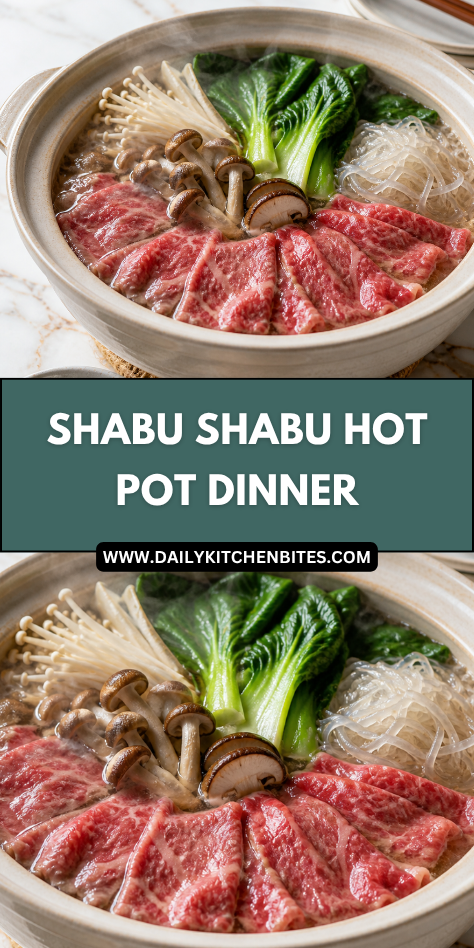
I make shabu shabu hot pot when I want dinner to feel warm, simple, and shared. It is the kind of meal where everyone gathers around the pot, cooks small pieces of meat and vegetables, and builds their own bowl at the table.
This meal feels comforting because it is light but still satisfying. The broth stays gentle, the thin meat cooks in seconds, and the fresh vegetables make the whole meal feel clean, cozy, and easy to enjoy with family.
Why You’ll Love This Recipe
Shabu shabu hot pot is calm, nourishing, and fun to eat. Instead of cooking everything ahead, the meal happens right at the table, which makes dinner feel relaxed and more connected.
The flavors are simple and fresh, so each ingredient can stand out. Thinly sliced beef, tofu, mushrooms, cabbage, noodles, and dipping sauces all come together in a way that feels balanced without being heavy.
It is also very flexible for families. You can use different meats, seafood, vegetables, noodles, or sauces, and everyone can choose what they like best from the pot.
Serves: 4 people
This recipe serves 4 people as a full meal with meat, tofu, vegetables, mushrooms, and noodles. If you are serving bigger appetites, add extra beef, more noodles, or a side of steamed rice so everyone leaves the table full.
Ingredients You’ll Need
For the Broth
- 8 cups water
- 1 piece dried kombu, about 4 inches
- 2 tablespoons sake, optional
- 1 teaspoon salt
For the Meat and Protein
- 1 pound thinly sliced beef ribeye or sirloin, shabu shabu cut
- 8 ounces firm tofu, drained and cut into 1-inch cubes
For the Vegetables
- 4 cups napa cabbage, chopped into large pieces
- 2 cups baby bok choy, halved or chopped
- 1 cup carrots, thinly sliced
- 1 cup daikon radish, thinly sliced, optional
- 1 cup green onions, cut into 2-inch pieces
- 2 cups enoki mushrooms, trimmed
- 2 cups shiitake mushrooms, stems removed and caps sliced
- 1 cup bean sprouts
For the Noodles
- 8 ounces udon noodles, cooked and drained
- 4 ounces glass noodles or shirataki noodles, rinsed and drained, optional
For Serving and Dipping
- 1/2 cup ponzu sauce
- 1/2 cup sesame dipping sauce
- 2 tablespoons grated daikon, optional
- 2 tablespoons chopped green onions
- 1 tablespoon toasted sesame seeds
- 1 teaspoon chili oil, optional
- Steamed white rice, optional
Pro Tips
Use meat sliced very thin for the best shabu shabu texture. The slices should cook in just a few swishes through the hot broth, which keeps them tender instead of chewy.
Do not boil the kombu hard. Remove it before the water reaches a full boil so the broth stays clean and does not turn bitter or slimy.
Arrange the ingredients on platters before bringing everyone to the table. This keeps the meal calm and makes it easy for each person to add what they like to the pot.
Cook vegetables in small batches so the broth stays hot. If too much goes in at once, the temperature drops and the ingredients take longer to cook.
Use separate chopsticks or tongs for raw meat. This keeps the meal safer and makes it easier to handle the thin beef neatly.
Save the noodles for the end if you want a traditional cozy finish. After the meat and vegetables flavor the broth, the noodles soak up all that gentle savory taste.
Tools You’ll Need
- Electric hot pot, portable burner, or tabletop induction cooker
- Wide shallow pot or donabe-style pot
- Tongs or cooking chopsticks
- Ladle
- Small bowls for dipping sauces
- Serving platters
- Sharp knife
- Cutting board
- Measuring cups
- Measuring spoons
- Fine mesh skimmer, optional
- Individual serving bowls
- Small plates for cooked food
Substitutions and Variations
Use a Different Protein
Thinly sliced pork, chicken, shrimp, scallops, or fish slices can be used instead of beef. Keep the pieces small and thin so they cook quickly in the hot broth.
Make It Vegetarian
Skip the meat and use extra tofu, mushrooms, napa cabbage, bok choy, carrots, and noodles. Use kombu broth with a splash of soy sauce or miso for more flavor.
Change the Noodles
Udon noodles are soft and filling, but glass noodles, ramen noodles, rice noodles, or shirataki noodles also work well. Choose noodles your family enjoys and cook or rinse them according to the package directions before adding them.
Add More Vegetables
Try spinach, watercress, corn, zucchini, lotus root, snow peas, or thinly sliced sweet potato. Add firmer vegetables first and leafy greens near the end so everything cooks properly.
Make the Sauces Kid-Friendly
Serve ponzu, sesame sauce, chili oil, green onions, and sesame seeds separately. This lets kids keep their bowls mild while adults can add stronger, tangier, or spicier flavors.
Make Ahead Tips
Shabu shabu hot pot is a wonderful meal to prep ahead because most of the work is washing, slicing, and arranging the ingredients. You can chop the napa cabbage, bok choy, carrots, daikon, green onions, and mushrooms earlier in the day, then store them in separate containers in the refrigerator. Keep everything covered so the vegetables stay crisp and fresh.
The tofu can also be drained and cut ahead of time. Place the cubes in a covered container in the refrigerator until you are ready to serve. If you are using cooked udon noodles, prepare them according to the package directions, rinse them, and toss them with a tiny splash of water so they do not stick together.
The broth is best made close to serving because kombu broth is quick and gentle. You can place the kombu in the pot with water about 20 to 30 minutes before dinner if you want a deeper flavor. Keep the raw meat chilled until the very last minute, and bring it to the table only when the broth is hot and ready.
Instructions
Step 1: Prepare the Broth
Add 8 cups water and 1 piece dried kombu to a wide shallow pot. Let the kombu soak for 20 to 30 minutes if you have time, which helps the broth develop a light savory flavor.
Place the pot over medium heat and warm it slowly. Remove the kombu just before the water comes to a full boil so the broth stays clean and mild.
Step 2: Season the Broth
Stir in 2 tablespoons sake if using and 1 teaspoon salt. Keep the broth at a gentle simmer, not a hard boil.
The broth should taste light because most of the flavor comes from the ingredients and dipping sauces. If it tastes too plain, remember that the meat, mushrooms, tofu, and vegetables will add flavor as they cook.
Step 3: Arrange the Ingredients
Place 1 pound thinly sliced beef ribeye or sirloin on a serving plate and keep it chilled until ready to cook. Arrange 8 ounces cubed firm tofu on another plate.
Set out 4 cups chopped napa cabbage, 2 cups baby bok choy, 1 cup thinly sliced carrots, 1 cup thinly sliced daikon if using, 1 cup green onions, 2 cups enoki mushrooms, 2 cups sliced shiitake mushrooms, and 1 cup bean sprouts. Place the cooked udon noodles and optional glass noodles or shirataki noodles in a bowl nearby.
Step 4: Set Up the Table
Place the hot pot on a portable burner, electric hot pot base, or tabletop induction cooker. Set out tongs, cooking chopsticks, a ladle, small plates, and individual bowls.
Pour 1/2 cup ponzu sauce and 1/2 cup sesame dipping sauce into small bowls. Add grated daikon, chopped green onions, toasted sesame seeds, chili oil, and steamed rice on the side if using.
Step 5: Start with Vegetables and Tofu
Add a small handful of napa cabbage, bok choy, carrots, daikon, mushrooms, green onions, and tofu to the simmering broth. Let them cook until tender, about 2 to 5 minutes depending on the vegetable.
Do not overcrowd the pot because too many ingredients can cool the broth quickly. Cook in small batches so everything stays hot and fresh.
Step 6: Cook the Beef
Pick up one slice of thinly sliced beef with cooking chopsticks or tongs. Swish it gently through the simmering broth for a few seconds until it changes color and is cooked to your liking.
The beef should cook very quickly because it is sliced thin. Dip the cooked beef into ponzu or sesame sauce before eating.
Step 7: Keep Cooking in Batches
Continue adding vegetables, tofu, mushrooms, and beef to the pot as everyone eats. Skim off any foam from the surface with a fine mesh skimmer if needed.
Keep the broth at a steady simmer and add a little hot water if the liquid level gets too low. The broth will become more flavorful as the meal goes on.
Step 8: Add the Noodles
Near the end of the meal, add 8 ounces cooked udon noodles to the broth. Add 4 ounces glass noodles or shirataki noodles if using.
Let the noodles warm through for 1 to 2 minutes. They will soak up the gentle broth and make a cozy final bowl.
Step 9: Serve the Final Soup
Ladle the noodles and broth into individual bowls. Add any remaining cooked vegetables, tofu, or mushrooms from the pot.
Top with chopped green onions, sesame seeds, chili oil, or a splash of ponzu if desired. This final bowl is warm, simple, and full of flavor from everything cooked before it.
Serving Suggestions
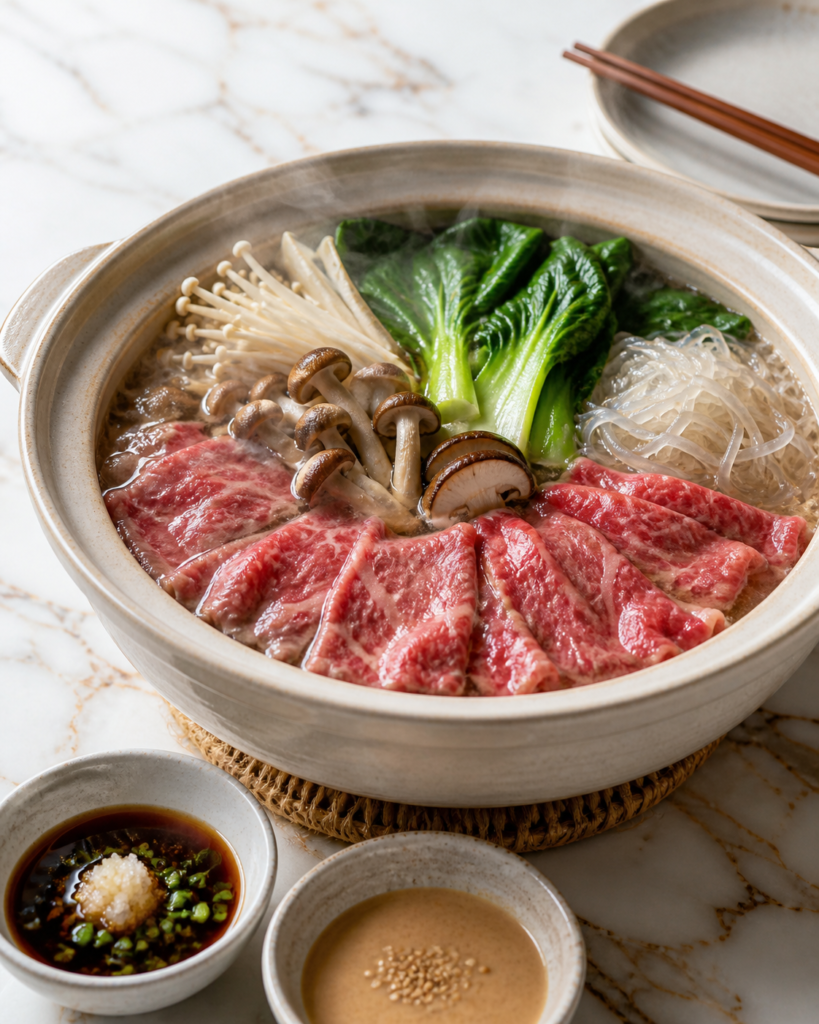
Shabu shabu hot pot is best served right at the table so everyone can cook and eat at their own pace. Place the raw meat on one side, the vegetables and tofu on another, and the sauces in easy reach.
Steamed white rice is a simple side that makes the meal more filling. It is especially helpful for kids or anyone who wants something familiar alongside the broth, meat, and vegetables.
Ponzu sauce adds a bright citrus flavor that tastes great with beef, tofu, mushrooms, and cabbage. Sesame dipping sauce is creamier and softer, which makes it a good choice for mild bowls.
For a fuller spread, serve small sides like cucumber salad, edamame, pickled vegetables, or simple steamed dumplings. These sides keep the meal relaxed without taking attention away from the hot pot.
If you are serving children, give them a small bowl of cooked ingredients from the pot instead of having them cook their own. This keeps the meal safe while still letting them enjoy the same flavors.
At the end, serve the noodles in the seasoned broth as a warm finish. The broth becomes richer after the beef, tofu, and vegetables have cooked in it, so the final noodle bowl is often one of the best parts.
Leftovers and Storage
Leftover shabu shabu ingredients should be stored carefully because raw meat and cooked ingredients need to stay separate. Refrigerate any uncooked beef in its own airtight container and use it within 1 day. Store cooked vegetables, tofu, noodles, and broth in separate containers if possible.
Cooked vegetables and tofu can be refrigerated for up to 3 days. The broth can also be stored for up to 3 days, but it should be brought to a full simmer before serving again. If the broth looks cloudy, strain it before reheating for a cleaner texture.
Noodles are best stored separately because they can soak up too much broth and become soft. Reheat leftovers in a small pot until hot, then add fresh greens or noodles if you want to make another simple soup. Do not refreeze thawed raw meat, and discard anything that sat out too long at the table.
Nutrition and Benefits
- Protein-rich meal: Thinly sliced beef and tofu both add protein, which helps make the meal satisfying. You can adjust the amount of meat or tofu based on your family’s needs.
- Plenty of vegetables: Napa cabbage, bok choy, carrots, mushrooms, green onions, and bean sprouts add color, fiber, and texture. They cook gently in the broth and keep the meal feeling fresh.
- Light broth base: Kombu broth is mild and clean, which makes this hot pot feel comforting without being heavy. The dipping sauces add flavor without needing a rich soup base.
- Flexible for different tastes: Each person can choose their own mix of meat, tofu, vegetables, noodles, and sauces. This makes the meal easier for families with different preferences.
- Shared family meal: Shabu shabu is naturally slow and interactive. It encourages everyone to sit together, cook small bites, and enjoy a warm meal at the table.
Recipe FAQ
What does shabu shabu mean?
Shabu shabu refers to the swishing sound made when thin slices of meat are moved through hot broth. The meat cooks very quickly because it is sliced so thin. It is usually dipped in ponzu or sesame sauce before eating.
What kind of beef is best for shabu shabu?
Thinly sliced ribeye or sirloin works very well because it stays tender when cooked quickly. Look for meat labeled shabu shabu cut at an Asian market if possible. If slicing at home, chill the meat until firm so it can be cut very thin.
Can I make shabu shabu without a tabletop burner?
Yes, you can cook the ingredients in batches on the stove and bring them to the table in bowls. It will not have the same cook-at-the-table feel, but it still tastes warm and comforting. Keep the broth simmering and serve ingredients as they finish cooking.
Is shabu shabu spicy?
Traditional shabu shabu is usually not spicy. The broth is light and mild, and heat can be added with chili oil or spicy sauces at the table. This makes it easy to keep the meal kid-friendly.
Can I use chicken instead of beef?
Yes, very thinly sliced chicken can be used, but it must be cooked fully. Make sure there is no pink in the center before eating. Chicken takes longer than beef, so give it enough time in the simmering broth.
What sauces go with shabu shabu?
Ponzu and sesame dipping sauce are the most common choices. Ponzu is bright, citrusy, and salty, while sesame sauce is creamy and nutty. You can add green onions, grated daikon, sesame seeds, or chili oil to customize each bowl.
Can I reuse the broth?
Yes, you can save leftover broth if it was handled safely and not left out too long. Strain it, refrigerate it, and use it within 3 days. Bring it to a full simmer before using it again in soup, noodles, or another hot pot meal.
A Cozy Hot Pot Meal to Share
Shabu shabu hot pot is a warm and simple meal that brings everyone to the table in a calm, comforting way. The gentle broth, tender meat, tofu, fresh vegetables, mushrooms, noodles, and dipping sauces make each bowl feel personal and satisfying.
I love this recipe for family dinners because it is flexible, nourishing, and easy to adjust for different tastes. It turns simple ingredients into a shared meal that feels special without being difficult, making it worth enjoying again on quiet nights or cozy weekends.