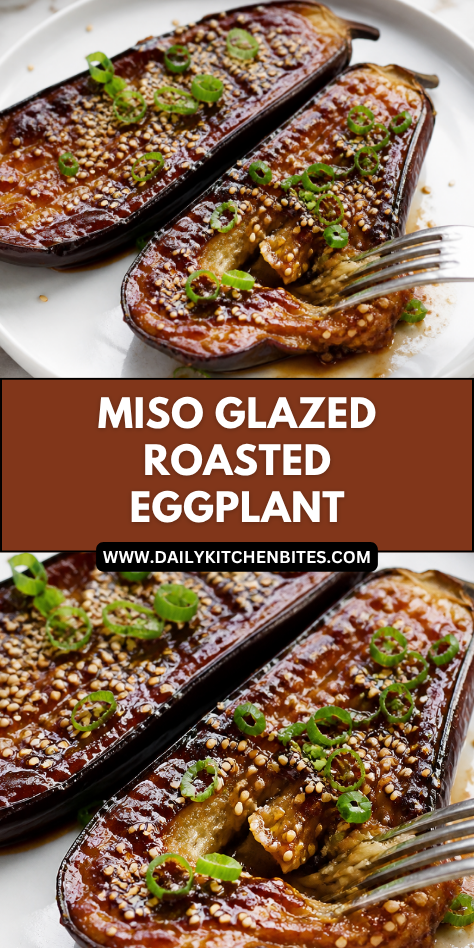
I make Miso Glazed Roasted Eggplant when I want a simple vegetable dish that tastes rich, cozy, and full of flavor. The eggplant turns soft and silky in the oven, while the miso glaze adds a savory-sweet finish that makes every bite feel warm and satisfying.
This is one of those recipes that looks a little special but is very easy to make at home. I like serving it with rice, noodles, grilled chicken, tofu, or a simple salad, and it always brings a comforting balance of tender texture, deep flavor, and just enough sweetness.
Why You’ll Love This Recipe
Miso Glazed Roasted Eggplant is a wonderful recipe when you want vegetables to feel like the main event. The eggplant becomes creamy inside with golden edges, and the glaze gives it that savory, slightly sweet flavor that keeps you going back for another bite.
It is also simple enough for a weeknight. The oven does most of the work, and the glaze comes together quickly with pantry ingredients like miso paste, soy sauce, sesame oil, and a little honey or maple syrup.
This recipe is family-friendly because it can be served in many ways. You can make it mild for kids, add chili for adults, or serve it over rice so the glaze soaks into everything on the plate.
Serves: 4 people
This recipe serves 4 people as a side dish or 2 people as a lighter main dish with rice or noodles. The portion size can change depending on the size of your eggplants and what else you are serving with the meal.
If your family loves eggplant, you may want to double the recipe and roast it on two sheet pans. Just be sure not to crowd the pan, because the eggplant needs space to brown and soften properly.
Ingredients You’ll Need
- 2 medium eggplants, about 1 1/2 pounds total
- 2 tablespoons neutral oil, such as avocado oil or canola oil
- 1 tablespoon toasted sesame oil
- 3 tablespoons white miso paste
- 1 tablespoon low-sodium soy sauce
- 1 tablespoon mirin
- 1 tablespoon rice vinegar
- 1 tablespoon honey or maple syrup
- 1 teaspoon fresh ginger, finely grated
- 1 garlic clove, finely grated or minced
- 1 teaspoon lime juice or lemon juice
- 1/4 teaspoon black pepper
- 1/4 teaspoon red pepper flakes, optional
- 2 tablespoons sliced green onions, for serving
- 1 tablespoon toasted sesame seeds, for serving
- 1 tablespoon chopped cilantro, optional for serving
- Cooked white rice, brown rice, or noodles, optional for serving
Pro Tips
Choose eggplants that feel firm, heavy for their size, and have smooth, shiny skin. Eggplants that feel very soft or wrinkled can have a spongier texture and a more bitter taste.
Score the cut side of the eggplant before roasting. Shallow crosshatch cuts help the glaze settle into the flesh and make the eggplant cook more evenly.
Brush the eggplant with oil before adding the miso glaze. This helps it roast nicely and keeps the glaze from drying out too quickly in the oven.
Roast the eggplant cut side down first if you want softer centers. Then flip it and add the glaze so the top becomes glossy, golden, and flavorful.
Watch the glaze closely near the end of baking. Miso, honey, and mirin can brown quickly, so you want caramelized edges without letting the top burn.
Let the eggplant rest for a few minutes before serving. The inside will be very hot, and resting helps the texture settle into that soft, creamy bite.
Tools You’ll Need
- Large baking sheet
- Parchment paper or foil
- Cutting board
- Sharp knife
- Small mixing bowl
- Measuring spoons
- Whisk or fork
- Pastry brush or spoon
- Microplane or small grater
- Spatula or tongs
- Small skillet for toasting sesame seeds, optional
- Serving platter or shallow bowls
Substitutions and Variations
Use a Different Miso
White miso gives the glaze a mild, slightly sweet flavor, but yellow miso can also work well. Red miso has a stronger, saltier taste, so use a little less if you choose that option.
Make It Vegan
Use maple syrup instead of honey. The glaze will still taste glossy, sweet, and savory, and the eggplant will roast into the same tender texture.
Add More Heat
Stir in extra red pepper flakes, chili crisp, sriracha, or a small spoonful of gochujang. Start with a little so the heat supports the miso glaze instead of covering it.
Try Different Toppings
Top the roasted eggplant with crushed peanuts, toasted cashews, fried shallots, or extra herbs. These add crunch and freshness while keeping the soft roasted eggplant at the center.
Make It Heartier
Serve the eggplant over rice, noodles, quinoa, or cauliflower rice with tofu, chicken, salmon, or a fried egg. This turns the dish into a fuller meal while keeping the miso glazed eggplant as the main flavor.
Make Ahead Tips
Miso Glazed Roasted Eggplant is best served warm from the oven, but you can still prep a few parts ahead to make cooking easier. The miso glaze can be mixed up to 3 days ahead and stored in a covered jar or container in the refrigerator.
Before using the glaze, give it a good stir because it may thicken as it chills. If it seems too thick to brush onto the eggplant, add 1 teaspoon of warm water at a time until it loosens into a smooth, spreadable sauce.
You can also wash and trim the eggplants earlier in the day, but I recommend slicing and scoring them close to roasting time. Once cut, eggplant can start to brown and soften, so it is best prepared fresh when possible.
If you want to make the full dish ahead, roast the eggplant until tender but save a little glaze for reheating. Warm the eggplant in the oven, brush with the reserved glaze, and heat until glossy. This helps bring back some of that fresh roasted flavor and keeps the top from tasting dry.
Instructions
Step 1: Preheat the Oven
Preheat the oven to 425°F. Line a large baking sheet with parchment paper or foil for easier cleanup.
A hot oven helps the eggplant soften quickly while the edges turn golden. Place the rack in the middle of the oven so the glaze can caramelize without burning too fast.
Step 2: Prepare the Eggplant
Trim the ends from the eggplants and slice each one in half lengthwise. If your eggplants are very large, you can cut each half into smaller long wedges.
Place the eggplant cut side up on the cutting board. Use a sharp knife to make shallow crosshatch cuts across the flesh, being careful not to cut through the skin.
Step 3: Oil the Eggplant
Place the eggplant pieces on the prepared baking sheet. Brush the cut sides with the neutral oil, then drizzle lightly with toasted sesame oil.
The oil helps the eggplant roast into a soft, creamy texture. It also helps the surface brown before the miso glaze goes on.
Step 4: Start Roasting
Place the eggplant cut side down on the baking sheet. Roast for 18 to 22 minutes, or until the flesh begins to soften and the cut side looks lightly golden.
This first roast gives the eggplant time to cook through without the glaze burning. The eggplant should feel tender when gently pressed with tongs.
Step 5: Make the Miso Glaze
While the eggplant roasts, add the white miso paste, low-sodium soy sauce, mirin, rice vinegar, honey or maple syrup, grated ginger, grated garlic, lime juice or lemon juice, black pepper, and red pepper flakes if using to a small bowl. Whisk until smooth.
The glaze should be thick but spreadable. If it feels too stiff, add a small splash of warm water until it can be brushed easily over the eggplant.
Step 6: Flip and Glaze
Carefully remove the baking sheet from the oven. Turn the eggplant pieces cut side up with tongs or a spatula.
Brush the miso glaze generously over the scored flesh. Let some of the glaze settle into the cuts so the flavor can soak into the eggplant.
Step 7: Roast Until Glossy
Return the baking sheet to the oven and roast for another 8 to 12 minutes. The eggplant should be very tender, and the glaze should look shiny, darkened in spots, and lightly caramelized.
Watch closely during the last few minutes. Miso and sweeteners can brown quickly, so pull the eggplant out before the glaze turns too dark.
Step 8: Add the Finishing Touches
Let the roasted eggplant rest on the baking sheet for 3 to 5 minutes. This helps the soft centers settle and makes the pieces easier to move.
Sprinkle with sliced green onions, toasted sesame seeds, and chopped cilantro if using. Add a tiny squeeze of lime or lemon if you want a brighter finish.
Step 9: Serve Warm
Transfer the eggplant to a serving platter or shallow bowls. Spoon any extra glaze from the pan over the top if it has not burned.
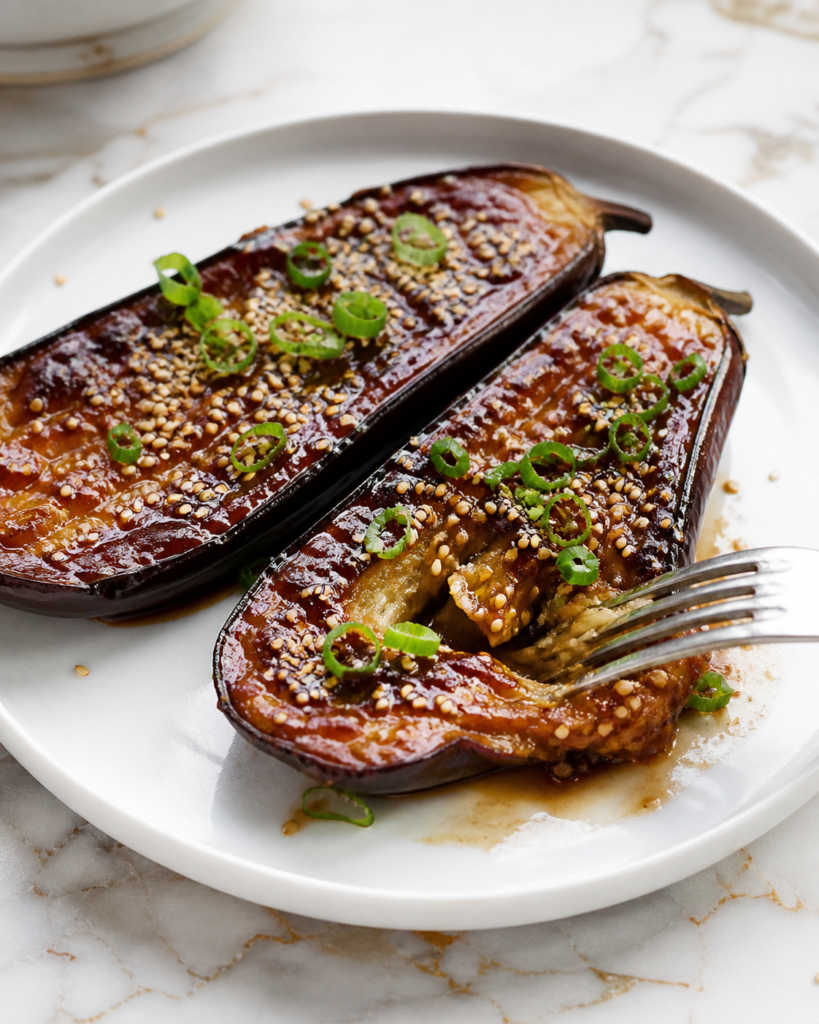
Serve warm with cooked white rice, brown rice, or noodles if desired. The eggplant should be silky inside, caramelized on top, and full of savory-sweet miso flavor.
Serving Suggestions
Miso Glazed Roasted Eggplant is wonderful over a bowl of warm white rice. The soft eggplant and glossy glaze soak into the rice, making a simple and comforting meal that feels complete with very little effort.
For a heartier dinner, serve it with grilled chicken, baked salmon, tofu, or a fried egg. These simple proteins pair well with the savory miso flavor and help turn the eggplant into a full family meal.
You can also serve the eggplant with noodles. Soba noodles, rice noodles, or simple sesame noodles all work well because they pick up the extra glaze and make the dish more filling.
For a lighter plate, pair the eggplant with a cucumber salad, steamed edamame, or crisp cabbage slaw. The fresh crunch balances the soft roasted texture and keeps the meal from feeling too rich.
This dish also works nicely as part of a small vegetable spread. Serve it with roasted broccoli, sautéed greens, pickled vegetables, and rice for a colorful meatless dinner.
If you are serving kids, cut the roasted eggplant into smaller pieces and offer the toppings on the side. Some children enjoy the sweet glaze more when the green onions or sesame seeds are optional.
Leftovers and Storage
Store leftover Miso Glazed Roasted Eggplant in an airtight container in the refrigerator for up to 3 days. Let the eggplant cool before covering it, but do not leave it out at room temperature for too long.
To reheat, place the eggplant on a baking sheet and warm it in a 350°F oven for 8 to 12 minutes. This helps the glaze loosen and the edges warm through without making the eggplant too mushy.
You can also reheat it in the microwave for a faster option. Use short 30-second bursts until warm, but know that the texture will be softer than oven reheating.
If the eggplant looks dry after chilling, brush it with a small spoonful of extra glaze, soy sauce, or sesame oil before reheating. A tiny splash of water can also help loosen the sauce.
Freezing is not recommended for this recipe because roasted eggplant becomes very soft after thawing. It is better to enjoy leftovers within a few days over rice, noodles, or tucked into a grain bowl.
Nutrition and Benefits
- Eggplant is naturally low in calories and has a soft, satisfying texture once roasted. It works well as a vegetable side or a meatless main when served with rice, noodles, or protein.
- Miso adds deep savory flavor, which helps make the dish taste rich without needing a heavy sauce. It also brings a fermented ingredient into the meal in a simple and approachable way.
- Sesame oil, green onions, ginger, and garlic add strong flavor in small amounts. This keeps the recipe bold, warm, and balanced without a long ingredient list.
- Serving the eggplant with rice, tofu, fish, chicken, or eggs makes it easy to build a complete meal. You can keep it light or make it heartier depending on your family’s needs.
- This recipe is easy to adjust for different eating styles. It can be made vegan with maple syrup, gluten-free with tamari, or spicier with chili crisp or red pepper flakes.
Recipe FAQ
Can I use Japanese eggplant instead of regular eggplant?
Yes, Japanese eggplant works very well in this recipe. It is smaller, sweeter, and often cooks a little faster than larger globe eggplant. Check it early so it does not become too soft.
What kind of miso is best for this recipe?
White miso is best because it is mild, slightly sweet, and family-friendly. Yellow miso also works if that is what you have. Red miso is stronger and saltier, so use a little less and taste the glaze before brushing it on.
Can I make this recipe gluten-free?
Yes, use tamari instead of soy sauce and make sure your miso paste is gluten-free. Some miso contains barley or other grains, so it is important to check the label. The rest of the recipe is easy to keep gluten-free.
Why is my eggplant tough?
Eggplant can be tough if it is undercooked or cut too thick. Roast it until the flesh feels very tender when pressed with tongs. If needed, give it another 5 to 10 minutes in the oven before serving.
Can I make this without mirin?
Yes, you can replace mirin with a little rice vinegar plus a small extra spoonful of honey or maple syrup. The flavor will be slightly different, but it will still have a nice sweet and tangy balance.
How do I keep the miso glaze from burning?
Roast the eggplant with oil first, then add the glaze later in the cooking time. Miso, honey, and mirin can burn if they bake too long. Watch the eggplant closely during the final few minutes.
Can I serve this cold?
Yes, you can serve it cold or at room temperature, though the texture is softer. It is tasty in rice bowls, noodle bowls, or packed lunches. For the best flavor, let chilled leftovers sit out for a few minutes before eating.
A Savory Roasted Eggplant Dish Worth Repeating
Miso Glazed Roasted Eggplant is simple, comforting, and full of rich flavor without being hard to make. The eggplant turns tender and silky, while the miso glaze adds a savory-sweet finish that works well with rice, noodles, tofu, chicken, or fish.
It is worth making again because it turns a humble vegetable into something warm and satisfying. With easy prep, flexible toppings, and dependable results, this recipe can fit busy weeknights, family dinners, or quiet meals when you want something cozy and flavorful.