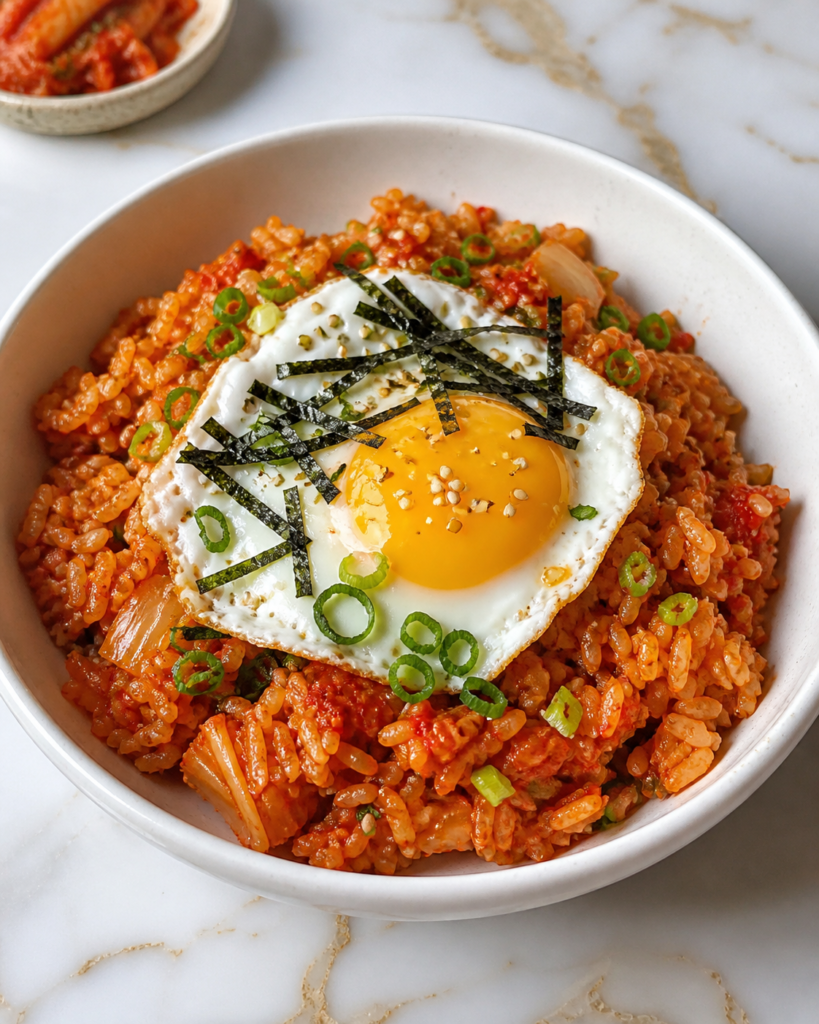
I make spicy kimchi fried rice when I need a fast meal that still tastes bold, warm, and comforting. It is one of my favorite ways to turn leftover rice into something satisfying with just a few pantry and fridge staples.
The kimchi brings tang, heat, and deep savory flavor, while the rice gets lightly crisp in the skillet. I like this recipe because it feels quick and practical, but it still has that cozy homemade taste that makes everyone come back for another scoop.

Why You’ll Love This Recipe
Spicy kimchi fried rice is flavorful, filling, and easy to make in one pan. The kimchi adds spice and brightness, the rice soaks up the sauce, and a simple egg on top makes the whole bowl feel complete.
It is also a helpful recipe for busy families because it works best with leftover rice. You can use what you already have, add a few vegetables or protein if needed, and have a warm meal ready without much planning.
This dish is easy to adjust for different spice levels. Keep it mild with less gochujang, or make it bolder with extra kimchi juice, chili flakes, or a drizzle of chili oil at the table.
Serves: 4 people
This recipe makes 4 comfortable servings as a main dish. If you are serving smaller appetites, it can stretch a bit further with fruit, cucumber salad, dumplings, or a simple soup on the side.
Ingredients You’ll Need
For the Fried Rice
- 4 cups cooked day-old white rice or brown rice, chilled
- 1 1/2 cups napa cabbage kimchi, chopped
- 1/4 cup kimchi juice
- 2 tablespoons neutral oil, such as avocado oil or canola oil
- 1 teaspoon toasted sesame oil
- 1 small yellow onion, finely diced
- 2 garlic cloves, minced
- 1 teaspoon fresh ginger, grated
- 1/2 cup frozen peas
- 1/2 cup diced carrots
- 2 tablespoons low-sodium soy sauce
- 1 tablespoon gochujang
- 1 teaspoon honey or brown sugar, optional
- 1/4 teaspoon black pepper
For the Eggs
- 4 large eggs
- 1 tablespoon neutral oil or butter
- Pinch of salt
- Pinch of black pepper
For Serving
- 2 green onions, thinly sliced
- 1 tablespoon toasted sesame seeds
- 1 sheet roasted seaweed, cut or crumbled, optional
- 1 teaspoon toasted sesame oil, for drizzling, optional
- Extra kimchi
- Chili oil or gochugaru, optional
Pro Tips
Use cold day-old rice for the best texture. Fresh rice is soft and steamy, which can make fried rice turn mushy instead of lightly crisp.
Chop the kimchi into small pieces before cooking. This helps it spread evenly through the rice and makes each bite easier to eat.
Cook the kimchi for a few minutes before adding the rice. This deepens the flavor, softens the sharpness, and helps the kimchi caramelize a little in the pan.
Break up the rice with your hands or a spoon before adding it to the skillet. Clumps are harder to season evenly and can keep the rice from frying well.
Taste before adding extra salt. Kimchi, kimchi juice, gochujang, and soy sauce are all salty, so the rice may not need much more seasoning.
Serve the eggs the way your family likes them. A runny fried egg makes the rice richer, while a fully cooked egg or scrambled egg may be easier for kids.
Tools You’ll Need
- Large skillet, wok, or sauté pan
- Medium skillet for eggs
- Cutting board
- Sharp knife
- Measuring cups
- Measuring spoons
- Wooden spoon or spatula
- Grater or microplane
- Small bowl for mixing sauce
- Tongs or fork for breaking up rice
- Serving bowls
Substitutions and Variations
Use a Different Rice
White rice is classic, but brown rice, jasmine rice, or short-grain rice can also work well. Just make sure the rice is cooked, chilled, and firm enough to fry without becoming mushy.
Make It Vegetarian or Vegan
Use vegan kimchi and skip the eggs, or replace them with tofu. Some kimchi contains fish sauce or shrimp paste, so check the label if you need a fully vegetarian or vegan version.
Add More Protein
Stir in cooked chicken, shrimp, pork, tofu, edamame, or leftover beef. Add cooked proteins near the end so they warm through without drying out.
Add Extra Vegetables
Bell peppers, spinach, zucchini, mushrooms, corn, or cabbage all work nicely in this fried rice. Cut them small so they cook quickly and blend well with the rice.
Adjust the Spice Level
Use less gochujang and mild kimchi for a gentler version. For more heat, add gochugaru, chili oil, extra kimchi juice, or a spoonful of chili crisp when serving.
Make Ahead Tips
Spicy kimchi fried rice is a great recipe for using rice that has already been cooked and chilled. In fact, day-old rice works better than fresh rice because it is firmer, drier, and easier to fry without turning soft. If you know you want to make this dish later in the week, cook the rice a day ahead and store it in the refrigerator.
You can also chop the kimchi, dice the onion and carrots, mince the garlic, and grate the ginger ahead of time. Store each item in a covered container in the refrigerator so the cooking process moves quickly. The sauce ingredients can be mixed together earlier in the day, then stirred again before adding them to the skillet.
The finished fried rice can be made ahead for lunches, but it tastes best when freshly cooked. If making it for meal prep, store the eggs separately or cook fresh eggs when serving. A fresh topping of green onions, sesame seeds, and roasted seaweed helps leftovers taste bright again.
Instructions
Step 1: Prepare the Rice
Use 4 cups cooked day-old white rice or brown rice that has been chilled in the refrigerator. Break up any clumps with clean hands, a fork, or a spoon before cooking.
Cold rice fries better because it has less moisture than fresh rice. This helps the grains stay separate and gives the fried rice a better texture.
Step 2: Mix the Sauce
In a small bowl, stir together 2 tablespoons low-sodium soy sauce, 1 tablespoon gochujang, 1/4 cup kimchi juice, 1 teaspoon honey or brown sugar if using, and 1/4 teaspoon black pepper. Mix until the gochujang is mostly smooth.
This sauce should taste savory, spicy, tangy, and slightly sweet. If your kimchi is very salty or strong, you can use a little less soy sauce and adjust later.
Step 3: Cook the Onion and Vegetables
Heat 2 tablespoons neutral oil in a large skillet or wok over medium-high heat. Add 1 finely diced small yellow onion, 1/2 cup diced carrots, and 1/2 cup frozen peas.
Cook for 3 to 4 minutes, stirring often, until the onion softens and the carrots begin to become tender. The vegetables should still have a little texture so the fried rice does not feel too soft.
Step 4: Add Garlic and Ginger
Stir in 2 minced garlic cloves and 1 teaspoon grated fresh ginger. Cook for about 30 seconds, just until fragrant.
Keep stirring so the garlic does not burn. This quick step adds warmth and depth to the rice without making the flavor harsh.
Step 5: Cook the Kimchi
Add 1 1/2 cups chopped napa cabbage kimchi to the skillet. Cook for 3 to 5 minutes, stirring often, until the kimchi softens and starts to smell rich and savory.
Cooking the kimchi first helps mellow its sharpness and brings out a deeper flavor. It also helps some of the extra moisture cook off before the rice is added.
Step 6: Add the Rice
Add the chilled rice to the skillet and spread it out over the vegetables and kimchi. Let it sit for 30 to 60 seconds before stirring so some of the grains can lightly crisp.
Stir and fold the rice into the kimchi mixture until everything is evenly combined. Break up any remaining clumps as you go so the sauce can coat the rice well.
Step 7: Add the Sauce
Pour the prepared sauce over the rice. Stir well for 2 to 3 minutes, making sure the gochujang mixture coats the rice evenly.
The rice should turn a warm reddish color from the kimchi and sauce. If it looks dry, add another spoonful of kimchi juice or a small splash of water.
Step 8: Finish with Sesame Oil
Turn off the heat and stir in 1 teaspoon toasted sesame oil. Taste the fried rice and adjust with a little more soy sauce, kimchi juice, or black pepper if needed.
Sesame oil is best added at the end so the flavor stays fragrant. It gives the rice a warm, nutty finish that works well with the spicy kimchi.
Step 9: Cook the Eggs
Heat 1 tablespoon neutral oil or butter in a medium skillet over medium heat. Crack in 4 large eggs and season them with a pinch of salt and a pinch of black pepper.
Cook the eggs until the whites are set and the yolks are done the way your family likes them. For fully cooked eggs, cover the skillet briefly or flip the eggs gently.
Step 10: Serve the Fried Rice
Spoon the spicy kimchi fried rice into serving bowls. Top each bowl with a cooked egg.
Add 2 thinly sliced green onions, 1 tablespoon toasted sesame seeds, roasted seaweed if using, and a small drizzle of toasted sesame oil if desired. Serve with extra kimchi, chili oil, or gochugaru on the side.
Serving Suggestions
Spicy kimchi fried rice is filling enough to serve as a main dish, especially with a fried egg on top. The egg adds richness and helps balance the tangy, spicy rice.
For a simple family meal, serve it with sliced cucumbers or a small cucumber salad. The cool crunch gives a nice contrast to the warm kimchi flavor.
Dumplings are a great side if you want the meal to feel a little more special. Pan-fried, steamed, or frozen dumplings all work well with the bold flavor of the rice.
A small bowl of miso soup or clear broth soup can make the meal feel cozy without making it too heavy. The warm soup pairs nicely with the spicy rice and helps round out dinner.
For kids, serve the fried rice with mild toppings and keep chili oil on the side. A fully cooked egg, extra peas, or a little plain rice mixed in can soften the spice.
You can also wrap leftovers in roasted seaweed sheets for a quick snack-style meal. The seaweed adds salty crunch and makes the rice easy to eat in small bites.
Leftovers and Storage
Let leftover spicy kimchi fried rice cool before storing it. Place it in an airtight container and refrigerate for up to 4 days. Store the eggs separately if possible, especially if they have runny yolks.
Reheat the rice in a skillet over medium heat with a small splash of water or oil. Stir often until hot, letting the rice crisp slightly if you like more texture. You can also microwave it in short bursts, stirring halfway through so it heats evenly.
Freezing is possible, but the texture of the rice and vegetables may soften after thawing. If you freeze it, store the rice without the egg and use it within 2 months. Thaw overnight in the refrigerator, then reheat in a skillet and add fresh toppings before serving.
Nutrition and Benefits
- Uses leftover rice well: This recipe turns chilled leftover rice into a warm and satisfying meal. It is a practical way to reduce waste and make a quick dinner.
- Kimchi adds bold flavor: Kimchi brings tang, heat, and savory depth without needing many extra ingredients. It gives the fried rice a strong flavor base right away.
- Vegetables add color and texture: Peas, carrots, onion, garlic, ginger, and kimchi make the dish more colorful and balanced. They also help each bowl feel more filling.
- Eggs add protein: A fried egg on top makes the dish feel complete and satisfying. You can also use tofu, shrimp, chicken, or edamame if you want a different protein.
- Easy to adjust: The spice level can be mild or bold depending on the kimchi and gochujang. This makes it easier to serve to a family with different heat preferences.
Recipe FAQ
Can I use fresh rice for kimchi fried rice?
Yes, but chilled day-old rice works better. Fresh rice has more moisture and can turn soft or sticky in the pan. If you only have fresh rice, spread it on a baking sheet and chill it for a while before cooking.
What kind of kimchi works best?
Napa cabbage kimchi is the best choice for classic kimchi fried rice. Aged kimchi with a stronger tang gives the dish deeper flavor. If your kimchi is very spicy, start with less gochujang.
Can I make this fried rice less spicy?
Yes, use mild kimchi and reduce the gochujang to 1 or 2 teaspoons. You can also leave out chili oil and gochugaru when serving. Adding extra rice or a fully cooked egg can soften the heat too.
Can I make this recipe vegan?
Yes, use vegan kimchi and skip the eggs or replace them with tofu. Some kimchi contains fish sauce or shrimp paste, so check the label. Use maple syrup or sugar instead of honey if needed.
Why is my fried rice mushy?
Fried rice can become mushy if the rice is too fresh, too wet, or crowded in the pan. Use cold rice and cook over medium-high heat so extra moisture can evaporate. Avoid adding too much kimchi juice at once.
What protein can I add?
Cooked chicken, shrimp, pork, tofu, edamame, or beef all work well. Add cooked proteins near the end so they warm through without overcooking. Keep the pieces small so they mix easily with the rice.
How long does kimchi fried rice last?
Kimchi fried rice lasts up to 4 days in the refrigerator when stored in an airtight container. Reheat it until hot before serving. Add fresh green onions, sesame seeds, or seaweed after reheating for the best flavor.
A Spicy Rice Bowl for Busy Nights
Spicy kimchi fried rice is a warm, bold, and practical meal that turns simple leftovers into something comforting. The tangy kimchi, savory sauce, tender vegetables, and crisp bits of rice come together quickly in one pan.
I like this recipe because it is easy to adjust and dependable on busy days. It works for lunch, dinner, or meal prep, and the egg on top makes each bowl feel filling, cozy, and worth making again.