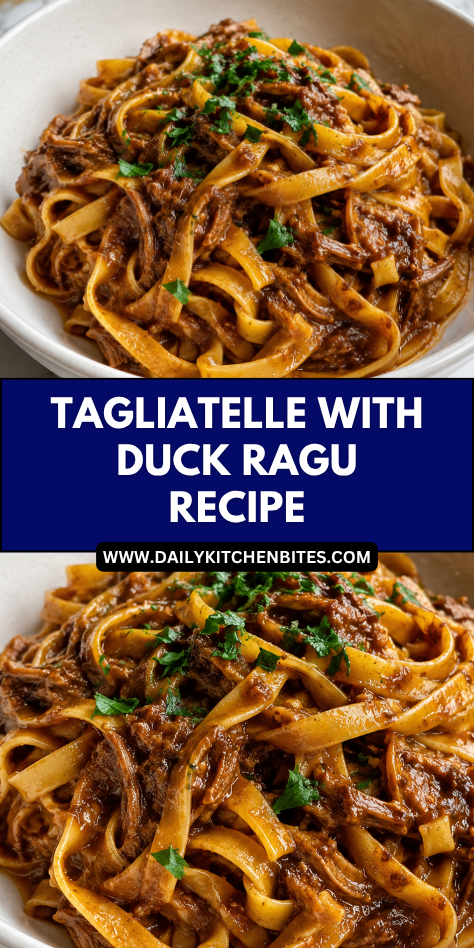
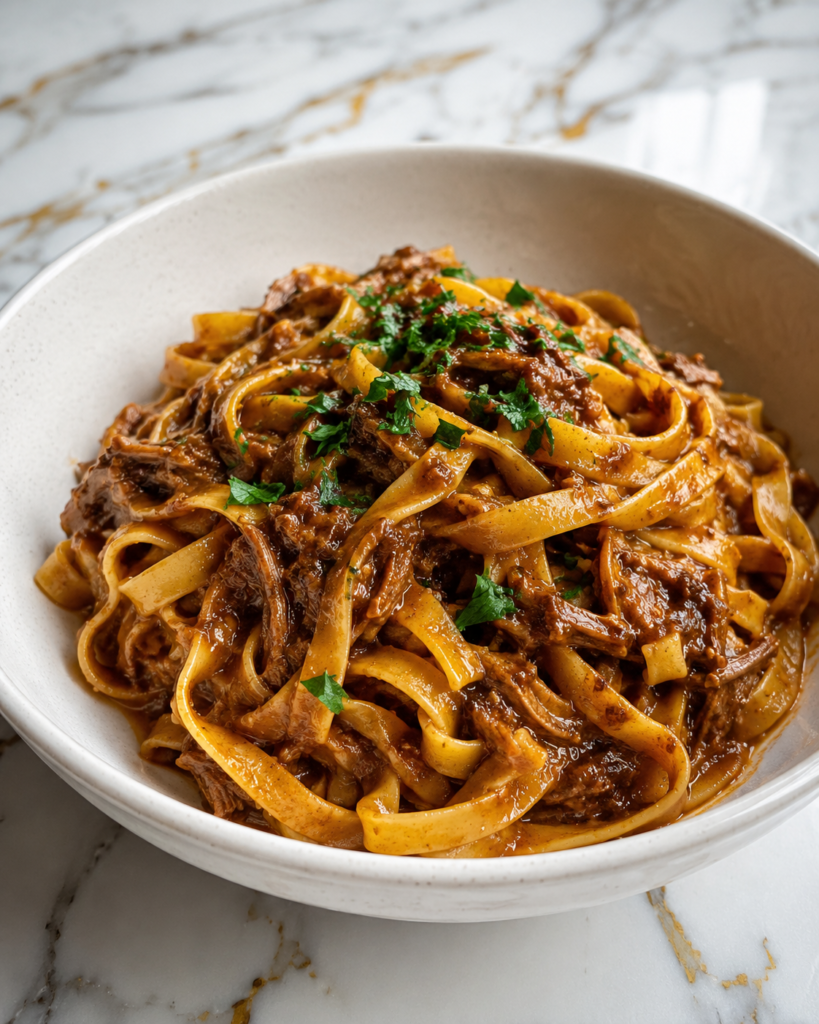
I make tagliatelle with duck ragu when I want a meal that feels slow, rich, and comforting. The duck cooks down into a tender sauce with tomatoes, wine, herbs, and vegetables, then clings beautifully to wide ribbons of pasta.
This is the kind of dish I like for Sunday dinner, holidays, or a quiet evening when I have time to let something simmer. It feels special on the table, but the steps are steady and simple, and the sauce rewards you with deep flavor as it cooks.
Why You’ll Love This Recipe
Tagliatelle with duck ragu is hearty, cozy, and full of savory flavor. The duck becomes tender as it braises, while the tomatoes, aromatics, wine, and herbs turn into a rich sauce that tastes like it has been cared for.
It is also a wonderful family meal when you want something a little different from regular meat sauce. The tagliatelle holds the ragu well, and the sauce can be kept mild, warm, and comforting without being spicy.
This recipe is perfect for make-ahead cooking because the ragu tastes even better after resting. You can simmer the sauce earlier in the day, reheat it gently, and boil the pasta right before serving.
Serves: 6 people
This recipe serves 6 people as a generous pasta dinner. If you are serving it with salad, bread, or vegetables on the side, the portions can stretch a little further for a family-style meal.
Ingredients You’ll Need
For the Duck Ragu
- 2 pounds duck legs or duck thighs, bone-in and skin-on
- 1 teaspoon salt, divided
- 1/2 teaspoon black pepper, divided
- 1 tablespoon olive oil, if needed
- 1 medium yellow onion, finely diced
- 1 medium carrot, finely diced
- 1 celery stalk, finely diced
- 4 garlic cloves, minced
- 2 tablespoons tomato paste
- 1 cup dry red wine
- 1 can crushed tomatoes, 28 ounces
- 1 cup low-sodium chicken broth
- 1 teaspoon dried thyme
- 1 teaspoon dried rosemary, crushed
- 1 bay leaf
- 1/4 teaspoon red pepper flakes, optional
- 1 teaspoon balsamic vinegar
- 1 teaspoon honey or sugar, optional
- 2 tablespoons chopped fresh parsley
For the Pasta
- 1 pound tagliatelle pasta
- 1 tablespoon salt, for pasta water
- 1/2 cup reserved pasta water
- 1 tablespoon unsalted butter, optional
For Serving
- 1/2 cup grated Parmesan cheese
- Extra chopped fresh parsley
- Freshly cracked black pepper
- Extra virgin olive oil, optional
- Crusty bread, optional
- Simple green salad, optional
Pro Tips
Pat the duck dry before searing it. Dry skin browns better, and that browning adds deep flavor to the base of the ragu.
Sear the duck slowly enough to render some of the fat. Duck has more fat than chicken, and letting that fat cook out helps create a richer sauce without making it greasy.
Drain off extra duck fat before adding the vegetables. Leave a little in the pot for flavor, but too much can make the finished ragu feel heavy.
Cook the onion, carrot, and celery until soft before adding the tomato paste. This builds a sweet, savory base that makes the sauce taste more balanced.
Let the ragu simmer until the duck is very tender. The meat should pull easily from the bone, which usually takes time but not much effort.
Toss the pasta with the sauce before serving instead of spooning the ragu only on top. This helps the tagliatelle absorb flavor and makes each bite more even.
Tools You’ll Need
- Large Dutch oven or heavy-bottomed pot with lid
- Large pasta pot
- Tongs
- Wooden spoon
- Sharp knife
- Cutting board
- Measuring cups
- Measuring spoons
- Can opener
- Forks for shredding duck
- Fine grater for Parmesan
- Colander
- Ladle or heatproof measuring cup for pasta water
- Serving bowl or pasta plates
Substitutions and Variations
Use Duck Breast Instead of Legs
Duck breast can be used, but it will not become as tender and shreddable as duck legs or thighs. For the best ragu texture, cook it gently and avoid simmering it so long that it dries out.
Swap the Pasta Shape
Tagliatelle is a lovely match for rich ragu, but pappardelle, fettuccine, rigatoni, or wide egg noodles also work well. Choose a pasta that can hold a hearty sauce.
Make It Without Wine
Replace the red wine with extra chicken broth and add 1 tablespoon balsamic vinegar for depth. The sauce will still taste rich, warm, and family-friendly.
Add More Vegetables
Stir in mushrooms, finely chopped fennel, or a handful of spinach near the end. These add flavor and texture while keeping the duck ragu at the center of the dish.
Make It Extra Cozy
Add a splash of cream or a pat of butter at the end for a softer, richer sauce. This makes the ragu feel more luxurious without changing the main flavor.
Make Ahead Tips
Tagliatelle with duck ragu is a wonderful make-ahead meal because the sauce becomes even better after resting. You can cook the ragu 1 to 2 days ahead, let it cool, and store it in an airtight container in the refrigerator. The flavors deepen, and any extra duck fat firms on top so it is easy to remove before reheating.
You can also sear the duck and chop the onion, carrot, celery, and garlic earlier in the day. Keep the vegetables covered in the refrigerator until you are ready to cook. This makes the simmering process feel much easier, especially if you are preparing the meal for Sunday dinner or guests.
For the best pasta texture, cook the tagliatelle right before serving. Reheat the ragu gently on the stove, adding a splash of broth or water if it has thickened too much. Boil the pasta fresh, then toss everything together while the noodles are hot.
Instructions
Step 1: Season the Duck
Pat 2 pounds duck legs or duck thighs dry with paper towels. Season all sides with 1/2 teaspoon salt and 1/4 teaspoon black pepper.
Let the duck sit at room temperature for about 15 minutes while you prepare the vegetables. This helps it sear more evenly and gives the seasoning time to settle.
Step 2: Sear the Duck
Place a large Dutch oven or heavy-bottomed pot over medium heat. Add the duck skin side down and cook for 8 to 10 minutes, until the skin is browned and some of the fat has rendered.
Turn the duck and sear the other side for 3 to 4 minutes. Transfer the duck to a plate and carefully spoon off extra fat, leaving about 1 tablespoon in the pot.
Step 3: Cook the Vegetables
Add 1 finely diced medium yellow onion, 1 finely diced medium carrot, and 1 finely diced celery stalk to the pot. Cook for 6 to 8 minutes, stirring often, until the vegetables soften.
Add 4 minced garlic cloves and cook for 30 seconds. The garlic should smell fragrant but should not brown too much.
Step 4: Add the Tomato Paste
Stir in 2 tablespoons tomato paste and cook for 1 to 2 minutes. It should darken slightly and coat the vegetables.
This step helps the tomato paste taste richer and less sharp. It also builds a stronger base for the duck ragu.
Step 5: Deglaze with Wine
Pour in 1 cup dry red wine and stir, scraping up the browned bits from the bottom of the pot. Let the wine simmer for 3 to 4 minutes so it reduces slightly.
Those browned bits add a lot of flavor to the sauce. If you are not using wine, use chicken broth and balsamic vinegar instead.
Step 6: Add the Tomatoes and Broth
Add 1 can crushed tomatoes, 1 cup low-sodium chicken broth, 1 teaspoon dried thyme, 1 teaspoon crushed dried rosemary, 1 bay leaf, 1/4 teaspoon red pepper flakes if using, the remaining 1/2 teaspoon salt, and the remaining 1/4 teaspoon black pepper. Stir well to combine.
Return the seared duck to the pot, nestling it into the sauce. The duck should be partly covered, but it does not need to be fully submerged.
Step 7: Simmer Until Tender
Bring the sauce to a gentle simmer, then reduce the heat to low and cover the pot. Let the duck cook for 1 1/2 to 2 hours, turning the pieces once or twice.
The duck is ready when the meat pulls easily from the bone. Keep the simmer gentle so the sauce thickens slowly and the meat stays tender.
Step 8: Shred the Duck
Transfer the duck pieces to a plate and let them cool slightly. Remove and discard the skin, bones, and any excess fat.
Shred the meat with two forks into bite-sized pieces. Return the shredded duck to the sauce and stir until evenly mixed.
Step 9: Finish the Ragu
Remove the bay leaf from the pot. Stir in 1 teaspoon balsamic vinegar and 1 teaspoon honey or sugar if the tomatoes taste too sharp.
Simmer uncovered for 10 to 15 minutes, until the sauce thickens and coats the duck. Stir in 2 tablespoons chopped fresh parsley just before serving.
Step 10: Cook the Tagliatelle
Bring a large pot of water to a boil and add 1 tablespoon salt. Cook 1 pound tagliatelle according to the package directions until al dente.
Before draining, reserve 1/2 cup pasta water. Drain the pasta, but do not rinse it because the starch helps the sauce cling.
Step 11: Toss Pasta with Ragu
Add the cooked tagliatelle to the pot with the duck ragu, or combine them in a large serving bowl. Toss gently, adding reserved pasta water a little at a time until the sauce coats the noodles.
Stir in 1 tablespoon unsalted butter if using. This gives the sauce a glossy finish and helps it cling to the pasta.
Step 12: Serve Warm
Divide the tagliatelle with duck ragu among bowls or plates. Top with 1/2 cup grated Parmesan cheese, extra parsley, freshly cracked black pepper, and a light drizzle of olive oil if desired.
Serve right away while the pasta is hot and the sauce is rich and tender. Add crusty bread or a simple green salad on the side if you like.
Serving Suggestions
Tagliatelle with duck ragu is hearty enough to serve as the main dish for a cozy dinner. The wide pasta and rich sauce make each bowl filling and satisfying.
A simple green salad is a good side because it adds freshness to the meal. Use a light vinaigrette with lemon or red wine vinegar to balance the richness of the duck.
Crusty bread is helpful for scooping up any extra sauce left on the plate. It also makes the meal feel relaxed and family-style.
Roasted vegetables pair nicely with this pasta, especially carrots, Brussels sprouts, cauliflower, or mushrooms. Their caramelized flavor works well with the deep ragu.
For a special dinner, serve the pasta with a little extra Parmesan and parsley at the table. This lets everyone finish their bowl the way they like.
If you are serving children, keep the red pepper flakes out of the sauce and offer them on the side. The ragu will still be rich, savory, and comforting without extra heat.
Leftovers and Storage
Store leftover tagliatelle with duck ragu in an airtight container in the refrigerator for up to 3 days. If possible, store extra ragu separately from the pasta for the best texture. The pasta will continue to absorb sauce as it sits, which can make it softer.
Reheat leftovers gently in a skillet or saucepan over medium-low heat. Add a splash of broth, water, or reserved pasta water to loosen the sauce. Stir often until the pasta and ragu are heated through.
The duck ragu freezes well on its own for up to 3 months. Let it cool completely, then freeze it in family-size portions or single servings. Thaw overnight in the refrigerator and reheat gently before tossing with freshly cooked tagliatelle.
Nutrition and Benefits
- Rich protein source: Duck adds satisfying protein and deep flavor to the ragu. A little goes a long way because the sauce is hearty and savory.
- Vegetable flavor base: Onion, carrot, celery, garlic, tomatoes, and herbs build a balanced sauce. These ingredients add sweetness, acidity, and warmth.
- Comforting pasta meal: Tagliatelle is wide enough to hold the thick ragu well. This makes each bite taste evenly coated and satisfying.
- Make-ahead friendly: The ragu tastes even better after resting, which makes it useful for weekends, holidays, and family dinners. Cooking the sauce ahead also makes serving easier.
- Flexible serving style: This dish can be served as a special main course or stretched with salad, bread, and vegetables. It feels elegant but still warm and homey.
Recipe FAQ
Can I make duck ragu ahead of time?
Yes, duck ragu is excellent made ahead. The flavor deepens after a night in the refrigerator, and the sauce reheats well. Cook the pasta fresh right before serving for the best texture.
What cut of duck is best for ragu?
Duck legs or thighs are best because they become tender and shreddable after slow cooking. They also bring rich flavor to the sauce. Duck breast can work, but it is leaner and does not braise the same way.
Can I make this without wine?
Yes, replace the red wine with extra chicken broth. Add 1 tablespoon balsamic vinegar to give the sauce more depth. The ragu will still taste rich and comforting.
Why is my ragu greasy?
Duck releases a lot of fat as it cooks. Spoon off extra fat after searing, and skim the sauce if needed after simmering. If making the ragu ahead, chill it and remove the firm fat from the top.
What pasta works besides tagliatelle?
Pappardelle, fettuccine, rigatoni, wide egg noodles, or even gnocchi can work well. Choose a pasta shape that can hold a thick sauce. Wide noodles are especially good with shredded duck.
Can I use canned tomatoes?
Yes, canned crushed tomatoes are used in this recipe and work very well. They create a steady sauce with good body. Use good-quality tomatoes for the best flavor.
How do I thicken duck ragu?
Simmer the sauce uncovered after shredding the duck. This lets extra liquid cook off and helps the sauce cling to the meat. If it gets too thick, add a splash of broth or pasta water.
A Slow-Simmered Pasta Dinner Worth Sharing
Tagliatelle with duck ragu is a warm, comforting meal with tender shredded duck, rich tomato sauce, herbs, and wide ribbons of pasta. It feels special enough for a weekend or holiday, but the steps are simple and steady.
I love this recipe because the sauce gets better as it rests and the pasta brings everything together beautifully. It is cozy, dependable, and worth making again when you want a family dinner that feels slow-cooked and full of care.