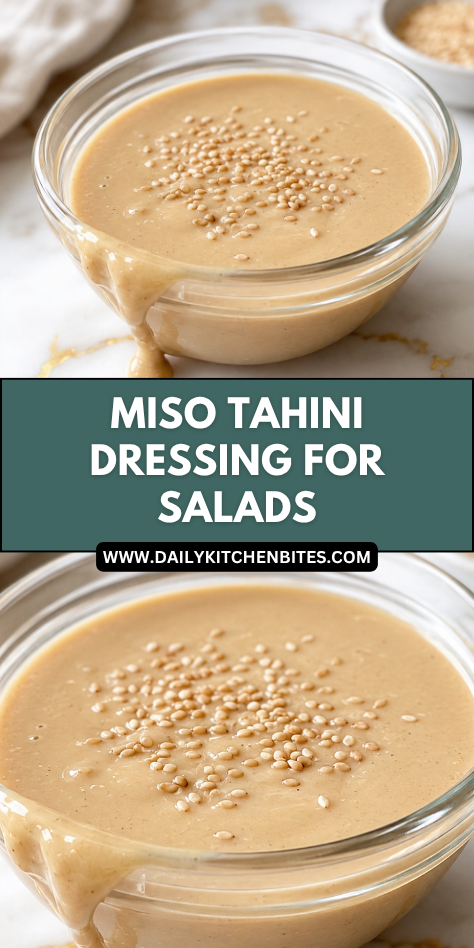
I make Miso Tahini Dressing when I want a sauce that can pull a simple meal together in just a few minutes. It is creamy, savory, lightly nutty, and bright enough to make vegetables, grain bowls, noodles, and salads taste more complete.
This is one of those recipes I like to keep in the refrigerator because it makes everyday food feel a little more thoughtful. A spoonful can turn roasted broccoli, leftover chicken, rice, or raw cucumbers into something that tastes fresh, balanced, and comforting.
Why You’ll Love This Recipe
Miso Tahini Dressing is rich and creamy without needing mayonnaise or heavy cream. The tahini gives it a smooth sesame flavor, while the miso adds a deep savory taste that makes the dressing feel satisfying.
It is also very quick to make because everything gets whisked together in one bowl or shaken in a jar. You can make it thicker for dipping, thinner for salads, or somewhere in the middle for drizzling over bowls and roasted vegetables.
This dressing is family-friendly because the flavor is bold but not too spicy. Kids can use it as a dip for carrots or cucumbers, while adults can drizzle it over greens, noodles, tofu, salmon, rice bowls, or meal prep lunches.
Serves: 8 people
This recipe makes about 1 cup of dressing, which serves around 8 people if each person uses 2 tablespoons. That amount is perfect for several salads, a tray of roasted vegetables, or a few meal prep bowls during the week.
If your family loves sauces and dips, you may want to double the recipe. It stores well in the refrigerator, and the thickness can be adjusted with a little warm water whenever you are ready to use it.
Ingredients You’ll Need
- 1/3 cup tahini
- 2 tablespoons white miso paste
- 3 tablespoons fresh lemon juice
- 1 tablespoon rice vinegar
- 1 tablespoon low-sodium soy sauce or tamari
- 1 tablespoon maple syrup or honey
- 1 teaspoon toasted sesame oil
- 1 small garlic clove, finely grated or minced
- 1 teaspoon fresh ginger, finely grated
- 1/4 teaspoon black pepper
- 1/8 teaspoon fine sea salt, optional and only if needed
- 3 to 5 tablespoons warm water, plus more as needed
- 1 teaspoon lemon zest, optional
- 1/4 teaspoon red pepper flakes, optional
- 1 tablespoon chopped fresh cilantro or parsley, optional
Pro Tips
Use smooth, runny tahini for the best texture. If your tahini is very thick or dry at the bottom of the jar, stir it well before measuring so the dressing blends evenly.
Start with less water and add more slowly. Tahini changes texture as it mixes with liquid, and adding the water gradually helps you control whether the dressing is thick, creamy, or pourable.
Choose white miso for a mellow, family-friendly flavor. It is slightly sweet and mild, which works well with lemon, sesame, and maple syrup without tasting too salty.
Taste before adding extra salt. Miso and soy sauce already bring plenty of saltiness, so you may not need the added fine sea salt at all.
Use fresh lemon juice instead of bottled juice. The fresh citrus brightens the tahini and miso, keeping the dressing from tasting too heavy.
Let the dressing rest for 10 minutes before serving if you have time. This gives the garlic, ginger, miso, and lemon a chance to settle together into a smoother flavor.
Tools You’ll Need
- Medium mixing bowl
- Whisk
- Measuring cups
- Measuring spoons
- Microplane or small grater
- Citrus juicer
- Small spoon or spatula
- Glass jar with lid, optional for storage
- Blender or small food processor, optional
- Airtight container for leftovers
Substitutions and Variations
Make It Gluten-Free
Use tamari instead of soy sauce and check that your miso paste is gluten-free. Some miso is made with barley, so reading the label is the safest way to keep the dressing gluten-free.
Make It Vegan
Use maple syrup instead of honey. It adds a gentle sweetness that balances the salty miso and nutty tahini while keeping the dressing completely plant-based.
Add More Heat
Stir in red pepper flakes, chili crisp, sriracha, or a small spoonful of gochujang. Start with a little so the heat supports the creamy dressing instead of taking over.
Make It Creamier
Blend the dressing in a small food processor or blender instead of whisking by hand. This makes the garlic and ginger extra smooth and gives the dressing a silky texture.
Turn It Into a Dip
Use less water so the dressing stays thick and scoopable. Serve it with cucumbers, carrots, bell peppers, snap peas, pita chips, roasted potatoes, or grilled chicken for an easy snack or appetizer.
Make Ahead Tips
Miso Tahini Dressing is one of my favorite sauces to make ahead because it keeps well and makes simple meals easier all week. You can whisk it together in a few minutes, store it in the refrigerator, and use it whenever a bowl, salad, wrap, or plate of vegetables needs more flavor.
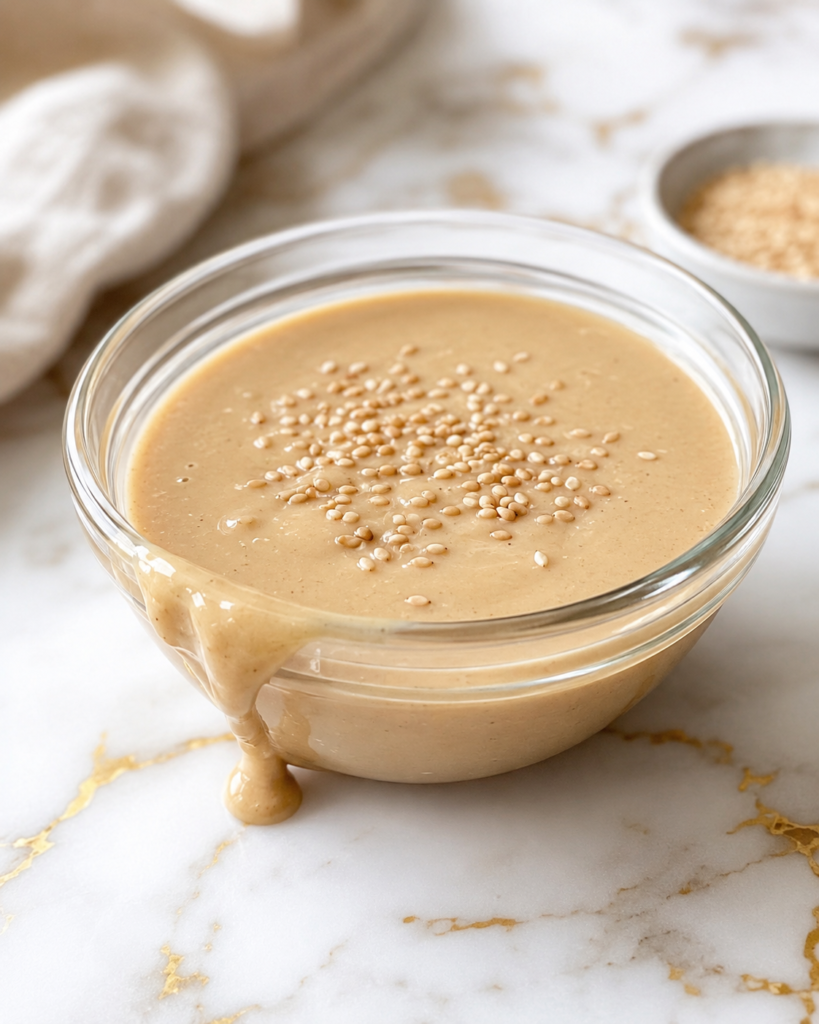
The dressing can be made up to 5 days ahead and stored in a clean glass jar or airtight container. It will thicken as it chills because tahini becomes firmer in the refrigerator, so do not worry if it looks less pourable the next day.
To loosen it, stir in 1 teaspoon of warm water at a time until it reaches the texture you want. For salads, make it thinner and pourable. For dipping vegetables or spreading on sandwiches, keep it thicker and creamy.
If you are making it for meal prep, I recommend storing the dressing separately from greens, grains, and vegetables. This keeps salads crisp and lets everyone add as much dressing as they like. Give the jar a good shake or stir before each use so the miso, tahini, lemon, and sesame oil blend back together smoothly.
Instructions
Step 1: Stir the Tahini
Open the tahini jar and stir it well before measuring. Tahini can separate as it sits, with oil rising to the top and thicker paste settling at the bottom.
Once it looks smooth and pourable, measure 1/3 cup into a medium mixing bowl. Starting with well-mixed tahini helps the dressing become creamy instead of gritty or oily.
Step 2: Add the Miso
Add 2 tablespoons white miso paste to the bowl with the tahini. Use a spoon or small spatula to press the miso into the tahini before whisking.
This helps break up the miso so it blends more evenly. The mixture will look thick at first, but it will loosen once the lemon juice, vinegar, and water are added.
Step 3: Add the Citrus and Vinegar
Pour in the fresh lemon juice and rice vinegar. Whisk slowly at first so the tahini does not splash out of the bowl.
The mixture may tighten and look thicker for a moment, which is normal. Tahini often thickens when it first meets acidic liquid, but it will smooth out as you continue adding liquid.
Step 4: Add Soy Sauce, Sweetener, and Sesame Oil
Whisk in the low-sodium soy sauce or tamari, maple syrup or honey, and toasted sesame oil. These ingredients help balance the dressing with salty, sweet, nutty, and savory flavor.
Keep whisking until the dressing looks smooth and glossy. If it still looks a little stiff, that is fine because the warm water will fix the texture in the next step.
Step 5: Add Garlic, Ginger, and Seasoning
Add the finely grated garlic, finely grated fresh ginger, black pepper, lemon zest if using, and red pepper flakes if using. Whisk until everything is evenly mixed.
Taste before adding the optional fine sea salt. Miso and soy sauce are already salty, so you may not need any extra salt at all.
Step 6: Thin with Warm Water
Add 3 tablespoons warm water, 1 tablespoon at a time, whisking well after each addition. The dressing should slowly turn creamy, smooth, and lighter in color.
For a thicker dip, stop at 3 tablespoons water. For a pourable salad dressing, add 4 to 5 tablespoons or a little more until it drizzles easily from a spoon.
Step 7: Taste and Adjust
Taste the dressing and adjust gently. Add a little more lemon juice if it needs brightness, a tiny bit more maple syrup or honey if it tastes too sharp, or more warm water if it feels too thick.
The finished dressing should taste creamy, savory, lightly tangy, and balanced. The miso should be noticeable but not overpowering.
Step 8: Rest the Dressing
Let the dressing sit for about 10 minutes before serving if you have time. This gives the garlic, ginger, lemon, miso, and tahini a chance to settle together.
After resting, stir it again and check the texture. If it has thickened, add another small splash of warm water.
Step 9: Serve or Store
Use the dressing right away, or transfer it to a clean jar with a lid. If serving immediately, drizzle it over salads, grain bowls, roasted vegetables, noodles, or grilled protein.
If storing, keep it covered in the refrigerator. Shake or stir well before using, and thin with warm water as needed.
Serving Suggestions
Miso Tahini Dressing is wonderful over simple green salads because it gives the leaves more body and flavor. I like it with romaine, baby spinach, arugula, shredded cabbage, cucumbers, carrots, and avocado.
It is also a great sauce for grain bowls. Spoon it over rice, quinoa, farro, or cauliflower rice with roasted vegetables, chickpeas, tofu, salmon, chicken, or a soft-boiled egg.
For a quick family snack, serve it as a dip with crisp vegetables. Carrot sticks, cucumber slices, bell peppers, snap peas, broccoli florets, and radishes all taste great with the creamy sesame flavor.
This dressing works beautifully with roasted vegetables, especially broccoli, cauliflower, sweet potatoes, carrots, eggplant, and Brussels sprouts. The savory miso flavor makes simple vegetables taste richer and more satisfying.
You can also toss it with noodles for an easy lunch. Thin the dressing with a little warm water, then mix it with soba noodles, rice noodles, shredded chicken, edamame, cucumbers, and green onions.
For sandwiches and wraps, keep the dressing thicker and use it as a spread. It adds creamy flavor to turkey wraps, veggie sandwiches, tofu pitas, and chicken lettuce cups.
Leftovers and Storage
Store leftover Miso Tahini Dressing in an airtight container or glass jar in the refrigerator for up to 5 days. The flavor may become a little deeper as it sits, especially from the garlic, ginger, and miso.
The dressing will thicken after chilling, which is completely normal. Stir it well, then add warm water 1 teaspoon at a time until it becomes creamy and pourable again.
If the dressing separates slightly, shake the jar or whisk it in a small bowl. Tahini-based dressings come back together easily with a little stirring.
Do not freeze this dressing. Tahini can become grainy after freezing and thawing, and the texture may not return to its smooth, creamy state.
If you are using it for meal prep, store the dressing separately from salads, noodles, and cooked vegetables. Add it right before eating so your greens stay crisp and your bowls do not become soggy.
Always use a clean spoon when scooping from the jar. This helps keep the dressing fresh for the full storage time.
Nutrition and Benefits
- Tahini adds creaminess, plant-based fats, and a rich sesame flavor. It helps make the dressing satisfying without needing mayonnaise or cream.
- Miso brings deep savory flavor in a small amount. Because it is so flavorful, it helps simple vegetables, grains, and proteins taste more complete.
- Lemon juice, rice vinegar, garlic, and ginger add brightness and warmth. These ingredients keep the dressing from feeling too heavy.
- This dressing can help make vegetables more appealing for family meals. A creamy drizzle or dip can make cucumbers, carrots, broccoli, cabbage, and roasted vegetables easier to enjoy.
- The recipe is flexible for different eating styles. It can be made vegan with maple syrup, gluten-free with tamari, and thicker or thinner depending on how you want to serve it.
Recipe FAQ
Can I make Miso Tahini Dressing without soy sauce?
Yes, you can leave out the soy sauce and use a little extra miso or a pinch of salt instead. The flavor will be slightly less deep, but it will still taste creamy and savory. Coconut aminos can also work if you want a milder, slightly sweeter option.
What kind of miso should I use?
White miso is the best choice for this dressing because it is mild, smooth, and slightly sweet. It blends well with tahini, lemon, and maple syrup. Yellow miso can also work, but red miso may taste stronger and saltier.
Why did my tahini dressing get thick?
Tahini naturally thickens when mixed with lemon juice, vinegar, and cold temperatures. This is normal and easy to fix. Whisk in warm water a little at a time until the dressing becomes smooth and pourable again.
Can I make this dressing in a blender?
Yes, a blender or small food processor works very well. It makes the garlic and ginger extra smooth and gives the dressing a silky texture. You may need to scrape down the sides once or twice while blending.
Is this dressing vegan?
It is vegan if you use maple syrup instead of honey. The rest of the ingredients are plant-based as long as your miso and soy sauce do not include any unexpected additives. Always check labels if this is important for your household.
How can I make it less salty?
Use low-sodium soy sauce or tamari, and do not add the optional sea salt. You can also add more tahini, lemon juice, or warm water to soften the salty flavor. A small extra drizzle of maple syrup can help balance it too.
What can I use this dressing on?
Use it on salads, rice bowls, roasted vegetables, noodles, wraps, sandwiches, tofu, chicken, fish, or grain bowls. It also works as a dip for raw vegetables. Keep it thick for dipping or thin it with warm water for drizzling.
A Creamy Everyday Dressing That Makes Meals Easier
Miso Tahini Dressing is the kind of simple homemade sauce that makes everyday food feel more comforting and complete. The creamy tahini, savory miso, fresh lemon, garlic, and ginger come together quickly, giving you a dependable dressing for salads, bowls, vegetables, and easy lunches.
It is worth making again because it keeps well, adjusts easily, and fits so many family meals. Keep it thick for dipping, thin it for drizzling, or spoon it over leftovers to make them taste fresh and satisfying.