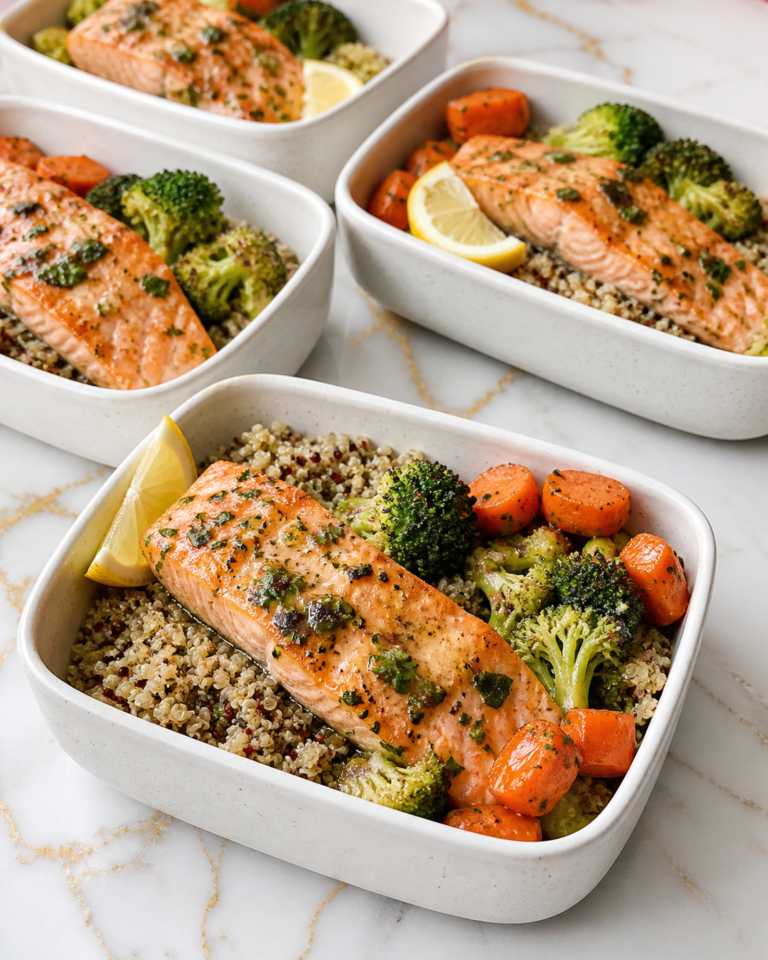
I make Paleo Salmon with Mango Avocado Salsa when I want a dinner that feels fresh, colorful, and simple without losing that satisfying homemade feeling. The salmon cooks up tender and flaky, while the mango avocado salsa adds sweet, creamy, and bright flavors that make the whole plate feel balanced.
This is one of those meals I like for busy weeknights, warm-weather dinners, or meal prep when I want something nourishing but not heavy.
It comes together with real ingredients, a quick seasoning blend, and a fresh salsa that makes the salmon taste special without needing a complicated sauce.
Why You’ll Love This Recipe
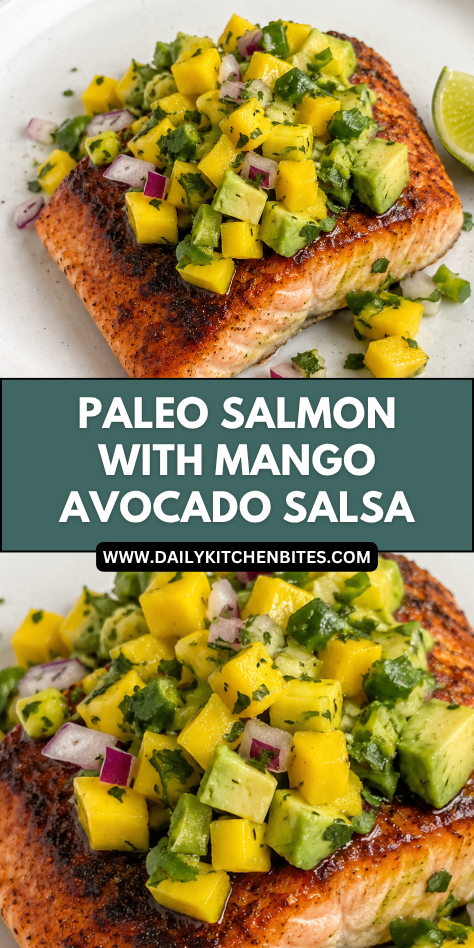
Paleo Salmon with Mango Avocado Salsa is fresh, flavorful, and easy to make with simple whole-food ingredients. The salmon brings rich, savory flavor, while the salsa adds juicy mango, creamy avocado, crisp onion, fresh herbs, and lime.
This recipe is also naturally dairy-free, gluten-free, and grain-free, which makes it a helpful option for many family meals. It feels light and clean, but still filling enough to serve as a full dinner with vegetables, cauliflower rice, or a simple salad.
The best part is how quickly it comes together. The salmon cooks in minutes, and the salsa only needs chopping and gentle mixing, so you can have a bright, dependable meal without spending much time in the kitchen.
Serves: 4 people
This recipe serves 4 people with one salmon fillet per person and a generous spoonful of mango avocado salsa on top. It is a nice portion for a family dinner, especially when served with roasted vegetables, greens, or cauliflower rice.
If you are serving younger children, one fillet can often be split into smaller portions. For bigger appetites, add an extra side or use larger salmon fillets so the meal feels more filling.
Ingredients You’ll Need
For the Salmon
- 4 salmon fillets, about 5 to 6 ounces each
- 1 tablespoon avocado oil or olive oil
- 1 tablespoon fresh lime juice
- 1 teaspoon lime zest
- 1 teaspoon garlic powder
- 1 teaspoon smoked paprika
- 1/2 teaspoon ground cumin
- 1/2 teaspoon kosher salt
- 1/4 teaspoon black pepper
- 1/4 teaspoon chili powder, optional
- 1 tablespoon chopped fresh cilantro, for serving
- Lime wedges, for serving
For the Mango Avocado Salsa
- 1 large ripe mango, peeled and diced
- 1 large ripe avocado, diced
- 1/2 cup red bell pepper, finely diced
- 1/4 cup red onion, finely diced
- 1 small jalapeño, seeds removed and finely minced, optional
- 2 tablespoons fresh cilantro, chopped
- 1 tablespoon fresh mint, chopped, optional
- 2 tablespoons fresh lime juice
- 1 teaspoon lime zest
- 1 tablespoon extra virgin olive oil
- 1/4 teaspoon kosher salt
- 1/8 teaspoon black pepper
For Serving
- 4 cups cauliflower rice, cooked
- 4 cups mixed greens, optional
- 2 cups roasted broccoli, asparagus, or zucchini, optional
- Extra lime wedges
- Extra chopped cilantro
Pro Tips
Choose salmon fillets that are close to the same thickness. This helps them cook evenly, so one piece does not dry out while another is still undercooked in the center.
Pat the salmon dry before adding oil and seasoning. Removing extra moisture helps the seasoning stick and gives the salmon a better texture when it cooks.
Use ripe mango that is sweet but still firm. If the mango is too soft, it can turn mushy in the salsa and make the mixture watery.
Add the avocado to the salsa gently and close to serving time. Avocado is soft and can break down if stirred too much, so a light fold keeps the salsa chunky and fresh.
Keep the jalapeño optional if you are serving kids or spice-sensitive eaters. You can also set minced jalapeño on the side so adults can add it to their own plates.
Do not overcook the salmon. It should flake easily with a fork and look moist in the center, not dry or chalky.
Let the salmon rest for a few minutes before topping it with salsa. This helps the juices settle and keeps the warm fish from softening the avocado too quickly.
Taste the salsa before serving. A little extra lime juice or salt can make the mango, avocado, and herbs taste brighter and more balanced.
Tools You’ll Need
- Large skillet, grill pan, or baking sheet
- Cutting board
- Sharp knife
- Measuring spoons
- Measuring cups
- Microplane or small grater
- Citrus juicer
- Small mixing bowl
- Medium mixing bowl
- Spoon or rubber spatula
- Fish spatula or tongs
- Instant-read thermometer, optional
- Serving plates or shallow bowls
Substitutions and Variations
Use Another Fish
Use cod, halibut, mahi mahi, trout, or sea bass instead of salmon. Choose fillets that are similar in thickness, and check them early because lean white fish may cook faster.
Make It Milder
Skip the jalapeño and chili powder for a gentler flavor. The lime, mango, avocado, and herbs will still make the dish bright and flavorful without adding heat.
Change the Fruit
Use pineapple, peaches, nectarines, or strawberries instead of mango. Choose fruit that is sweet, fresh, and firm enough to hold its shape in the salsa.
Add More Crunch
Stir diced cucumber, jicama, or extra bell pepper into the salsa. These add a crisp texture that balances the soft avocado and flaky salmon.
Make It Heartier
Serve the salmon and salsa over cauliflower rice with roasted vegetables or a big green salad. For family members who are not eating paleo, you can offer regular rice or warm tortillas on the side while keeping the main recipe the same.
Make Ahead Tips
Paleo Salmon with Mango Avocado Salsa is best when the salmon is cooked fresh and the salsa is added right before serving. You can still prepare several parts ahead so dinner feels quick and easy when it is time to cook.
The spice mixture for the salmon can be measured and mixed up to 1 week ahead. Store it in a small jar or container, then sprinkle it over the salmon when you are ready to cook.
You can also chop the red bell pepper, red onion, jalapeño, cilantro, and mint several hours ahead. Keep them covered in the refrigerator until you are ready to mix the salsa.
The mango can be diced earlier in the day, but the avocado should be cut close to serving time. This keeps it green, creamy, and fresh instead of brown or mushy.
If you are meal prepping, cook the salmon and store the salsa ingredients separately. Add the avocado and lime juice when you are ready to eat so the salsa tastes bright and fresh.
Instructions
Step 1: Prepare the Salmon
Pat the salmon fillets dry with paper towels. Place them on a plate or shallow dish so they are ready for seasoning.
Drizzle the salmon with avocado oil or olive oil and fresh lime juice. Rub the oil and lime juice gently over the tops and sides of each fillet.
Step 2: Season the Salmon
In a small bowl, stir together the lime zest, garlic powder, smoked paprika, ground cumin, kosher salt, black pepper, and chili powder if using. Sprinkle the seasoning evenly over the salmon.
Press the seasoning lightly onto the fish so it sticks. Let the salmon sit for 5 to 10 minutes while you prepare the salsa ingredients.
Step 3: Dice the Mango
Peel the mango and cut the fruit away from the pit. Dice it into small pieces that are easy to spoon over the salmon.
Add the diced mango to a medium mixing bowl. Try to keep the pieces even so the salsa has a nice texture in every bite.
Step 4: Prepare the Avocado
Cut the avocado in half and remove the pit. Scoop the flesh from the peel and dice it into pieces close in size to the mango.
Set the avocado aside for a moment. It is best to fold it into the salsa gently at the end so it keeps its shape.
Step 5: Mix the Salsa
Add the diced red bell pepper, red onion, jalapeño if using, cilantro, mint if using, lime juice, lime zest, olive oil, kosher salt, and black pepper to the bowl with the mango. Stir gently until everything is lightly coated.
Fold in the diced avocado last. Taste the salsa and add a little more lime juice or salt if it needs a brighter flavor.
Step 6: Heat the Pan
Place a large skillet or grill pan over medium heat. Let it warm for a minute or two before adding the salmon.
If your skillet is not nonstick, add a small drizzle of avocado oil. The pan should be hot enough to lightly sizzle when the salmon touches it.
Step 7: Cook the Salmon
Place the salmon fillets in the skillet, skin-side down if they have skin. Cook for 4 to 5 minutes on the first side without moving them too much.
Carefully flip the salmon and cook for another 3 to 5 minutes, depending on thickness. The salmon should flake easily with a fork and stay moist in the center.
Step 8: Check for Doneness
Use a fork to gently test the thickest part of the salmon. It should separate into soft flakes and look tender, not dry.
For a temperature check, salmon is medium around 125°F to 130°F and fully cooked at 145°F. Choose the doneness your family prefers.
Step 9: Rest the Salmon
Transfer the cooked salmon to a plate and let it rest for 3 to 5 minutes. This helps the juices settle and keeps the fish tender.
Do not add the salsa while the salmon is still very hot. Waiting a few minutes helps the avocado stay fresh and creamy.
Step 10: Add Salsa and Serve
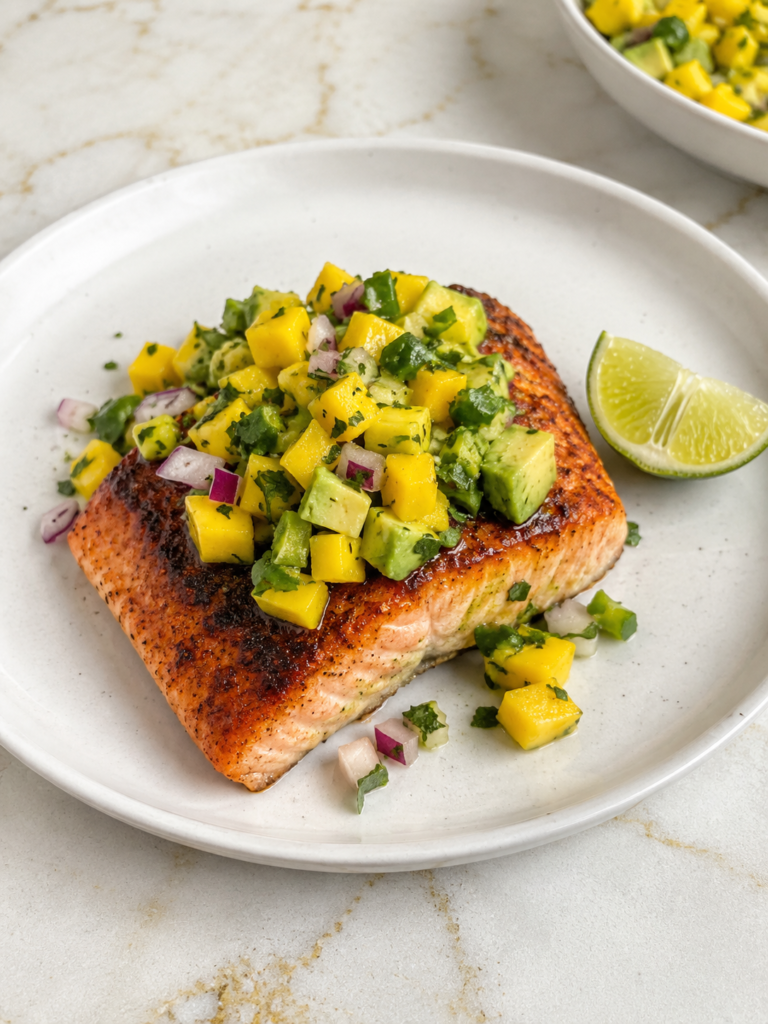
Spoon the mango avocado salsa generously over each salmon fillet. Sprinkle with extra chopped cilantro if desired.
Serve with lime wedges, cooked cauliflower rice, mixed greens, or roasted vegetables. The finished plate should be colorful, fresh, and full of sweet, savory, and creamy flavor.
Serving Suggestions
Paleo Salmon with Mango Avocado Salsa is delicious over warm cauliflower rice. The cauliflower rice keeps the meal grain-free while soaking up the lime juice and salmon juices.
A simple green salad also works well on the side. Use mixed greens, cucumber, carrots, and a light olive oil and lime dressing to keep the plate fresh.
Roasted vegetables make the meal feel more filling. Broccoli, asparagus, zucchini, green beans, or sweet potatoes all pair nicely with the salmon and salsa.
For a lighter dinner, serve the salmon over lettuce with extra mango avocado salsa. This turns it into a bright salmon salad that feels cool and refreshing.
If your family includes people who are not eating paleo, you can offer regular rice, quinoa, or warm tortillas on the side. The salmon and salsa stay the same, but everyone can build a plate that works for them.
This salmon is also great for lunch bowls. Add cauliflower rice, greens, leftover roasted vegetables, and a spoonful of salsa for a quick meal the next day.
Leftovers and Storage
Store leftover salmon in an airtight container in the refrigerator for up to 3 days. Let it cool before covering, but do not leave it sitting out at room temperature for too long.
Store the mango avocado salsa separately if possible. The mango, onion, pepper, and herbs will hold well, but the avocado may brown and soften after a day.
To keep the salsa fresher, press a piece of plastic wrap directly against the surface before covering the container. A little extra lime juice can also help slow browning.
Reheat the salmon gently in a skillet over low heat or in the microwave at short intervals. Avoid high heat because salmon can dry out quickly once it has already been cooked.
You can also enjoy leftover salmon cold. Flake it over salad, tuck it into lettuce cups, or serve it with chilled cauliflower rice and extra lime.
Freezing is not ideal for this full recipe because the salsa does not thaw well. If needed, freeze only the cooked salmon for up to 2 months, then make a fresh salsa when serving.
Nutrition and Benefits
- Salmon is rich in protein and healthy fats, including omega-3 fatty acids. It helps make this meal filling while still feeling fresh and light.
- Mango adds natural sweetness, vitamin C, and bright color. It balances the savory salmon and makes the meal feel more refreshing.
- Avocado adds creaminess, fiber, and healthy fats. It gives the salsa a soft texture that pairs beautifully with flaky fish.
- Lime juice, cilantro, mint, onion, and bell pepper bring freshness without needing a heavy sauce. These ingredients help keep the recipe clean, bright, and family-friendly.
- This recipe is naturally grain-free, gluten-free, and dairy-free. It is easy to serve with paleo sides like cauliflower rice, greens, and roasted vegetables.
Recipe FAQ
Can I bake the salmon instead of pan-searing it?
Yes, you can bake the salmon at 400°F for 10 to 14 minutes, depending on thickness. Place the seasoned fillets on a lined baking sheet and cook until they flake easily. Let them rest before adding the mango avocado salsa.
Can I grill the salmon?
Yes, grilled salmon works very well with this salsa. Brush the grates with oil and grill the salmon over medium heat for about 4 to 5 minutes per side. Be gentle when flipping so the fillets stay together.
How do I keep avocado from browning in the salsa?
Add fresh lime juice and fold the avocado in close to serving time. Store leftovers with plastic wrap pressed directly against the salsa. The avocado may still darken a little, but it will stay fresher longer.
Can I use frozen salmon?
Yes, frozen salmon works if it is fully thawed first. Pat it very dry before seasoning so it cooks well and does not release too much water. Thaw it overnight in the refrigerator for the best texture.
Is this recipe spicy?
It can be mild or spicy depending on whether you use jalapeño and chili powder. For a kid-friendly version, leave both out. Adults can add jalapeño, hot sauce, or extra chili powder to their own plates.
What can I use instead of mango?
Pineapple, peaches, nectarines, or strawberries can all work in the salsa. Choose fruit that is ripe but still firm enough to dice. The goal is a sweet, juicy flavor that balances the salmon.
What sides go best with this paleo salmon?
Cauliflower rice, roasted vegetables, mixed greens, cucumber salad, or sweet potatoes all work well. These sides keep the meal fresh and nourishing. They also let the mango avocado salsa stay the bright center of the plate.
A Fresh Salmon Dinner with Bright Family Flavor
Paleo Salmon with Mango Avocado Salsa is an easy meal that feels colorful, nourishing, and dependable. The salmon cooks quickly, the salsa comes together with simple chopping, and the mix of sweet mango, creamy avocado, lime, and herbs makes every plate feel fresh.
It is worth making again because it fits busy nights, meal prep, and warm family dinners without much effort. Serve it with cauliflower rice, greens, or roasted vegetables for a simple meal that feels light, comforting, and full of flavor.