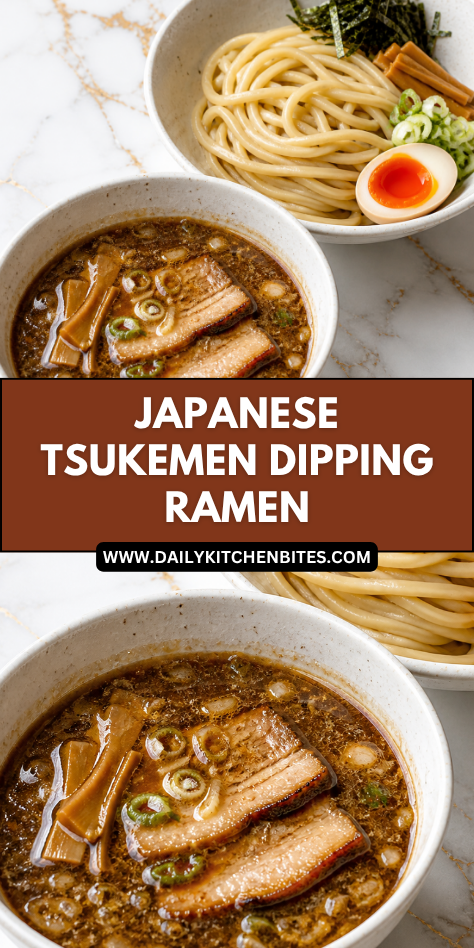
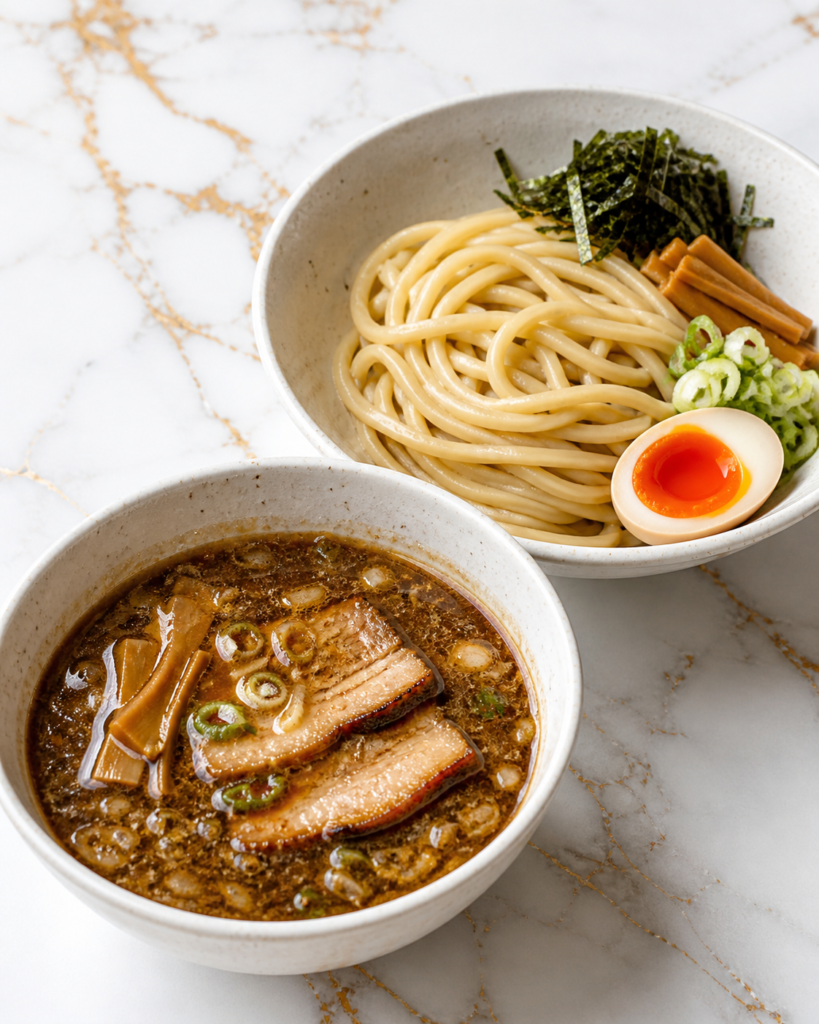
I make Japanese tsukemen dipping ramen when I want a noodle meal that feels cozy, fun, and a little different from a regular bowl of ramen. The noodles are served separately from the broth, then dipped into a rich, savory sauce before each bite.
This is the kind of recipe I like for a slow weekend lunch or a family dinner where everyone can enjoy the meal at their own pace.
The cold or room-temperature noodles are chewy and satisfying, while the warm dipping broth is bold, salty, slightly sweet, and full of umami flavor. I love how simple toppings like soft-boiled eggs, green onions, nori, and sliced pork make the whole meal feel special.
Why You’ll Love This Recipe
Japanese tsukemen dipping ramen is comforting, flavorful, and fun to eat. Instead of serving noodles in a large bowl of soup, you dip the noodles into a concentrated broth that clings to every strand. This makes each bite taste rich, savory, and deeply satisfying without needing a huge pot of soup.
This recipe is also easy to adjust for your family. You can make the broth lighter or stronger, add spice, use chicken instead of pork, or keep the toppings simple for kids. The dipping style makes dinner feel interactive, which can help make noodle night more exciting.
Another reason I love tsukemen is the texture. The noodles are rinsed after cooking, which makes them chewy and springy instead of soft. Paired with a warm, flavorful dipping broth, tender meat, jammy eggs, and crunchy toppings, it becomes a meal that feels both comforting and fresh.
Serves: 4 people
This recipe serves 4 people with a generous portion of noodles and dipping broth for each bowl. If you are serving younger kids, you can divide the noodles into smaller portions and keep the toppings simple. For bigger appetites, add extra noodles, more sliced pork or chicken, and a few simple sides like edamame or cucumber salad.
Ingredients You’ll Need
For the Dipping Broth
- 1 tablespoon sesame oil
- 2 teaspoons neutral oil, such as avocado oil or vegetable oil
- 3 garlic cloves, minced
- 1 tablespoon fresh ginger, grated
- 2 tablespoons white miso paste
- 2 tablespoons soy sauce
- 1 tablespoon mirin
- 1 tablespoon rice vinegar
- 1 teaspoon brown sugar
- 4 cups chicken broth or pork broth
- 1 cup water
- 1 tablespoon oyster sauce, optional
- 1 teaspoon fish sauce, optional
- 1/2 teaspoon chili garlic sauce or chili oil, optional
- 1/4 teaspoon black pepper
- 1 sheet kombu, about 3 inches, optional
- 1/2 cup bonito flakes, optional
For the Noodles
- 16 ounces fresh ramen noodles or thick wheat noodles
- 8 cups water, for boiling
- 1 teaspoon salt
For the Toppings
- 4 soft-boiled eggs, peeled and halved
- 8 ounces cooked pork belly, chashu, shredded chicken, or tofu
- 2 green onions, thinly sliced
- 1 cup bean sprouts, blanched
- 1/2 cup corn kernels, warmed
- 1 sheet nori, cut into strips
- 1 tablespoon toasted sesame seeds
- 1 tablespoon chili oil, optional
- 1/2 cup bamboo shoots, optional
- 1/2 cup sliced mushrooms, sautéed, optional
For Serving
- 1 lime or lemon, cut into wedges
- Extra soy sauce, to taste
- Extra chili oil, for adults who like heat
- Ice water, for rinsing noodles
Pro Tips
Use fresh ramen noodles if you can find them. They have a springy, chewy texture that works especially well for tsukemen because the noodles are meant to be dipped instead of sitting in broth.
Make the dipping broth stronger than regular soup. Tsukemen broth should taste bold because the noodles are dipped into it, not fully soaked in it.
Rinse the noodles well after boiling. This removes extra starch and helps the noodles become firm, glossy, and chewy.
Serve the broth hot and the noodles cool or room temperature. The contrast is part of what makes tsukemen so satisfying.
Keep toppings simple if you are cooking for kids. Soft-boiled eggs, corn, green onions, chicken, and nori are easy, familiar choices.
Add chili oil at the table instead of directly to the pot. This lets each person control the heat and keeps the main broth family-friendly.
Tools You’ll Need
- Large pot for boiling noodles
- Medium saucepan for broth
- Cutting board
- Sharp knife
- Measuring cups
- Measuring spoons
- Wooden spoon or silicone spatula
- Microplane or grater for ginger
- Fine mesh strainer
- Tongs or chopsticks
- Mixing bowl for ice water
- Ladle
- Serving bowls
- Small bowls for dipping broth
- Timer
Substitutions and Variations
Use Chicken Instead of Pork
Shredded rotisserie chicken, grilled chicken thighs, or leftover roasted chicken all work well. Chicken makes the meal lighter while still pairing nicely with the savory dipping broth.
Make It Vegetarian
Use vegetable broth, skip the bonito flakes, fish sauce, and oyster sauce, and add sautéed mushrooms or tofu. Miso, soy sauce, kombu, and mushrooms still give the broth a deep, savory flavor.
Add More Heat
Stir chili garlic sauce, chili crisp, or chili oil into individual bowls of dipping broth. This keeps the main recipe mild while letting spice lovers make their serving bolder.
Try Different Noodles
Use udon, soba, or thick wheat noodles if fresh ramen noodles are not available. The texture will be different, but the dipping style and savory broth still make the meal delicious.
Make It Heartier
Add extra chashu, shredded chicken, tofu, mushrooms, corn, bamboo shoots, or a second soft-boiled egg. These toppings turn the noodles and broth into a more filling family dinner.
Make Ahead Tips
Japanese tsukemen dipping ramen works well when some parts are made ahead, especially the broth and toppings. You can prepare the dipping broth up to 2 days in advance and store it in an airtight container in the refrigerator. The flavor often gets deeper as it rests, which makes the final meal even more satisfying.
Soft-boiled eggs, cooked pork, shredded chicken, tofu, blanched bean sprouts, corn, mushrooms, and bamboo shoots can also be prepared ahead. Keep each topping in a separate container so the textures stay fresh. Warm the broth and any cooked toppings right before serving, while keeping the noodles freshly cooked for the best chewy texture.
I do not recommend cooking the ramen noodles too far ahead. Once they sit for a long time, they can clump together or lose their springy bite. If you need to prep quickly, have a pot of water ready, toppings sliced, and broth simmering so the noodles can be cooked right before everyone eats.
Instructions
Step 1: Start the Dipping Broth
Heat the sesame oil and neutral oil in a medium saucepan over medium heat. Add the minced garlic and grated ginger, then cook for 30 to 60 seconds until fragrant. Stir often so the garlic does not burn.
Step 2: Add Miso and Seasonings
Add the white miso paste, soy sauce, mirin, rice vinegar, brown sugar, oyster sauce if using, fish sauce if using, chili garlic sauce or chili oil if using, and black pepper. Stir until the miso loosens and blends with the aromatics. The mixture should smell savory, warm, and slightly sweet.
Step 3: Simmer the Broth
Pour in the chicken broth or pork broth and water. Add the kombu if using, then bring the broth to a gentle simmer. Let it cook for 10 to 15 minutes so the flavors can come together.
Step 4: Add Bonito and Strain
Turn off the heat and add the bonito flakes if using. Let them steep for 3 to 5 minutes, then strain the broth through a fine mesh strainer into a clean saucepan or heat-safe bowl. Discard the solids and keep the broth warm over low heat.
Step 5: Prepare the Toppings
Halve the soft-boiled eggs, slice the pork belly or chashu, shred the chicken, or cut tofu into pieces. Warm the corn, blanch the bean sprouts, sauté the mushrooms if using, and slice the green onions. Cut the nori into strips and set out sesame seeds, bamboo shoots, lime or lemon wedges, and chili oil.
Step 6: Cook the Noodles
Bring 8 cups water to a boil in a large pot and add 1 teaspoon salt. Add the fresh ramen noodles or thick wheat noodles and cook according to the package directions, usually 2 to 4 minutes for fresh noodles. Stir gently while they cook so they do not stick together.
Step 7: Rinse and Chill the Noodles
Drain the noodles and rinse them well under cold running water. Use your hands or tongs to gently loosen the strands and wash away extra starch. For extra firm noodles, place them briefly in ice water, then drain very well.
Step 8: Portion the Broth and Noodles
Divide the hot dipping broth among 4 small bowls. Place the chilled or room-temperature noodles in separate serving bowls. Keep the broth portions smaller and stronger than regular ramen soup because the noodles will be dipped into it.
Step 9: Add Toppings
Arrange the soft-boiled eggs, pork, chicken, tofu, bean sprouts, corn, nori, green onions, sesame seeds, bamboo shoots, and mushrooms over or beside the noodles. Add lime or lemon wedges on the side. Serve chili oil separately so each person can control the heat.
Step 10: Serve and Dip
To eat, pick up a small amount of noodles and dip them into the hot broth before each bite. Add toppings between bites or dip them into the broth too. If the broth becomes too strong near the end, add a splash of hot water or extra broth to soften it.
Serving Suggestions
Japanese tsukemen dipping ramen is filling on its own, but it is lovely with a few simple sides. Steamed edamame with a pinch of salt makes an easy starter that feels light and family-friendly.
A cucumber salad also pairs well with the bold dipping broth. Thin cucumbers tossed with rice vinegar, sesame oil, and sesame seeds add a cool crunch beside the chewy noodles.
Gyoza are a cozy side if you want a more complete ramen-shop style meal at home. Pan-fried dumplings add crisp edges and a savory filling that works nicely with the dipping broth.
You can serve the noodles with extra toppings in small bowls so everyone can build their own plate. Corn, eggs, nori, green onions, mushrooms, chicken, tofu, and bean sprouts all make the meal feel fun and flexible.
For kids, serve a smaller portion of broth with mild toppings like corn, egg, chicken, and nori. Keep chili oil, chili crisp, and extra pepper on the side for adults.
Hot tea, sparkling water, or a light citrus drink pairs nicely with tsukemen. The broth is rich and savory, so a clean drink helps balance the meal.
Leftovers and Storage
Store leftover dipping broth in an airtight container in the refrigerator for up to 3 days. Reheat it gently on the stove over medium-low heat until hot, stirring well because some seasonings may settle. Add a splash of water or broth if it tastes too strong after chilling.
Cooked noodles are best eaten fresh, but leftovers can be stored for 1 day in the refrigerator. Toss them with a tiny drizzle of sesame oil to help prevent sticking. To serve, rinse them briefly under cool water to loosen the strands, or warm them quickly if you prefer.
Keep toppings in separate containers whenever possible. Eggs, meat, tofu, vegetables, and nori all store best on their own. Do not freeze assembled tsukemen, because the noodles and toppings can lose their texture, though the broth can be frozen for up to 2 months.
Nutrition and Benefits
- Satisfying noodle meal: Ramen noodles provide a filling base that makes this dish feel hearty and comforting. The dipping style helps each bite taste rich and flavorful.
- Customizable protein: Pork, chicken, tofu, or eggs can all add protein to the meal. This makes it easy to adjust the recipe for different family needs.
- Flavorful broth without a long simmer: Miso, soy sauce, ginger, garlic, broth, and optional bonito flakes create a deep savory taste in a shorter time. The result feels cozy without needing hours on the stove.
- Easy to add vegetables: Bean sprouts, corn, mushrooms, bamboo shoots, green onions, and cucumber sides add color and texture. These toppings make the meal more balanced and fun to eat.
- Flexible spice level: Chili oil or chili garlic sauce can be added at the table. This keeps the main broth mild enough for kids while letting adults add more heat.
Recipe FAQ
What is tsukemen?
Tsukemen is a Japanese dipping ramen dish where noodles and broth are served separately. The noodles are usually cooled or served at room temperature, while the dipping broth is hot and more concentrated than regular ramen soup. You dip the noodles into the broth before eating each bite. This gives the meal a chewy texture and bold flavor.
Can I serve the noodles hot instead of cold?
Yes, you can serve the noodles warm if your family prefers them that way. Traditional tsukemen often uses chilled or room-temperature noodles for a firm, chewy texture. Warm noodles will feel softer and closer to regular ramen. Either way, serve the dipping broth hot.
What noodles are best for tsukemen?
Fresh ramen noodles or thick wheat noodles are best because they have a springy texture. Look for noodles that are slightly thicker than regular ramen if possible. Udon can work for a softer, chewier version, and soba gives a different flavor. Avoid very thin noodles because they may not hold up as well for dipping.
Can I make the broth vegetarian?
Yes, use vegetable broth and skip bonito flakes, fish sauce, and oyster sauce. Add kombu, mushrooms, miso, soy sauce, and a little sesame oil for savory depth. Sautéed mushrooms or tofu make great toppings. The broth will still taste rich and satisfying.
Why is the dipping broth so strong?
Tsukemen broth is meant to be stronger than regular ramen broth because the noodles are dipped into it instead of sitting in it. The concentrated flavor coats the noodles in small amounts. If it tastes too strong for your family, add a little hot water or extra broth. You can adjust each serving bowl separately.
Can I make Japanese tsukemen dipping ramen ahead?
You can make the broth and toppings ahead, but the noodles are best cooked fresh. The broth can be refrigerated for up to 3 days and reheated before serving. Eggs, meat, tofu, and vegetables can also be prepared in advance. Cook, rinse, and drain the noodles right before eating for the best texture.
What toppings go well with tsukemen?
Soft-boiled eggs, chashu pork, shredded chicken, tofu, green onions, nori, corn, bean sprouts, bamboo shoots, and mushrooms all work well. You can keep the toppings simple or set out several choices for a build-your-own meal. Chili oil, sesame seeds, and lime or lemon wedges add extra flavor. Choose toppings that give a mix of soft, crunchy, fresh, and savory bites.
A Cozy Dipping Ramen Night at Home
Japanese tsukemen dipping ramen is a fun, comforting meal that brings rich broth, chewy noodles, and simple toppings together in a fresh way. The dipping style makes each bite flavorful and satisfying, while still letting everyone build a bowl that fits their taste.
I love this recipe for family noodle nights because it feels special without being too hard to prepare. The broth can be made ahead, the toppings are flexible, and the noodles cook quickly. It is a warm, dependable meal worth making again when you want ramen with a little extra joy.