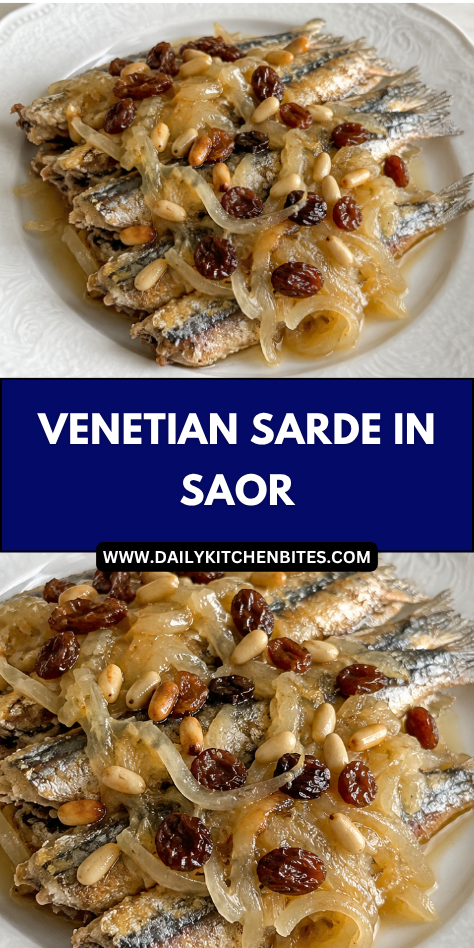
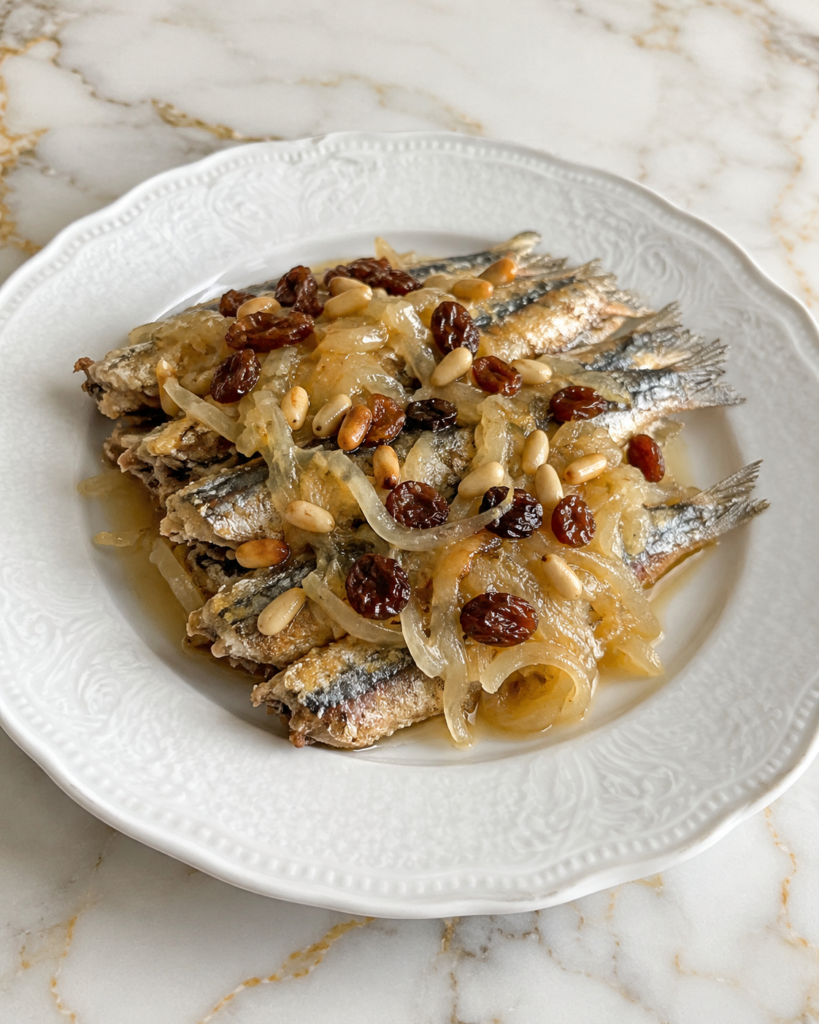
I make Venetian Sarde in Saor when I want a dish that feels simple, old-fashioned, and full of character. It has tender sardines, sweet onions, tangy vinegar, golden raisins, and pine nuts, all layered together so the flavors can rest and soften.
This is a classic Venetian recipe that was made to keep fish flavorful for longer, and I love how practical it still feels today. It is not fussy, but it tastes thoughtful, and it works beautifully as an appetizer, light lunch, or make-ahead dish for sharing.
Why You’ll Love This Recipe
Venetian Sarde in Saor has a wonderful sweet-and-sour flavor that makes it stand out from everyday fish dishes. The sardines are lightly cooked, then layered with soft onions that have been gently simmered with vinegar, raisins, and pine nuts.
It is also a great make-ahead recipe because it is meant to rest before serving. That resting time lets the onions mellow, the vinegar soften, and the fish absorb all the bright, savory flavor.
I love that this dish feels special but uses humble ingredients. Sardines, onions, vinegar, and pantry staples come together in a way that tastes rich, balanced, and deeply comforting.
Serves: 4 people
This recipe serves 4 people as an appetizer or light meal. If you are serving it as part of a larger spread with bread, salad, olives, and cheese, it can stretch to 6 smaller portions.
Ingredients You’ll Need
For the Sardines
- 1 pound fresh sardines, cleaned, butterflied, and patted dry
- ½ cup all-purpose flour
- ½ teaspoon fine salt
- ¼ teaspoon black pepper
- ½ cup olive oil, for pan-frying, plus more if needed
For the Saor Onion Mixture
- 3 large yellow onions, thinly sliced
- 3 tablespoons olive oil
- ½ cup white wine vinegar
- ¼ cup dry white wine or water
- 2 tablespoons golden raisins
- 2 tablespoons pine nuts
- 1 teaspoon granulated sugar
- ½ teaspoon fine salt, plus more to taste
- ¼ teaspoon black pepper
- 1 bay leaf
- 1 pinch ground cinnamon, optional
For Serving
- 1 tablespoon chopped fresh parsley
- 1 lemon, cut into wedges
- 4 to 6 slices crusty bread or grilled polenta
- Extra olive oil, optional for drizzling
Pro Tips
Use the freshest sardines you can find. Since sardines are the main ingredient, fresh fish gives the dish the cleanest flavor and best texture.
Pat the sardines very dry before coating them in flour. This helps them fry more evenly and keeps the coating light instead of gummy.
Cook the onions slowly until they are soft and sweet. Do not rush this step, because the onions are what make the saor mixture taste mellow and balanced.
Soak the raisins briefly if they feel dry. A few minutes in warm water or white wine plumps them up and helps them blend into the onion mixture.
Let the finished dish rest before serving. Venetian Sarde in Saor tastes best after several hours, and many people enjoy it even more the next day.
Serve it at room temperature, not cold from the refrigerator. Letting it sit out briefly before serving brings back the flavor and texture.
Tools You’ll Need
- Large skillet
- Medium skillet or sauté pan
- Cutting board
- Sharp knife
- Measuring cups
- Measuring spoons
- Shallow bowl for flour
- Tongs or fish spatula
- Wooden spoon or silicone spatula
- Paper towels
- Medium baking dish or shallow serving dish
- Small bowl for soaking raisins, optional
- Plastic wrap or airtight cover
- Serving platter
Substitutions and Variations
Use Another Small Fish
If fresh sardines are not available, use small fresh anchovies, smelts, or butterflied mackerel fillets. Keep the pieces thin so they cook quickly and absorb the sweet-and-sour onion mixture well.
Make It Gluten-Free
Use rice flour, cornstarch, or a gluten-free all-purpose flour blend instead of regular flour. The coating will still help the sardines brown lightly in the pan.
Change the Vinegar
White wine vinegar is classic, but apple cider vinegar or champagne vinegar can also work. Choose a vinegar that tastes bright but not too harsh so the onions stay balanced.
Add More Sweetness
Use extra golden raisins, currants, or a small spoonful of honey if you like a sweeter saor. Keep the sweetness gentle so the vinegar and sardines still shine through.
Serve It as a Heartier Meal
Pair the sardines with grilled polenta, roasted potatoes, or a simple bean salad. These sides make the dish more filling while keeping the traditional sweet-and-sour flavor at the center.
Make Ahead Tips
Venetian Sarde in Saor is one of those recipes that is actually better when made ahead. The sardines, onions, vinegar, raisins, and pine nuts need time to rest together so the flavor becomes softer, deeper, and more balanced.
I like to make it at least 6 hours before serving, but overnight is even better. The onions become mellow, the vinegar loses its sharp edge, and the sardines absorb the sweet-and-sour saor mixture.
You can prepare the onion mixture a day ahead and refrigerate it in a covered container. When you are ready to assemble, fry the sardines, layer everything together, and let the dish rest again before serving.
If you are making this for guests, prepare the full dish the day before and keep it covered in the refrigerator. Take it out about 30 minutes before serving so it can come closer to room temperature, which gives the best flavor and texture.
Instructions
Step 1: Prepare the Sardines
Place 1 pound fresh cleaned and butterflied sardines on a paper towel-lined plate. Pat them very dry on both sides with more paper towels.
Dry sardines fry better and hold their coating more evenly. This also keeps the oil from splattering too much when the fish goes into the pan.
Step 2: Season the Flour
In a shallow bowl, stir together ½ cup all-purpose flour, ½ teaspoon fine salt, and ¼ teaspoon black pepper. Mix well so the seasoning spreads evenly through the flour.
This simple coating helps the sardines brown lightly in the skillet. It should be thin and delicate, not heavy or thick.
Step 3: Coat the Sardines
Dredge each sardine lightly in the seasoned flour. Shake off any extra flour so only a thin layer remains.
Place the coated sardines on a clean plate while you heat the oil. Try not to stack them too much, because the coating can become damp if they sit pressed together.
Step 4: Fry the Sardines
Heat ½ cup olive oil in a large skillet over medium heat. When the oil is hot and shimmering, add the sardines in batches.
Cook for about 1 to 2 minutes per side, depending on their size. They should be lightly golden and just cooked through.
Step 5: Drain the Fish
Transfer the fried sardines to a paper towel-lined plate. Sprinkle them lightly with a small pinch of salt while they are still warm.
Continue frying the remaining sardines, adding a little more olive oil if the pan becomes dry. Set the cooked sardines aside while you prepare the saor onion mixture.
Step 6: Soften the Onions
In a medium skillet or sauté pan, heat 3 tablespoons olive oil over medium-low heat. Add 3 large thinly sliced yellow onions and stir to coat them in the oil.
Cook the onions for 18 to 22 minutes, stirring often, until they are very soft and pale golden. Do not rush this step, because slow-cooked onions give the dish its mellow sweetness.
Step 7: Add the Vinegar and Wine
Pour in ½ cup white wine vinegar and ¼ cup dry white wine or water. Stir gently, scraping up any sweet onion bits from the bottom of the pan.
Let the mixture simmer for 4 to 5 minutes. The vinegar should soften slightly, and the onions should look glossy and tender.
Step 8: Add Raisins, Pine Nuts, and Seasonings
Stir in 2 tablespoons golden raisins, 2 tablespoons pine nuts, 1 teaspoon granulated sugar, ½ teaspoon fine salt, ¼ teaspoon black pepper, 1 bay leaf, and 1 pinch ground cinnamon if using. Simmer gently for another 5 minutes.
The raisins should plump, and the pine nuts should warm through. Taste the onions and adjust with a little more salt, sugar, or vinegar if needed.
Step 9: Remove the Bay Leaf
Turn off the heat and remove the bay leaf from the onion mixture. Let the onions cool for 5 to 10 minutes so they are warm but not steaming hot.
The mixture should taste sweet, tangy, and savory. It may seem bold on its own, but it will mellow once layered with the sardines.
Step 10: Layer the Dish
Spoon a thin layer of the onion mixture into the bottom of a medium baking dish or shallow serving dish. Place a layer of fried sardines over the onions.
Continue layering onions and sardines until everything is used. Finish with the onion mixture on top so the fish is covered and can absorb the flavor as it rests.
Step 11: Rest the Sarde in Saor
Cover the dish with plastic wrap or an airtight lid. Refrigerate for at least 6 hours, or overnight for the best flavor.
This resting time is part of the recipe, not just storage. It allows the vinegar, onions, raisins, pine nuts, and sardines to come together into the classic sweet-and-sour flavor.
Step 12: Serve at Room Temperature
Remove the dish from the refrigerator about 30 minutes before serving. Let it sit at room temperature so the olive oil softens and the flavors open up.
Sprinkle with 1 tablespoon chopped fresh parsley right before serving. Add lemon wedges, crusty bread, grilled polenta, or a drizzle of extra olive oil if you like.
Serving Suggestions
Venetian Sarde in Saor is wonderful served with crusty bread. The bread helps soak up the sweet-and-sour onion mixture and makes the dish feel more complete.
Grilled polenta is another classic and comforting option. Its mild corn flavor pairs beautifully with the tangy onions, tender sardines, and rich olive oil.
Serve it as part of an appetizer spread with olives, roasted peppers, marinated artichokes, and simple cheeses. The bright vinegar flavor works well beside salty and creamy bites.
For a light lunch, add a crisp green salad with lemony dressing. The freshness of the salad balances the richness of the sardines and the sweetness of the onions.
You can also serve it with roasted potatoes or a white bean salad. These sides make the meal heartier while keeping the dish rustic and simple.
For a family-style meal, place the dish in the center of the table with bread and lemon wedges. Everyone can take small portions and enjoy it at their own pace.
Leftovers and Storage
Store leftover Venetian Sarde in Saor covered in the refrigerator for up to 3 days. Keep the sardines layered with the onions so the fish stays moist and flavorful.
This dish is meant to be served cool or at room temperature, so reheating is not usually needed. Take it out of the refrigerator about 20 to 30 minutes before serving to soften the olive oil and bring back the best flavor.
If the dish looks a little dry after storage, drizzle a small amount of olive oil over the top. You can also add a tiny splash of vinegar if you want to refresh the sweet-and-sour taste.
Freezing is not recommended because the texture of the sardines and onions can change after thawing. The fish may become soft, and the onion mixture may lose its pleasant texture.
Always use clean utensils when serving leftovers. Since this dish is stored and served chilled or room temperature, clean handling helps keep it fresh.
Nutrition and Benefits
- Sardines Are Rich in Protein: Sardines provide satisfying protein in a small portion. They make this dish filling enough to serve as an appetizer, lunch, or light meal.
- Naturally Flavorful Fish: Sardines have a bold, savory taste that pairs well with vinegar and sweet onions. This means the recipe does not need a heavy sauce to feel complete.
- Onions Add Gentle Sweetness: Slow-cooked onions bring natural sweetness and soft texture. They help balance the sharp vinegar and rich fish.
- Raisins and Pine Nuts Add Texture: Golden raisins give little sweet bites, while pine nuts add a soft crunch. These classic additions make the dish more interesting without making it complicated.
- Make-Ahead Friendly: Since the dish improves as it rests, it is helpful for entertaining or meal prep. You can prepare it before guests arrive and serve it without last-minute cooking.
Recipe FAQ
Can I use canned sardines for Sarde in Saor?
Fresh sardines are best because they hold their shape and absorb the onion mixture well. Canned sardines can work in a quicker version, but the texture will be softer and richer. If using canned sardines, skip the frying step and layer them gently with the cooled onion mixture.
How long should Sarde in Saor rest before serving?
Let it rest for at least 6 hours, but overnight is best. The resting time lets the vinegar mellow and the sardines absorb the flavor of the onions, raisins, and pine nuts. This is why the dish tastes better the next day.
Can I serve this dish warm?
It is traditionally served at room temperature or cool, not hot. Serving it at room temperature gives the best texture and flavor. If it has been refrigerated, let it sit out for about 30 minutes before serving.
What can I use instead of pine nuts?
You can use sliced almonds, chopped walnuts, or leave the nuts out completely. Pine nuts are classic, but the dish will still taste good without them. If using another nut, toast it lightly for better flavor.
Is this recipe very vinegary?
It has a clear sweet-and-sour flavor, but the vinegar softens as the dish rests. The onions, raisins, sugar, and sardines balance the acidity. If you prefer a milder taste, use a little less vinegar and add more wine or water.
Can I make this gluten-free?
Yes, use rice flour, cornstarch, or gluten-free all-purpose flour to coat the sardines. The coating only needs to be light, so most gluten-free options work well. Make sure any bread or sides you serve are also gluten-free if needed.
What does “in saor” mean?
“In saor” refers to a sweet-and-sour preparation often made with onions, vinegar, raisins, and pine nuts. It was traditionally used in Venice to help preserve fish and improve flavor over time. Today, it is loved for its balanced, tangy, and slightly sweet taste.
A Sweet-and-Sour Venetian Dish to Share
Venetian Sarde in Saor is a simple, thoughtful dish with deep flavor and a comforting old-world feel. The tender sardines, soft onions, golden raisins, pine nuts, and bright vinegar come together as they rest, making every bite balanced and satisfying.
It is a lovely recipe for make-ahead meals, small gatherings, or a quiet lunch with bread and salad. With humble ingredients and dependable flavor, this Venetian classic is worth making again when you want something rustic, bright, and memorable.