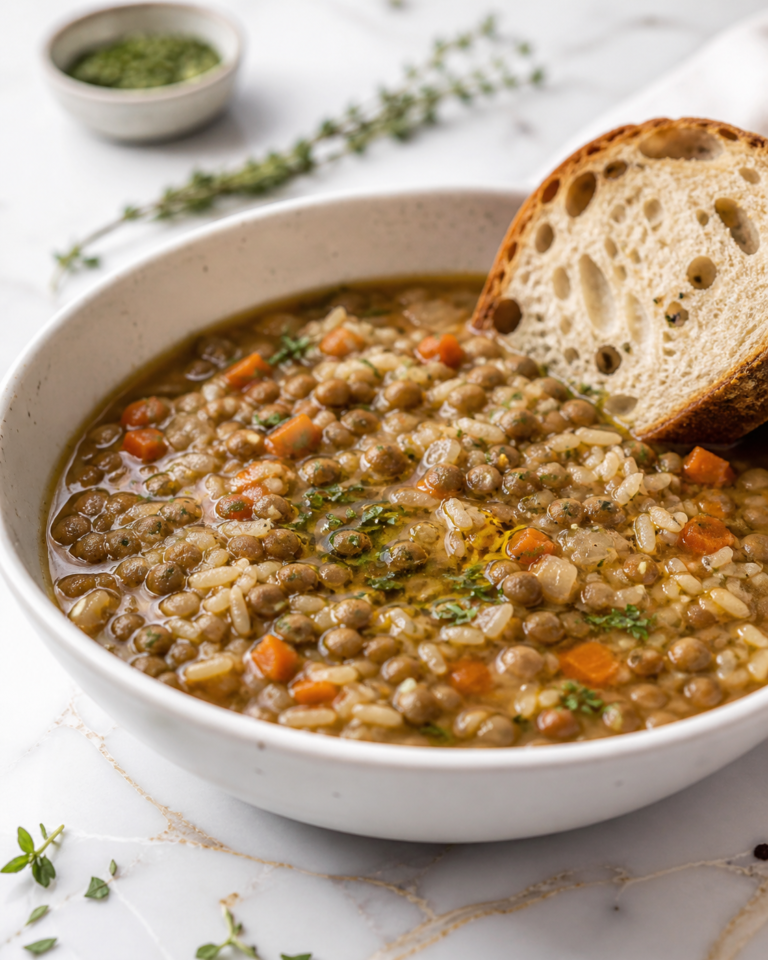
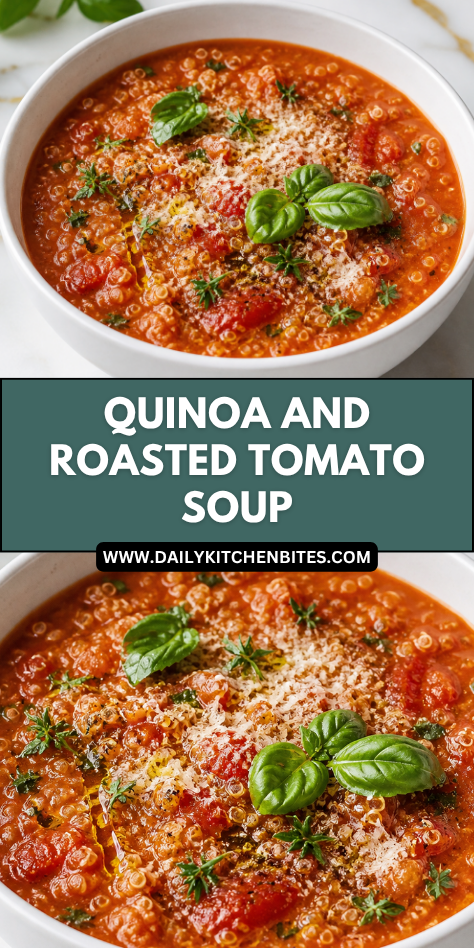
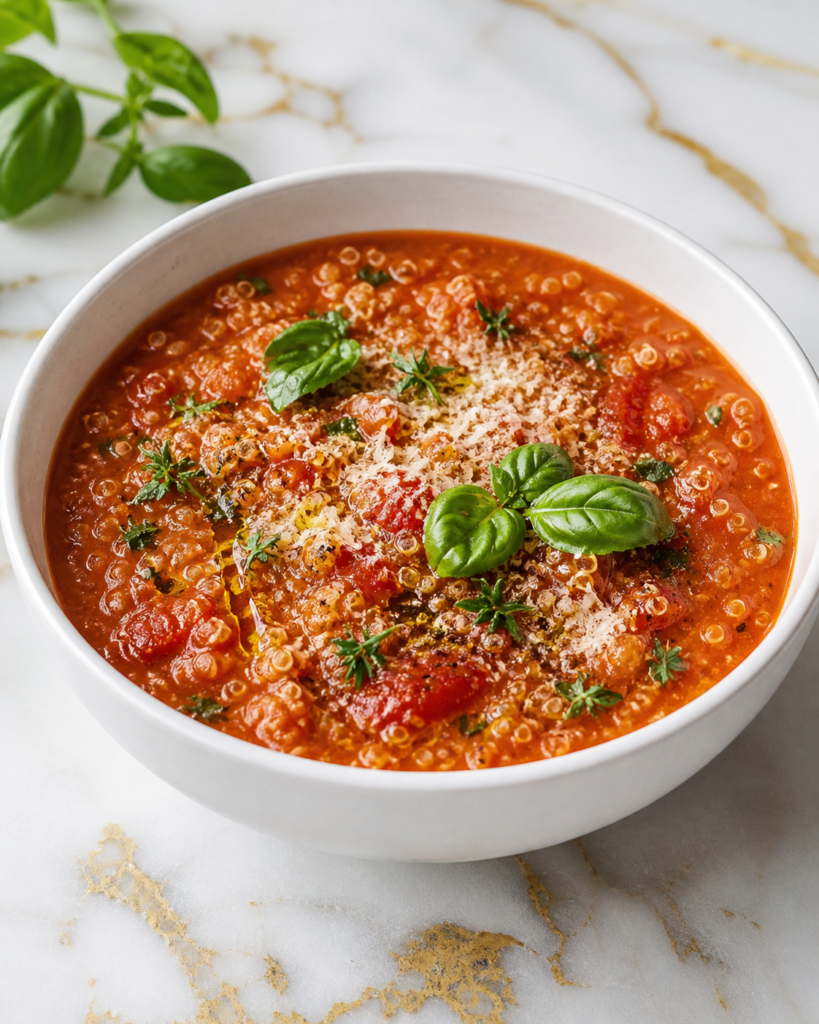
I make quinoa and roasted tomato soup when I want something cozy, simple, and full of real flavor. It has the warm comfort of tomato soup, but the quinoa makes it more filling and gives it a gentle texture that works well for lunch or dinner.
This is the kind of soup I like to make when the kitchen needs to smell good and the meal needs to feel steady. Roasting the tomatoes brings out their sweetness, and once everything simmers together, the soup tastes rich without needing heavy cream or a long list of ingredients.
Why You’ll Love This Recipe
Quinoa and roasted tomato soup is warm, nourishing, and easy to fit into a regular family meal. The roasted tomatoes give the soup a deeper flavor than plain canned tomato soup, while the quinoa adds protein, texture, and enough heartiness to make it feel like a real meal.
It is also very flexible, which is helpful when cooking for a family. You can keep it smooth and simple, leave it a little chunky, add extra vegetables, or serve it with bread, grilled cheese, or a side salad.
This soup is a good choice for make-ahead meals because the flavors get even better as it rests. It reheats well, packs nicely for lunches, and feels comforting without being too heavy.
Serves: 6 people
This recipe makes about 6 comfortable servings, which works well for a family dinner with some leftovers. If you are serving it as a starter, it can stretch to 8 smaller portions, especially with bread or a sandwich on the side.
Ingredients You’ll Need
For the Roasted Tomatoes
- 2 pounds ripe tomatoes, halved
- 1 medium yellow onion, quartered
- 4 garlic cloves, peeled
- 2 tablespoons olive oil
- 1 teaspoon salt
- 1/2 teaspoon black pepper
- 1 teaspoon dried Italian seasoning
- 1/4 teaspoon red pepper flakes, optional
For the Soup
- 1 tablespoon olive oil
- 1 medium carrot, diced
- 1 celery stalk, diced
- 1 tablespoon tomato paste
- 4 cups vegetable broth
- 1 can crushed tomatoes, 14.5 ounces
- 1/2 cup uncooked quinoa, rinsed
- 1 teaspoon dried basil
- 1/2 teaspoon smoked paprika
- 1/2 teaspoon salt, plus more to taste
- 1/4 teaspoon black pepper, plus more to taste
- 1 teaspoon honey or maple syrup, optional
- 1 tablespoon fresh lemon juice
Optional Toppings
- Fresh basil, chopped
- Grated Parmesan cheese
- Crumbled feta cheese
- Plain Greek yogurt
- Extra olive oil
- Toasted pumpkin seeds
- Croutons
- Red pepper flakes
Pro Tips
Use ripe tomatoes if you can because roasting brings out their natural sweetness. Roma tomatoes, vine tomatoes, cherry tomatoes, or a mix of tomatoes all work well in this soup.
Rinse the quinoa before adding it to the pot. This helps remove its natural coating, which can sometimes taste a little bitter if it is not washed first.
Do not rush the roasting step. The tomatoes should look soft, juicy, and slightly browned around the edges before you blend them into the soup.
Blend the soup before adding the quinoa if you want a smoother texture. This keeps the tomato base silky while still letting the quinoa cook gently in the broth.
Add the lemon juice at the end instead of during the simmer. It brightens the soup and helps balance the roasted tomato flavor without turning bitter.
Taste before serving and adjust the salt slowly. Broths and canned tomatoes can vary a lot, so it is better to season in small amounts until the soup tastes balanced.
Tools You’ll Need
- Large rimmed baking sheet
- Parchment paper
- Large soup pot or Dutch oven
- Sharp knife
- Cutting board
- Measuring cups
- Measuring spoons
- Fine mesh strainer for rinsing quinoa
- Wooden spoon
- Blender or immersion blender
- Ladle
- Soup bowls
Substitutions and Variations
Use Canned Tomatoes for Convenience
If fresh tomatoes are not in season, use two 28-ounce cans of whole peeled tomatoes and roast them with the onion and garlic. Drain a little of the liquid first so the tomatoes can caramelize instead of steam.
Make It Creamier
Stir in 1/2 cup coconut milk, half-and-half, or heavy cream near the end of cooking. This makes the soup softer and richer while keeping the roasted tomato flavor at the center.
Add Extra Vegetables
Add diced zucchini, bell pepper, spinach, or kale to the soup for more color and nutrition. Softer greens can be stirred in at the end, while firmer vegetables should simmer with the quinoa.
Change the Protein
For a heartier meal, add cooked chickpeas, white beans, shredded chicken, or turkey meatballs. These additions make the soup more filling without changing the cozy tomato base.
Make It Spicier or Milder
Add extra red pepper flakes, a pinch of cayenne, or a spoonful of chili crisp for more heat. For a kid-friendly version, leave out the red pepper flakes and use sweet basil or a small splash of cream to soften the flavor.
Make Ahead Tips
Quinoa and roasted tomato soup is a great recipe to make ahead because the flavors deepen as it sits. You can roast the tomatoes, onion, and garlic up to 2 days in advance, then store them in an airtight container in the refrigerator. When you are ready to cook, add them to the pot with the broth, crushed tomatoes, seasonings, and quinoa.
You can also make the full soup 3 to 4 days ahead and reheat it for lunches or easy dinners. The quinoa will continue to soak up liquid as it rests, so the soup may become thicker in the fridge. Stir in a splash of vegetable broth or water when reheating to bring it back to the texture you like.
If you want to freeze the soup, let it cool completely first. Freeze it in family-size containers or single portions for quick meals later. For the best texture, you can also freeze the tomato soup base without the quinoa, then add freshly cooked quinoa when reheating.
Instructions
Step 1: Preheat the Oven
Preheat the oven to 425°F. Line a large rimmed baking sheet with parchment paper so the tomatoes are easier to remove after roasting.
A hot oven helps the tomatoes soften, caramelize, and develop a deeper flavor. This step is what gives the soup that cozy roasted taste instead of a flat tomato flavor.
Step 2: Prepare the Tomatoes and Vegetables
Place 2 pounds halved ripe tomatoes, 1 quartered yellow onion, and 4 peeled garlic cloves on the prepared baking sheet. Drizzle with 2 tablespoons olive oil, then sprinkle with 1 teaspoon salt, 1/2 teaspoon black pepper, 1 teaspoon dried Italian seasoning, and 1/4 teaspoon red pepper flakes if using.
Toss everything gently so the vegetables are lightly coated. Spread them out in a single layer, with the tomatoes cut side up so they roast well and hold their juices.
Step 3: Roast Until Soft and Sweet
Roast the tomatoes, onion, and garlic for 30 to 35 minutes. The tomatoes should look soft and juicy, with lightly browned edges, and the onion should be tender.
If your tomatoes are very watery, roast them for another 5 minutes to help concentrate the flavor. Let the vegetables cool for a few minutes before blending so they are easier and safer to handle.
Step 4: Start the Soup Base
While the roasted vegetables cool slightly, warm 1 tablespoon olive oil in a large soup pot or Dutch oven over medium heat. Add 1 diced carrot and 1 diced celery stalk, then cook for 5 to 6 minutes until they begin to soften.
Stir often so the vegetables do not brown too much. These simple vegetables add a gentle sweetness and make the soup taste more rounded.
Step 5: Add the Tomato Paste
Stir in 1 tablespoon tomato paste and cook for 1 minute. It should darken slightly and coat the carrot and celery.
Cooking the tomato paste before adding liquid helps remove any raw taste. It also adds richness to the soup without needing cream or butter.
Step 6: Blend the Roasted Vegetables
Add the roasted tomatoes, onion, and garlic to a blender with 1 cup of the vegetable broth. Blend until mostly smooth, or leave it slightly chunky if your family likes more texture.
If using an immersion blender, add the roasted vegetables and 1 cup broth directly to the soup pot instead. Blend carefully until the base looks smooth and thick.
Step 7: Simmer the Soup
Pour the blended tomato mixture into the soup pot. Add the remaining 3 cups vegetable broth, 1 can crushed tomatoes, 1 teaspoon dried basil, 1/2 teaspoon smoked paprika, 1/2 teaspoon salt, and 1/4 teaspoon black pepper.
Stir well and bring the soup to a gentle boil over medium-high heat. Once it begins to bubble, lower the heat so it simmers steadily without splattering.
Step 8: Add the Quinoa
Rinse 1/2 cup uncooked quinoa in a fine mesh strainer under cool water, then drain it well. Stir the rinsed quinoa into the simmering soup.
Cover the pot partly with a lid and simmer for 18 to 22 minutes, stirring now and then. The quinoa is done when it looks tender and you can see the little rings around each grain.
Step 9: Balance the Flavor
Once the quinoa is tender, taste the soup and adjust the seasoning. Add more salt or black pepper if needed, and stir in 1 teaspoon honey or maple syrup if the tomatoes taste too sharp.
Turn off the heat and stir in 1 tablespoon fresh lemon juice. This brightens the soup and helps all the roasted flavors taste fresh and balanced.
Step 10: Serve Warm
Ladle the soup into bowls while it is warm and thick. Add fresh basil, Parmesan, feta, Greek yogurt, croutons, toasted pumpkin seeds, extra olive oil, or red pepper flakes as desired.
Serve right away with bread, grilled cheese, or a simple salad. The soup should taste rich, slightly sweet, lightly tangy, and hearty from the quinoa.
Serving Suggestions
Quinoa and roasted tomato soup is lovely with a grilled cheese sandwich for a classic comfort meal. The crisp bread and melted cheese pair so well with the smooth tomato base and tender quinoa.
For a lighter lunch, serve it with a green salad and a simple vinaigrette. The fresh crunch of lettuce, cucumber, or carrots helps balance the warmth of the soup.
It also works well with garlic bread, focaccia, or toasted sourdough. A sturdy piece of bread is perfect for dipping and makes the meal feel more filling.
For kids, try serving the soup in smaller bowls with toppings on the side. Croutons, shredded cheese, and a small spoonful of yogurt can make the soup feel more fun and familiar.
You can also serve it as a starter before pasta, roasted chicken, or baked vegetables. It adds warmth to the meal without feeling too heavy.
For meal prep, pack the soup in a thermos with crackers, fruit, or a small sandwich. It stays cozy and satisfying for lunch, especially on cooler days.
Leftovers and Storage
Let leftover quinoa and roasted tomato soup cool before storing it. Transfer it to airtight containers and refrigerate for up to 4 days. The quinoa will thicken the soup as it sits, so do not worry if it looks thicker the next day.
Reheat the soup in a pot over medium-low heat, stirring often until warm. Add a splash of vegetable broth or water to loosen it if needed. You can also reheat single portions in the microwave, stirring halfway through so it warms evenly.
This soup can be frozen for up to 3 months. Freeze it in small containers so it thaws faster and is easier to use for lunches. Thaw overnight in the refrigerator, then reheat gently and add extra broth to refresh the texture.
Nutrition and Benefits
- Good plant-based protein: Quinoa adds protein and makes the soup more filling than a basic tomato soup. It is a helpful ingredient for meatless meals that still need to feel satisfying.
- Rich tomato flavor: Roasted tomatoes bring natural sweetness, color, and comforting flavor. Tomatoes also provide vitamins and antioxidants that fit well into a balanced family meal.
- Fiber from vegetables and quinoa: Carrot, celery, tomatoes, and quinoa all add fiber. This helps the soup feel hearty while keeping it light and nourishing.
- Flexible for different diets: The soup is naturally vegetarian and can be vegan if you use maple syrup instead of honey and skip dairy toppings. It can also be made gluten-free by serving it with gluten-free bread or crackers.
- Balanced comfort food: This soup has the cozy feel of a classic tomato soup, but the quinoa adds texture and staying power. It is warm, simple, and useful for lunches, dinners, and make-ahead meals.
Recipe FAQ
Can I use canned tomatoes instead of fresh tomatoes?
Yes, canned tomatoes work well when fresh tomatoes are not in season. Use two 28-ounce cans of whole peeled tomatoes, drain some of the liquid, and roast them with the onion and garlic. This gives the soup a deeper flavor than adding canned tomatoes straight to the pot.
Do I have to rinse the quinoa?
Yes, rinsing quinoa is a good idea. Quinoa has a natural coating that can sometimes taste bitter if it is not washed off. A quick rinse under cool water helps the soup taste cleaner and more balanced.
Can I make this soup smooth?
Yes, you can blend the soup base until completely smooth before adding the quinoa. If you want the whole soup smooth, cook the quinoa separately and blend the tomato soup fully before stirring the quinoa in. This gives you a creamy base with gentle texture.
Can I make this soup vegan?
Yes, this soup is easy to make vegan. Use maple syrup instead of honey, and choose toppings like fresh basil, olive oil, toasted seeds, or dairy-free yogurt. The roasted tomatoes and quinoa still make it rich and satisfying.
Why did my soup get thick after sitting?
Quinoa keeps soaking up liquid as the soup rests. This is normal and does not mean anything went wrong. Add a little broth or water when reheating until the soup is the thickness you like.
Can I add more vegetables?
Yes, extra vegetables work nicely in this soup. Zucchini, bell pepper, spinach, kale, or even corn can be added depending on what you have. Add firmer vegetables while the soup simmers and softer greens near the end.
Is this soup good for meal prep?
Yes, it is very good for meal prep because it stores and reheats well. The flavor often tastes even better the next day after the roasted tomatoes and seasonings have had time to settle. Keep extra broth nearby when reheating because the quinoa may thicken the soup.
A Warm Tomato Soup to Keep in Your Meal Rotation
Quinoa and roasted tomato soup is the kind of meal that feels simple, steady, and comforting every time it is served. The roasted tomatoes bring deep flavor, the quinoa makes it filling, and the gentle seasonings keep it family-friendly without making the recipe feel plain.
I love that this soup works for busy lunches, cozy dinners, and make-ahead meals without much stress. It is warm, dependable, and easy to adjust with toppings or sides, which makes it worth making again whenever you need something nourishing and familiar.