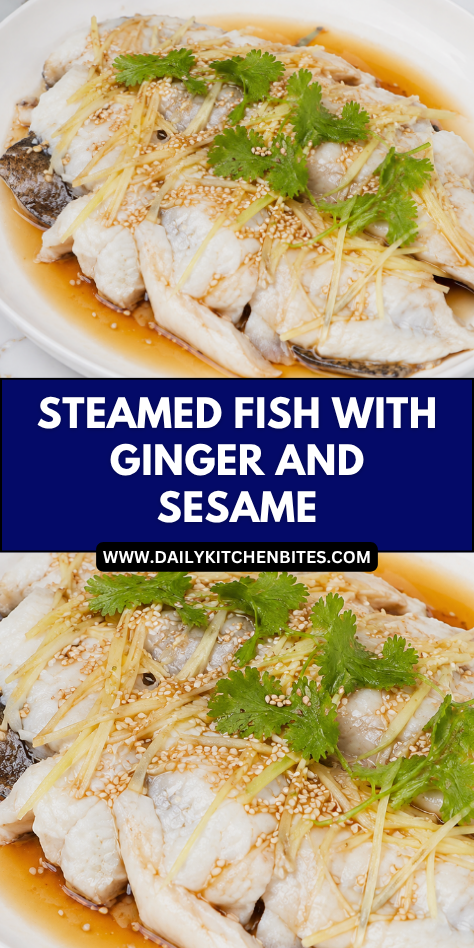
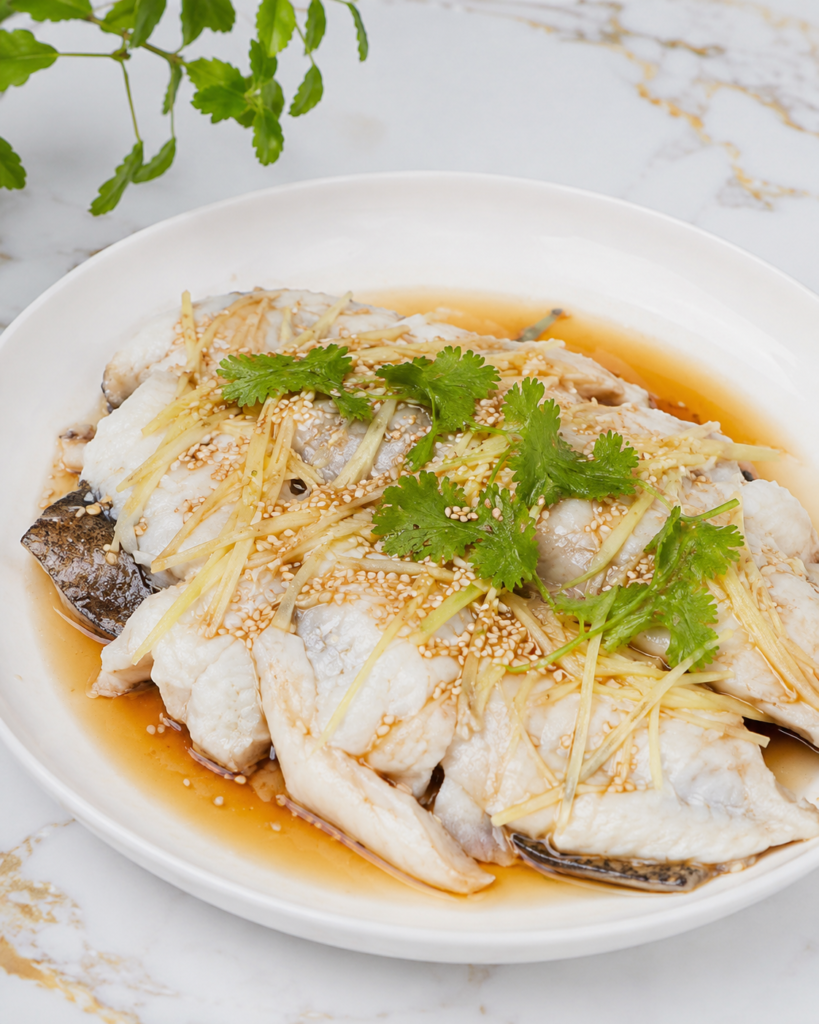
I make steamed fish with ginger and sesame when I want a meal that feels light, warm, and comforting without being complicated. The fish turns tender and delicate as it steams, while the ginger, green onions, soy sauce, and sesame oil give it a clean savory flavor that tastes fresh and homemade.
This is the kind of dish I like for busy family dinners because it cooks quickly and pairs so easily with rice and vegetables. It feels gentle enough for a simple weeknight meal, but it also looks nice enough to serve when you want something a little special at the table.
Why You’ll Love This Recipe
Steamed fish with ginger and sesame is simple, healthy-feeling, and full of flavor from a short list of ingredients. The steaming method keeps the fish moist, while ginger adds warmth and sesame oil gives the dish a soft, nutty finish.
It is also a family-friendly recipe because the flavors are savory but not too heavy. You can keep it mild for kids, add chili oil for adults, or serve extra sauce on the side so everyone can adjust their own plate.
This recipe is also very fast once the fish is ready. Most fillets steam in under 10 minutes, making this a helpful meal when you want something fresh and nourishing without spending a long time in the kitchen.
Serves: 4 people
This recipe serves 4 people with one fish fillet per person or larger fillets divided into portions. If you are serving smaller appetites, you can stretch the meal with extra rice, steamed greens, soup, or a simple cucumber salad.
Ingredients You’ll Need
For the Fish
- 1 1/2 pounds white fish fillets, such as cod, sea bass, halibut, snapper, or tilapia
- 1/2 teaspoon salt
- 1/4 teaspoon white pepper or black pepper
- 1 tablespoon Shaoxing wine or dry sherry, optional
- 1 tablespoon fresh ginger, cut into thin matchsticks
- 2 green onions, cut into 2-inch pieces
For the Ginger Sesame Sauce
- 3 tablespoons low-sodium soy sauce
- 1 tablespoon water or low-sodium chicken broth
- 1 tablespoon toasted sesame oil
- 1 tablespoon neutral oil, such as canola oil or avocado oil
- 1 teaspoon rice vinegar
- 1 teaspoon sugar or honey
- 1 teaspoon fresh ginger, finely grated
- 1 garlic clove, finely minced
- 1/4 teaspoon white pepper or black pepper
For Serving
- 2 green onions, thinly sliced
- 1 tablespoon fresh cilantro, chopped, optional
- 1 teaspoon toasted sesame seeds
- 4 cups cooked jasmine rice or long-grain white rice
- Steamed bok choy, broccoli, or snow peas, optional
- Chili oil, optional
- Lime wedges, optional
Pro Tips
Use fish fillets that are similar in thickness. This helps all the pieces cook at the same time and keeps thinner pieces from becoming dry.
Pat the fish dry before seasoning it. Removing extra moisture helps the salt, pepper, ginger, and sauce cling better to the fish.
Do not oversteam the fish. It is ready when it turns opaque and flakes gently with a fork, and cooking it too long can make it firm or dry.
Use fresh ginger if possible. Ground ginger does not give the same bright, warm flavor that makes this dish taste fresh and clean.
Keep the sauce light and balanced. The fish is delicate, so the soy sauce, sesame oil, vinegar, and sugar should support the flavor instead of covering it up.
Serve the fish right away after steaming. Steamed fish tastes best when it is hot, tender, and freshly spooned with the ginger sesame sauce.
Tools You’ll Need
- Large steamer basket, bamboo steamer, or steaming rack
- Large pot or wok with lid
- Heatproof shallow dish or plate that fits inside the steamer
- Small saucepan or microwave-safe bowl
- Small mixing bowl
- Sharp knife
- Cutting board
- Measuring spoons
- Measuring cups
- Grater or microplane
- Tongs or spatula
- Spoon for sauce
- Rice cooker or saucepan, if serving with rice
- Instant-read thermometer, optional
Substitutions and Variations
Use a Different Fish
Cod, sea bass, halibut, snapper, tilapia, sole, or barramundi all work well in this recipe. Choose a mild white fish that steams gently and flakes easily when cooked.
Make It Gluten-Free
Use gluten-free tamari instead of soy sauce. Also check the Shaoxing wine or dry sherry label, or leave it out if you need the dish fully gluten-free.
Add More Aromatics
Add thin slices of garlic, extra ginger, or a few cilantro stems under the fish before steaming. These small additions gently perfume the fish without making the dish too strong.
Make It Spicier
Add a few thin slices of red chili to the sauce or drizzle chili oil over the finished fish. Keep the spice on the side if you are serving children or anyone who prefers a mild meal.
Add Vegetables to the Steamer
Place bok choy, snow peas, napa cabbage, or mushrooms around the fish as it steams. Cut the vegetables small or thin so they cook quickly and stay tender-crisp.
Make Ahead Tips
Steamed fish with ginger and sesame is best cooked right before serving because fish is most tender when it comes straight from the steamer. You can still prepare several parts ahead so dinner feels quick and easy. Slice the ginger, cut the green onions, mix the sauce ingredients, and prepare your rice or vegetables earlier in the day.
If using frozen fish, thaw it overnight in the refrigerator. Pat it dry well before seasoning so it steams gently instead of sitting in extra water. Keep the fish chilled until you are ready to cook, and season it only shortly before steaming.
The ginger sesame sauce can be mixed up to 2 days ahead and stored in the refrigerator. Stir or shake it well before warming because the oils may separate. For the freshest flavor, add the sliced green onions, cilantro, sesame seeds, and any chili oil right before serving.
Instructions
Step 1: Prepare the Fish
Pat 1 1/2 pounds white fish fillets dry with paper towels. Place the fillets in a heatproof shallow dish or plate that fits inside your steamer.
Sprinkle the fish with 1/2 teaspoon salt and 1/4 teaspoon white pepper or black pepper. Drizzle with 1 tablespoon Shaoxing wine or dry sherry if using.
Step 2: Add the Aromatics
Scatter 1 tablespoon thin ginger matchsticks over the fish. Add 2 green onions cut into 2-inch pieces around and on top of the fillets.
These aromatics gently flavor the fish while it steams. Try to spread them evenly so each piece gets a little ginger and onion flavor.
Step 3: Prepare the Steamer
Add water to a large pot or wok fitted with a steamer basket, bamboo steamer, or steaming rack. Make sure the water sits below the steaming dish and does not touch the fish.
Bring the water to a steady simmer over medium-high heat. Once steam is rising, carefully place the dish of fish inside the steamer.
Step 4: Steam the Fish
Cover the steamer with a tight-fitting lid and steam the fish for 7 to 10 minutes. Thicker fillets may need 11 to 12 minutes, while thinner fillets may finish sooner.
The fish is done when it turns opaque and flakes gently with a fork. If using a thermometer, the thickest part should reach 145°F.
Step 5: Mix the Ginger Sesame Sauce
While the fish steams, combine 3 tablespoons low-sodium soy sauce, 1 tablespoon water or low-sodium chicken broth, 1 tablespoon toasted sesame oil, 1 teaspoon rice vinegar, 1 teaspoon sugar or honey, 1 teaspoon finely grated fresh ginger, 1 minced garlic clove, and 1/4 teaspoon white pepper or black pepper in a small bowl.
Stir until the sugar or honey dissolves. The sauce should taste savory, lightly nutty, a little warm from the ginger, and gently balanced.
Step 6: Warm the Neutral Oil
Warm 1 tablespoon neutral oil in a small saucepan over medium heat until it is hot but not smoking. This only takes a short time, so watch it closely.
Hot oil helps bloom the ginger, garlic, green onions, and sesame flavor when it is spooned over the fish. It gives the dish a more fragrant finish without needing much oil.
Step 7: Remove the Fish Carefully
Turn off the heat and carefully lift the dish from the steamer. Watch for hot steam when removing the lid and dish.
If there is a lot of watery liquid on the plate, spoon off a little of it. Leave a small amount behind because it can mix with the sauce and add gentle flavor.
Step 8: Add Sauce and Garnishes
Spoon the ginger sesame sauce over the hot fish. Sprinkle with 2 thinly sliced green onions, 1 tablespoon chopped fresh cilantro if using, and 1 teaspoon toasted sesame seeds.
Drizzle the hot neutral oil over the green onions and ginger on top. The toppings should sizzle lightly and smell fresh, savory, and nutty.
Step 9: Serve Right Away
Serve the fish hot with 4 cups cooked jasmine rice or long-grain white rice. Add steamed bok choy, broccoli, snow peas, chili oil, or lime wedges on the side if desired.
Spoon extra sauce from the plate over the rice. The fish should be tender, flaky, fragrant with ginger, and lightly coated in sesame soy sauce.
Serving Suggestions
Steamed fish with ginger and sesame is wonderful with plain jasmine rice. The rice soaks up the soy, sesame, ginger, and fish juices, making the meal feel complete and comforting.
Steamed bok choy is a natural side for this dish. It cooks quickly, tastes mild, and pairs nicely with the same sauce from the fish.
Broccoli, snow peas, napa cabbage, or green beans are also good choices. Keep the vegetables simple so the delicate flavor of the fish stays at the center of the meal.
For a fuller dinner, serve the fish with egg drop soup, cucumber salad, or a small plate of dumplings. These sides make the meal feel more complete without making it heavy.
If you are serving kids, keep chili oil and extra ginger on the side. The fish itself stays gentle, soft, and easy to eat with rice.
You can also serve the fish in rice bowls with vegetables and extra green onions. This makes the meal easy to portion and helpful for a quick family dinner.
Leftovers and Storage
Let leftover steamed fish cool before storing it. Place it in an airtight container and refrigerate for up to 2 days. Store the rice and vegetables separately if possible so they keep a better texture.
Reheat the fish gently because it can dry out if heated too long. Use a covered skillet with a splash of water or broth over low heat, or microwave it in short bursts at reduced power. Warm it only until heated through.
Freezing is not recommended for this dish because steamed fish can become watery and fragile after thawing. If you have leftovers, they are best used the next day in a rice bowl, noodle bowl, or simple soup. Add a fresh splash of soy sauce, sesame oil, or lime juice to brighten the flavor again.
Nutrition and Benefits
- Light protein: White fish provides lean protein and cooks quickly. It makes the meal satisfying without feeling heavy.
- Gentle cooking method: Steaming keeps the fish moist and tender without needing a lot of added fat. It is a simple method that works well for delicate fillets.
- Fresh aromatics: Ginger, garlic, and green onions add flavor without making the dish complicated. They bring warmth, freshness, and a comforting savory smell.
- Balanced sauce: Soy sauce, sesame oil, rice vinegar, and a little sugar or honey make the sauce salty, nutty, tangy, and lightly sweet. This balance helps the mild fish taste flavorful.
- Easy to pair with vegetables: Bok choy, broccoli, snow peas, mushrooms, or cabbage can all be served with this fish. These sides add color, fiber, and texture to the meal.
Recipe FAQ
What fish is best for steaming?
Mild white fish works best for this recipe. Cod, sea bass, halibut, snapper, tilapia, sole, and barramundi are all good choices. Try to use fillets that are similar in thickness so they cook evenly.
Can I use frozen fish?
Yes, frozen fish can be used if it is fully thawed first. Thaw it overnight in the refrigerator and pat it very dry before seasoning. Extra moisture can make the finished dish watery.
How do I know when steamed fish is done?
The fish is done when it turns opaque and flakes easily with a fork. The thickest part should reach 145°F if you use an instant-read thermometer. Avoid overcooking because fish can become firm and dry.
Do I need a bamboo steamer?
No, a bamboo steamer is not required. You can use a metal steamer basket, a steaming rack in a wok, or a large pot with a heatproof plate raised above simmering water. Just make sure the lid fits well.
Can I make this without sesame oil?
Yes, you can leave out the sesame oil if needed. The flavor will be less nutty, but the soy sauce, ginger, garlic, and green onions will still make the fish taste good. Add a little extra neutral oil if you want a softer finish.
Can I add vegetables while steaming the fish?
Yes, thin vegetables can steam with the fish. Bok choy, snow peas, mushrooms, napa cabbage, or thin broccoli pieces work well. Cut them small enough so they cook in the same time as the fish.
Is this recipe spicy?
No, this recipe is mild as written. Chili oil or sliced chili can be served on the side for anyone who wants heat. This makes it easy to keep the main dish family-friendly.
A Light Fish Dinner with Cozy Ginger Flavor
Steamed fish with ginger and sesame is a simple, gentle meal that still feels full of flavor. The tender fish, warm ginger, green onions, soy sauce, and nutty sesame oil come together quickly and taste especially comforting over rice.
I like this recipe because it is easy to cook, easy to serve, and dependable for busy nights. With a vegetable side and a little extra sauce spooned over the plate, it becomes a fresh family dinner worth making again.