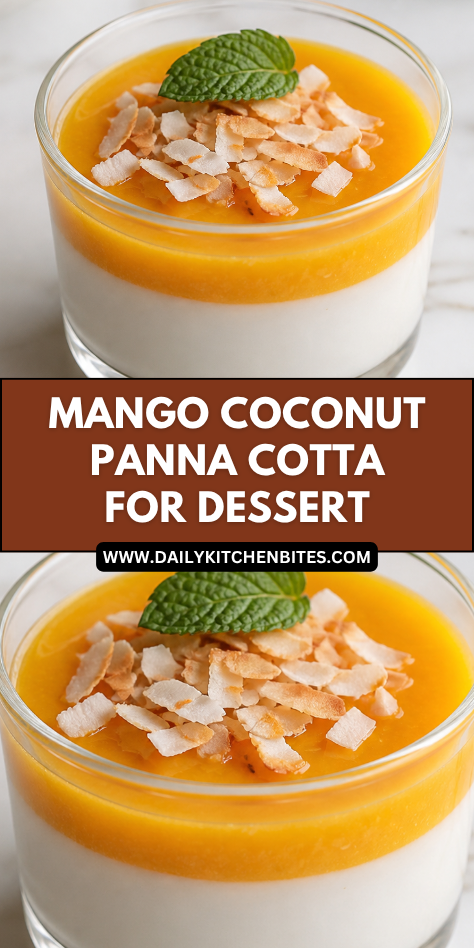
I make Mango Coconut Panna Cotta when I want a dessert that feels smooth, cool, and special without being too hard to prepare. It has a soft creamy texture, a gentle coconut flavor, and a bright mango topping that makes each spoonful taste fresh and comforting.
This is the kind of dessert I like for family dinners, warm weekends, or make-ahead treats when I do not want to rush at the last minute. The panna cotta sets quietly in the refrigerator, and when it is ready, it looks beautiful with very little effort.
Why You’ll Love This Recipe
Mango Coconut Panna Cotta is creamy, light, and refreshing all at once. The coconut milk gives it a soft tropical flavor, while the mango adds natural sweetness and a sunny color that makes the dessert feel cheerful and inviting.
It is also a wonderful make-ahead dessert because it needs time to chill. That means you can prepare it earlier in the day or the night before, then simply add the mango topping when it is time to serve.
This recipe is family-friendly because the texture is silky and gentle, and the flavor is sweet without being too heavy. Kids usually love the mango layer, while adults appreciate that it feels elegant enough for guests or a special meal.
Serves: 6 people
This recipe serves 6 people in small dessert cups or ramekins. Each portion is rich enough to feel satisfying, but still light enough to enjoy after lunch, dinner, or a warm-weather meal.
If you are serving children, you can divide the mixture into smaller cups and make 8 mini servings. For a dinner party or holiday table, clear glasses make the mango and coconut layers look especially pretty.
Ingredients You’ll Need
For the Coconut Panna Cotta
- 1 can full-fat coconut milk, 13.5 ounces
- 1 cup heavy cream
- 1/3 cup granulated sugar
- 2 teaspoons unflavored powdered gelatin
- 3 tablespoons cold water
- 1 teaspoon pure vanilla extract
- 1/8 teaspoon fine sea salt
For the Mango Topping
- 2 large ripe mangoes, peeled and diced
- 2 tablespoons granulated sugar or honey
- 1 tablespoon fresh lime juice
- 1 teaspoon lime zest
- 1/4 teaspoon pure vanilla extract
- 2 tablespoons water, if needed for blending
For Serving
- 1/4 cup toasted coconut flakes
- 1/4 cup diced fresh mango
- 2 tablespoons chopped pistachios, optional
- 6 small mint leaves, optional
Pro Tips
Use full-fat coconut milk for the best texture. Light coconut milk can make the panna cotta thinner and less creamy, which may affect how smoothly it sets.
Bloom the gelatin in cold water before adding it to the warm coconut mixture. This helps the gelatin dissolve evenly and prevents little lumps from forming in the finished dessert.
Do not boil the cream and coconut milk. Warm it gently until the sugar dissolves and the mixture is steaming, because boiling can change the flavor and texture.
Strain the panna cotta mixture before pouring it into cups. This simple step catches any tiny gelatin bits and helps the dessert set with a smooth, silky finish.
Choose ripe mangoes that smell sweet and give slightly when pressed. The mango topping depends on good fruit, so ripe mangoes will give you the best color and flavor.
Let the panna cotta chill fully before adding the topping. If the coconut layer is still soft, the mango can sink into it instead of sitting neatly on top.
Tools You’ll Need
- Medium saucepan
- Small bowl
- Measuring cups
- Measuring spoons
- Whisk
- Rubber spatula
- Fine mesh strainer
- Blender or food processor
- Cutting board
- Sharp knife
- Vegetable peeler
- Citrus juicer
- Microplane or small grater
- 6 small ramekins, jars, or serving glasses
- Plastic wrap or storage lids
- Small skillet for toasting coconut, optional
Substitutions and Variations
Make It Dairy-Free
Use 1 cup additional full-fat coconut milk or canned coconut cream instead of heavy cream. The panna cotta will have a stronger coconut flavor and still set into a smooth, creamy dessert.
Use a Different Fruit
Swap the mango topping for peach, pineapple, passion fruit, strawberry, or raspberry. Choose fruit that blends smoothly and has enough sweetness to balance the creamy coconut layer.
Make It Less Sweet
Reduce the sugar in the panna cotta to 1/4 cup and taste the mango topping before adding sweetener. Ripe mangoes are often sweet enough on their own, especially when paired with coconut.
Add More Texture
Top each cup with toasted coconut flakes, chopped pistachios, crushed graham crackers, or diced mango. These toppings add a little crunch and make the soft panna cotta feel more complete.
Make It Extra Tropical
Add a small splash of pineapple juice to the mango topping or stir a little lime zest into the coconut mixture. These small touches brighten the flavor while keeping the mango coconut taste at the center.
Make Ahead Tips
Mango Coconut Panna Cotta is one of the best desserts to make ahead because it needs several hours to chill and set. I like to prepare the coconut layer the night before, then make the mango topping the next day when I am closer to serving.
You can make the panna cotta up to 2 days ahead and keep the cups covered in the refrigerator. Wait to add the toasted coconut, pistachios, fresh mango, and mint until right before serving so the toppings stay crisp and bright.
The mango topping can also be made 1 day ahead. Store it in a covered container in the refrigerator, then give it a gentle stir before spooning it over the chilled panna cotta.
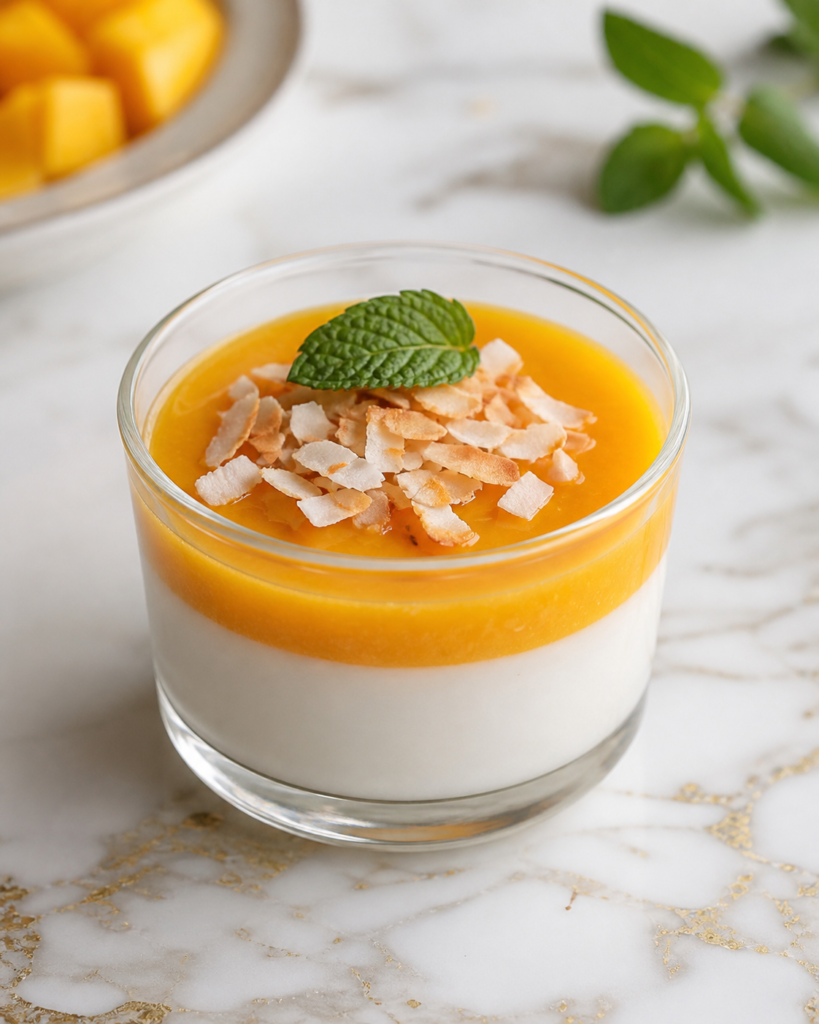
If you are serving this for guests, use small clear glasses or jars so the layers show nicely. Cover each cup with plastic wrap or a lid, and keep them chilled until dessert time.
Instructions
Step 1: Bloom the Gelatin
Add 3 tablespoons cold water to a small bowl. Sprinkle 2 teaspoons unflavored powdered gelatin evenly over the top, then let it sit for 5 to 10 minutes.
The gelatin will absorb the water and look thick and slightly wrinkled. This step helps it dissolve smoothly later, which gives the panna cotta its soft, creamy set.
Step 2: Warm the Coconut Mixture
In a medium saucepan, combine the full-fat coconut milk, heavy cream, granulated sugar, and fine sea salt. Place the pan over medium-low heat and whisk gently.
Warm the mixture until it is steaming and the sugar has dissolved. Do not let it boil, because gentle heat gives the panna cotta the smoothest texture.
Step 3: Add the Gelatin
Remove the saucepan from the heat. Add the bloomed gelatin to the warm coconut mixture and whisk until it fully dissolves.
The mixture should look smooth with no visible bits of gelatin. If you see small pieces, keep whisking for another minute while the mixture is still warm.
Step 4: Add the Vanilla
Stir in the pure vanilla extract. The vanilla adds warmth and helps round out the coconut flavor.
Taste a tiny spoonful if you like, being careful because the mixture will still be warm. It should taste lightly sweet, creamy, and gently coconut-rich.
Step 5: Strain the Mixture
Set a fine mesh strainer over a large measuring cup or bowl with a pour spout. Pour the warm panna cotta mixture through the strainer.
This catches any tiny gelatin pieces or coconut solids. It is a small step, but it helps the finished dessert feel silky and smooth.
Step 6: Pour into Cups
Divide the panna cotta mixture evenly among 6 small ramekins, jars, or serving glasses. Leave a little room at the top for the mango topping and garnishes.
Place the cups on a small tray so they are easy to move. This also helps keep them level while they chill.
Step 7: Chill Until Set
Cover the cups loosely with plastic wrap or lids. Refrigerate for at least 4 hours, or until the panna cotta is fully set.
The texture should be soft and creamy, not firm like gelatin cubes. When you gently tilt a cup, the panna cotta should hold its shape with a slight wobble.
Step 8: Make the Mango Topping
Add the diced ripe mangoes, sugar or honey, fresh lime juice, lime zest, vanilla extract, and 2 tablespoons water if needed to a blender or food processor. Blend until smooth.
Taste the topping and adjust gently. Add a little more lime juice for brightness or a small spoonful of sweetener if the mangoes are not very sweet.
Step 9: Spoon on the Mango Layer
Once the panna cotta is fully set, spoon the mango topping over each cup. Spread it gently into an even layer without pressing down too hard.
If the topping is very thick, stir in a teaspoon or two of water to loosen it. It should be spoonable but not watery.
Step 10: Add Toppings and Serve
Top each cup with toasted coconut flakes, diced fresh mango, chopped pistachios if using, and a small mint leaf if desired. Add the toppings right before serving for the best texture.
Serve the panna cotta cold. Each spoonful should have creamy coconut, bright mango, and a little crunch from the toppings.
Serving Suggestions
Mango Coconut Panna Cotta is lovely served after a simple family dinner because it feels special without being too heavy. The cool texture is especially nice after grilled chicken, seafood, rice bowls, or spicy dishes.
For a warm-weather meal, serve it with extra fresh fruit on the side. Sliced strawberries, pineapple, kiwi, or berries all pair nicely with the mango and coconut flavors.
This dessert also works well for parties because the cups can be made ahead and served straight from the refrigerator. Small glass jars make them easy to pass around and help keep portions neat.
For kids, keep the toppings simple with diced mango and toasted coconut. For adults, add pistachios, mint, extra lime zest, or even a tiny pinch of flaky salt to make the flavors pop.
You can also serve it as part of a brunch spread. It pairs well with muffins, fruit salad, iced tea, and light breakfast dishes because it is creamy but still refreshing.
If you want a more elegant plate, place each cup on a small saucer with a lime wedge and a few pieces of diced mango. It looks pretty without needing any complicated decorating.
Leftovers and Storage
Store leftover Mango Coconut Panna Cotta covered in the refrigerator for up to 3 days. Keep the cups tightly covered so they do not absorb other refrigerator smells, especially because coconut has a gentle flavor.
If the mango topping is already added, the dessert will still keep well, but the color and texture are freshest within the first 1 to 2 days. Toppings like toasted coconut and pistachios should be added right before eating because they soften in the refrigerator.
Do not leave panna cotta at room temperature for a long time. Since it contains cream and gelatin, it should stay chilled until close to serving.
Freezing is not recommended for panna cotta. The texture can become watery or grainy after thawing, and the smooth creamy set may not return.
If you have extra mango topping, store it separately in a small covered container for up to 3 days. Spoon it over yogurt, oatmeal, pancakes, ice cream, or smoothie bowls for a quick sweet topping.
Nutrition and Benefits
- Mango adds natural sweetness, bright color, and vitamin C. It helps the dessert taste fresh and fruity without needing a heavy topping.
- Coconut milk gives the panna cotta a creamy texture and gentle tropical flavor. Full-fat coconut milk makes the dessert satisfying in small portions.
- Using small serving cups helps keep portions balanced. Each cup feels rich and special without needing a large amount.
- Lime juice and zest brighten the mango topping and balance the creamy coconut layer. This keeps the dessert from tasting too sweet or flat.
- Homemade panna cotta lets you control the sweetness and toppings. You can make it lighter, dairy-free, or more fruit-forward depending on what your family enjoys.
Recipe FAQ
Can I make Mango Coconut Panna Cotta dairy-free?
Yes, you can make it dairy-free by replacing the heavy cream with more full-fat coconut milk or canned coconut cream. The flavor will be more coconut-forward, which works well with mango. Be sure to use full-fat coconut milk so the panna cotta still sets with a creamy texture.
Why did my panna cotta not set?
The most common reasons are not enough gelatin, overheating the mixture, or not chilling it long enough. Make sure the gelatin blooms in cold water before being added to the warm coconut mixture. The panna cotta needs at least 4 hours in the refrigerator, and overnight is even better.
Can I use frozen mango?
Yes, frozen mango works if fresh mango is not available. Thaw it first and drain off extra liquid before blending. The topping may be slightly thinner, so add water only if needed.
Can I unmold this panna cotta?
You can unmold it, but this recipe is best served in cups because the texture is soft and creamy. If you want to unmold it, lightly grease the ramekins before pouring in the mixture. Dip the bottom of each ramekin briefly in warm water before turning it out.
How do I know when panna cotta is done setting?
The panna cotta should look firm around the edges with a gentle wobble in the center. It should not be liquid when tilted. The texture should be creamy and spoonable, not rubbery.
Can I make this less sweet?
Yes, reduce the sugar in the coconut layer to 1/4 cup. You can also skip the sweetener in the mango topping if your mangoes are ripe and naturally sweet. Taste as you go so the dessert stays balanced.
What can I use instead of gelatin?
Agar agar can be used, but it sets differently and creates a firmer texture. You will need to follow the package directions because agar must usually be simmered to activate. The finished dessert may be less creamy than gelatin-based panna cotta.
A Silky Mango Dessert Made for Sharing
Mango Coconut Panna Cotta is a calm, creamy dessert that feels special without asking for much work. The smooth coconut base, bright mango topping, and simple crunchy garnishes make each cup refreshing, comforting, and dependable for family dinners or small celebrations.
It is worth making again because it can be prepared ahead and served cold whenever you need an easy sweet finish. With its soft texture and sunny flavor, this dessert brings a little tropical comfort to the table every time.