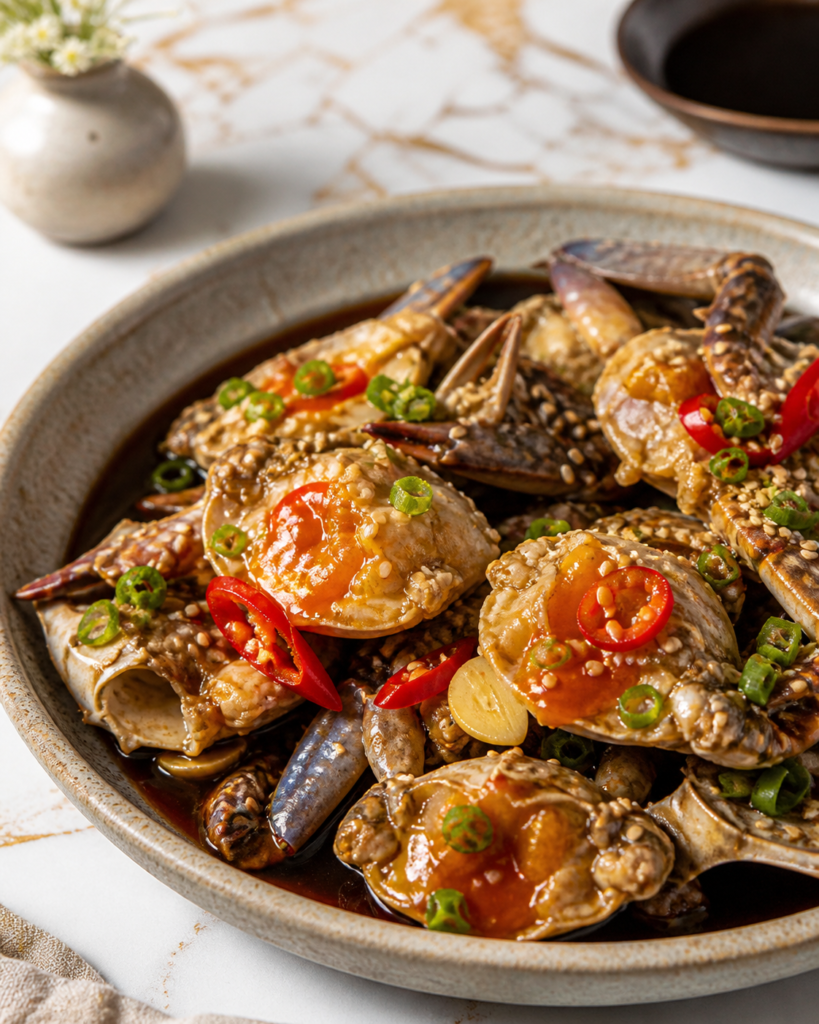
I make soy marinated crab Korean style when I want a dish that feels special, bold, and deeply comforting. It is made with fresh raw crab soaked in a savory soy-based marinade with garlic, ginger, onion, chili, and a little sweetness, giving the crab a rich flavor that is both clean and satisfying.
This is not an everyday quick dinner, but it is a recipe that feels meaningful when made with care. The crab becomes tender and flavorful as it rests in the marinade, and it is often served with warm rice so every bite feels balanced.
I love how simple the ingredients are, even though the finished dish tastes layered and memorable.

Why You’ll Love This Recipe
Soy marinated crab Korean style is loved for its deep savory flavor and silky texture. The soy marinade soaks into the crab, bringing together salty, sweet, garlicky, and slightly spicy notes. When served with hot rice, the rich crab meat and seasoned marinade become a comforting meal that feels simple but very special.
This recipe is also a wonderful way to enjoy seafood in a traditional Korean-inspired style at home. The process is not hard, but it does require fresh crab, careful cleaning, and enough chilling time for the flavors to develop. Once the crab is ready, the serving is easy and relaxed.
Another reason this dish is so appealing is how well it fits a family-style table. You can serve it with rice, kimchi, cucumbers, seaweed, and simple vegetable sides. It is bold enough for seafood lovers, but the warm rice and sweet-savory marinade help make it feel balanced and satisfying.
Serves: 4 people
This recipe serves 4 people as part of a meal with rice and side dishes. Soy marinated crab is rich and flavorful, so each person usually enjoys a portion of crab with plenty of warm rice. If you are serving it as a smaller side dish, it can stretch to 5 or 6 people depending on the size of the crabs.
Ingredients You’ll Need
For the Crab
- 2 pounds fresh blue crabs or small raw crabs, cleaned
- 1 tablespoon kosher salt, for cleaning
- Cold water, as needed for rinsing
- 4 cups ice water, for holding the cleaned crab
For the Soy Marinade
- 1 1/2 cups soy sauce
- 1 cup water
- 1/2 cup mirin
- 1/4 cup rice syrup or corn syrup
- 2 tablespoons brown sugar
- 1 small yellow onion, sliced
- 6 garlic cloves, lightly crushed
- 1-inch piece fresh ginger, sliced
- 2 green onions, cut into 2-inch pieces
- 1 small apple or Asian pear, sliced
- 2 dried red chilies, optional
- 1 teaspoon black peppercorns
- 1 small piece dried kelp, about 3 inches, optional
For Finishing and Serving
- 1 tablespoon toasted sesame oil
- 1 tablespoon toasted sesame seeds
- 2 green onions, thinly sliced
- 1 red chili, thinly sliced, optional
- 3 cups cooked short-grain white rice
- Roasted seaweed, for serving
- Kimchi, for serving
- Thinly sliced cucumber, for serving
Pro Tips
Use the freshest crab possible. Since this recipe uses raw crab that marinates instead of cooking in heat, freshness is the most important part of the recipe.
Clean the crab carefully and keep it very cold. Work quickly, rinse well, and place the cleaned crab in ice water while you prepare the marinade.
Bring the marinade to a boil, then cool it completely before pouring it over the crab. Hot marinade can affect the crab’s texture, so it must be fully chilled first.
Let the crab marinate long enough for the flavor to soak in. A full 24 hours gives the soy sauce, garlic, ginger, onion, and sweetness time to season the crab properly.
Use a non-reactive container like glass, ceramic, or food-safe plastic. Metal containers can react with the salty marinade and change the flavor.
Serve the crab with warm rice. The rice balances the strong, savory marinade and makes the dish feel complete and comforting.
Tools You’ll Need
- Large saucepan
- Large glass or ceramic container with lid
- Cutting board
- Sharp knife
- Kitchen shears
- Small brush for cleaning crab
- Measuring cups
- Measuring spoons
- Fine mesh strainer
- Tongs
- Large bowl
- Ice
- Spoon
- Rice cooker or saucepan for rice
- Serving platter
- Disposable gloves, optional
Substitutions and Variations
Use Snow Crab or Dungeness Crab
Blue crab is often used, but small snow crab sections or Dungeness crab pieces can work if they are very fresh and suitable for marinating. The texture and flavor will be different, but the soy marinade will still bring a rich Korean-style taste.
Make It Less Sweet
Reduce the rice syrup or brown sugar if you prefer a more savory marinade. Keep a small amount of sweetness because it helps balance the saltiness of the soy sauce.
Add More Heat
Use extra dried red chilies, sliced fresh chili, or a small spoonful of gochugaru. This gives the marinade a warmer kick while keeping the soy flavor at the center.
Try Pear Instead of Apple
Asian pear adds a gentle sweetness and fresh aroma to the marinade. It is a lovely swap for apple and works especially well with garlic, ginger, and soy sauce.
Make It More Family-Style
Serve the marinated crab with extra rice, roasted seaweed, steamed eggs, cucumber salad, and kimchi. These sides make the strong flavor easier to enjoy and help stretch the dish for a shared meal.
Make Ahead Tips
Soy marinated crab Korean style needs time to rest, so it is naturally a make-ahead dish. The soy marinade can be cooked and cooled 1 day in advance, then stored in the refrigerator until you are ready to clean and marinate the crab. This helps the final steps feel calmer, especially if you are preparing several side dishes too.
For the best flavor and texture, clean the crab the same day you plan to start marinating it. Keep the crab very cold while you work, and use a clean container with a tight lid. Once the cooled marinade is poured over the crab, refrigerate it right away.
The crab usually tastes best after 24 hours of marinating. Some people enjoy it after 12 hours, but the flavor will be lighter. I do not like leaving raw marinated crab for too many days because the texture can change, so it is best served within 1 to 2 days after marinating.
Instructions
Step 1: Prepare the Marinade Ingredients
Slice the onion, ginger, green onions, and apple or Asian pear. Lightly crush the garlic cloves so they release flavor into the marinade. Gather the dried red chilies, black peppercorns, and dried kelp if using, so everything is ready before the pot goes on the stove.
Step 2: Cook the Soy Marinade
Add the soy sauce, water, mirin, rice syrup or corn syrup, brown sugar, onion, garlic, ginger, green onions, apple or Asian pear, dried red chilies, black peppercorns, and dried kelp to a large saucepan. Bring the mixture to a gentle boil over medium heat, then reduce the heat and simmer for 10 minutes. Stir once or twice so the sugar dissolves fully.
Step 3: Cool the Marinade Completely
Remove the saucepan from the heat and let the marinade cool at room temperature for a short time. Strain the marinade through a fine mesh strainer into a clean bowl or container, then refrigerate until fully chilled. The marinade must be completely cold before it touches the raw crab.
Step 4: Clean the Crab
Rinse the fresh crabs under cold running water. Use kitchen shears and a small brush to clean the shells, legs, and joints, removing any dirt or rough bits. Sprinkle with kosher salt, gently rub, then rinse again with cold water.
Step 5: Prepare the Crab for Marinating
Remove the top shells if desired, depending on the type and size of crab you are using. Trim away any parts you do not plan to serve, then cut larger crabs into halves or quarters so the marinade can reach the meat. Place the cleaned crab pieces in ice water while you finish setting up.
Step 6: Place the Crab in a Container
Drain the crab well and pat it lightly with paper towels. Arrange the crab pieces in a large glass, ceramic, or food-safe plastic container with the shells facing upward when possible. Try to keep the pieces in an even layer so they marinate at the same pace.
Step 7: Add the Cold Marinade
Pour the fully chilled soy marinade over the crab until the pieces are mostly covered. Press the crab down gently with clean tongs or a spoon so the marinade reaches all sides. Cover the container tightly with a lid.
Step 8: Refrigerate and Marinate
Place the covered crab in the refrigerator for at least 12 hours, or preferably 24 hours. Turn the crab pieces once halfway through marinating if they are not fully submerged. Keep the crab cold the entire time and do not leave it sitting at room temperature.
Step 9: Finish for Serving
Remove the crab from the marinade and place it on a serving platter. Drizzle lightly with toasted sesame oil, then sprinkle with toasted sesame seeds, sliced green onions, and sliced red chili if using. Spoon a little extra marinade into a small bowl for serving with rice.
Step 10: Serve Cold with Rice
Serve the soy marinated crab cold with warm short-grain white rice. Add roasted seaweed, kimchi, and thinly sliced cucumber on the side. The warm rice balances the salty, sweet, and savory crab beautifully.
Serving Suggestions
Soy marinated crab Korean style is most comforting with hot short-grain white rice. The rice softens the bold soy marinade and makes each bite feel balanced, especially when you spoon a little seasoned sauce over the top.
Roasted seaweed is a simple and delicious side for this dish. You can wrap a small bite of rice, crab meat, and sauce in the seaweed for a salty, savory bite that feels complete.
Kimchi adds crunch, brightness, and a little heat beside the rich crab. A small serving is enough because the crab already has a strong, seasoned flavor.
Thin cucumber slices are helpful because they taste cool and clean. They make the meal feel lighter and give a fresh break between bites of crab and rice.
Steamed eggs, simple soup, or lightly seasoned vegetables also work well on the table. These softer sides make the meal more family-friendly and help balance the bold seafood flavor.
Leftovers and Storage
Soy marinated crab Korean style should be kept very cold at all times. Store leftovers in an airtight container in the refrigerator and enjoy them within 1 to 2 days for the best quality. Because this dish uses raw marinated crab, freshness and safe handling matter more than with many cooked recipes.
Keep the crab covered in some of the marinade while it is stored, but avoid keeping it too long. The salty marinade will continue to change the texture of the crab as it sits. If the crab smells off, tastes unpleasant, feels overly mushy, or seems questionable in any way, it should be discarded.
Freezing is not recommended after marinating because the texture of the raw crab can become watery and soft when thawed. It is better to make a smaller batch and enjoy it fresh. Always use clean utensils when serving so the leftovers stay as safe as possible.
Nutrition and Benefits
- Rich in seafood protein: Crab provides protein while feeling light and delicate. It can be satisfying when served with rice and simple side dishes.
- Bold flavor in small portions: The soy marinade is salty, savory, and slightly sweet, so a little crab goes a long way. This makes it easy to enjoy as part of a shared meal.
- Pairs well with balanced sides: Rice, cucumber, kimchi, seaweed, and steamed eggs help round out the plate. These sides make the meal feel more complete and easier to enjoy.
- Fresh aromatics add depth: Garlic, ginger, onion, green onion, and fruit give the marinade a layered flavor. They help balance the strong soy sauce base.
- Best as an occasional special dish: Because the recipe is rich in sodium and made with raw seafood, it is best enjoyed as a special meal. Careful sourcing, chilling, and handling are important for the best result.
Recipe FAQ
Can I use frozen crab for soy marinated crab?
Fresh crab is best for this recipe because the dish is raw and marinated, not cooked. Some frozen crab may work only if it is high quality, properly handled, and safe for raw-style preparation. Thaw it in the refrigerator and keep it very cold. When in doubt, ask a trusted seafood seller if the crab is suitable for this dish.
How long should soy marinated crab sit before serving?
The crab should marinate for at least 12 hours, but 24 hours gives a fuller flavor. Smaller crab pieces may season faster than larger pieces. Turn the crab once if it is not fully covered by the marinade. Serve it cold straight from the refrigerator.
Is soy marinated crab cooked?
No, soy marinated crab Korean style is not cooked with heat. The crab is seasoned and cured in a soy-based marinade, but it remains a raw seafood dish. This is why fresh crab, clean handling, and proper refrigeration are very important. Anyone with health concerns around raw seafood should avoid it or speak with a medical professional.
Can I reuse the marinade?
I do not recommend reusing marinade that has touched raw crab. It may contain raw seafood juices and is not safe to use again as a fresh marinade. You can spoon a small amount from the container for serving with the same batch if it has been handled safely. Discard the rest after the crab is finished.
Why is my marinated crab too salty?
Soy marinated crab is meant to be bold and salty, but it should still taste balanced with rice. If it tastes too strong, serve smaller pieces with extra warm rice, cucumber, and seaweed. Next time, add a little more water to the marinade or reduce the marinating time. Using low-sodium soy sauce can also soften the flavor.
What kind of crab is best for this recipe?
Fresh blue crab is a common choice because it has sweet meat and takes on the marinade well. Small raw crabs are also often used, depending on what is available where you live. The most important thing is freshness and safe handling. Choose crab from a seafood source you trust.
Can I make this less spicy?
Yes, simply leave out the dried red chilies and fresh red chili garnish. The crab will still have plenty of flavor from soy sauce, garlic, ginger, onion, green onion, and fruit. You can serve chili on the side for anyone who wants heat. This makes the dish easier to share with different tastes at the table.
A Savory Korean Seafood Dish Made for Sharing
Soy marinated crab Korean style is a special recipe with bold flavor, tender crab, and a comforting soy-based marinade that tastes wonderful with warm rice. It takes care, chilling time, and fresh seafood, but the steps are simple when you move slowly and keep everything cold.
I love how this dish turns a few strong ingredients into something memorable for the table. Served with rice, seaweed, cucumber, and kimchi, it feels balanced, satisfying, and worth making when you want a seafood meal that feels meaningful and homemade.