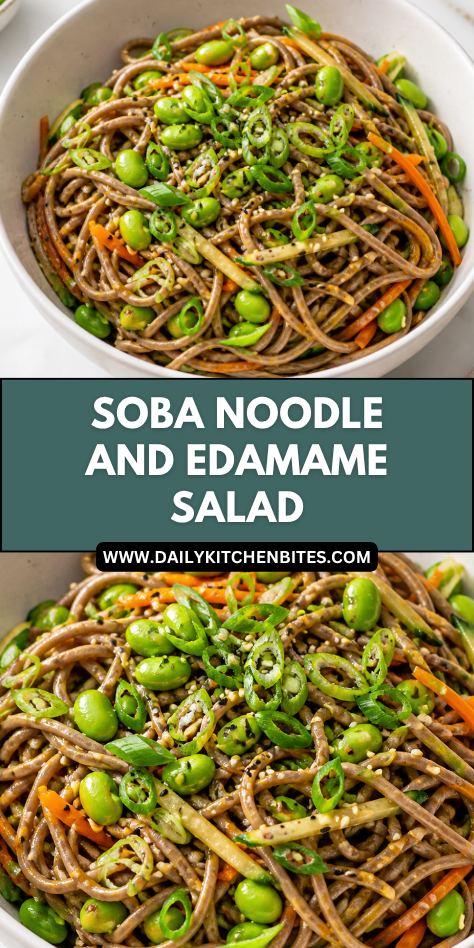
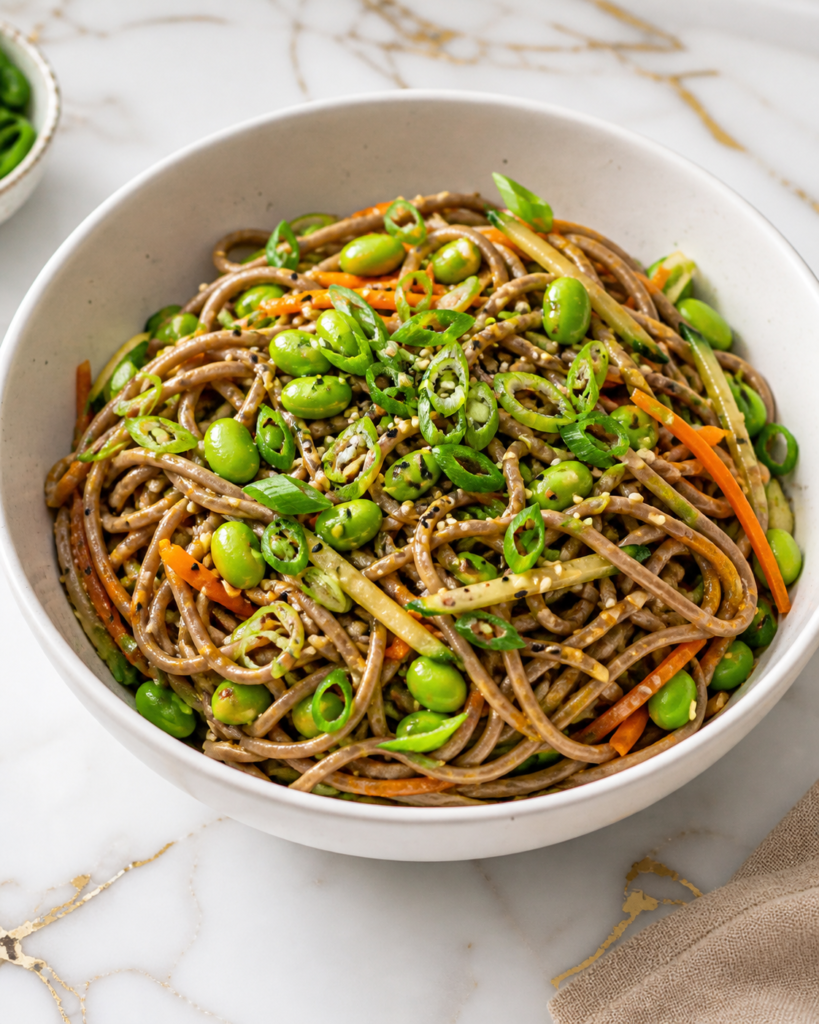
I make soba noodle and edamame salad when I want something fresh, filling, and easy to keep in the fridge for busy days. It has tender noodles, crisp vegetables, and a simple dressing that tastes bright, savory, and just a little nutty.
This is the kind of recipe I like for lunches, light dinners, or meal prep when I do not want anything too heavy. The edamame adds protein, the vegetables bring crunch, and the soba noodles make the whole salad feel satisfying without taking much time to put together.
Why You’ll Love This Recipe
Soba noodle and edamame salad is cool, colorful, and full of texture. The noodles are soft and slightly earthy, the edamame is tender and filling, and the vegetables add freshness in every bite.
It is also a helpful family recipe because it can be served cold or at room temperature. That makes it great for lunch boxes, picnics, simple dinners, or a make-ahead side dish when the day is already full.
The dressing is easy to whisk together and uses simple ingredients like soy sauce, sesame oil, rice vinegar, honey, ginger, and lime. It coats the noodles well without making the salad feel heavy, and you can adjust the flavor to be sweeter, tangier, or more savory.
Serves: 4 people
This recipe serves 4 people as a light main dish or 6 people as a side dish. If you are making it for meal prep, divide it into containers and keep a little extra dressing on the side to freshen it before eating.
Ingredients You’ll Need
For the Salad
- 8 ounces soba noodles
- 1 1/2 cups shelled edamame, frozen or fresh
- 1 cup shredded red cabbage
- 1 cup shredded carrots
- 1 red bell pepper, thinly sliced
- 1 cup cucumber, thinly sliced or cut into matchsticks
- 3 green onions, thinly sliced
- 1/2 cup fresh cilantro, chopped
- 1/4 cup fresh mint, chopped, optional
- 2 tablespoons toasted sesame seeds
- 1/3 cup chopped roasted peanuts or cashews, optional
For the Sesame Ginger Dressing
- 3 tablespoons low-sodium soy sauce or tamari
- 2 tablespoons rice vinegar
- 1 tablespoon fresh lime juice
- 1 tablespoon honey or maple syrup
- 1 tablespoon toasted sesame oil
- 1 tablespoon neutral oil, such as avocado oil or canola oil
- 2 teaspoons fresh ginger, grated
- 1 garlic clove, minced
- 1 teaspoon Dijon mustard
- 1 teaspoon sriracha or chili garlic sauce, optional
- 1/4 teaspoon black pepper
For Serving
- Lime wedges
- Extra toasted sesame seeds
- Extra chopped cilantro
- Extra sliced green onions
- Chili crisp, optional
- Extra chopped peanuts or cashews, optional
Pro Tips
Rinse the soba noodles under cold water after cooking. This stops the cooking, removes extra starch, and keeps the noodles from clumping together in the salad.
Do not overcook the edamame. It only needs a few minutes to become tender, and overcooking can make it too soft for a fresh noodle salad.
Slice the vegetables thinly so they mix easily with the noodles. Small, even pieces make every bite balanced and help the salad feel light instead of bulky.
Toss the noodles with a little dressing before adding the vegetables. This helps prevent sticking and lets the noodles soak up flavor from the start.
Taste the dressing before adding it all to the salad. Soy sauce, lime juice, and rice vinegar can vary in strength, so a small adjustment can make the salad taste more balanced.
Add nuts and sesame seeds right before serving if you want the most crunch. They can soften slightly in the fridge, so keeping some aside makes leftovers taste fresher.
Tools You’ll Need
- Large pot
- Colander
- Large mixing bowl
- Small mixing bowl or jar with lid
- Whisk
- Sharp knife
- Cutting board
- Measuring cups
- Measuring spoons
- Grater or microplane
- Tongs
- Vegetable peeler, optional
- Serving bowl or meal prep containers
Substitutions and Variations
Use Different Noodles
Soba noodles give this salad a nutty flavor, but rice noodles, whole wheat spaghetti, ramen noodles, or udon can also work. Cook them according to the package directions and rinse well so they stay loose and cool.
Make It Gluten-Free
Use 100% buckwheat soba noodles and tamari instead of soy sauce. Check the noodle package carefully because many soba noodles are made with both buckwheat and wheat flour.
Change the Protein
Edamame keeps the salad plant-based and simple, but you can add shredded chicken, tofu, shrimp, or a soft-boiled egg. These options make the salad heartier while keeping the fresh noodle bowl style.
Add More Crunch
Add snap peas, radishes, chopped romaine, bean sprouts, or crispy wonton strips. These give the salad more texture and make it especially nice for lunches or warm-weather meals.
Adjust the Flavor
Add more lime juice for brightness, more honey or maple syrup for sweetness, or chili crisp for heat. Keep the base dressing the same so the salad still tastes balanced and fresh.
Make Ahead Tips
Soba noodle and edamame salad is a great make-ahead recipe because it holds well in the refrigerator and tastes good cold. You can cook the noodles, prepare the edamame, slice the vegetables, and whisk the dressing earlier in the day. Store each part separately if you want the freshest texture, especially if you are making it for lunches.
If you want to fully assemble the salad ahead, toss the noodles with about half of the dressing first. Add the vegetables and edamame, then store the remaining dressing in a small jar to stir in right before serving. This keeps the noodles from drying out without making the salad too soft.
For meal prep, divide the salad into containers and keep crunchy toppings like sesame seeds, peanuts, or cashews in a small separate bag. Add those just before eating so they stay crisp. A fresh squeeze of lime also helps brighten the flavor after the salad has been chilled.
Instructions
Step 1: Cook the Soba Noodles
Bring a large pot of water to a boil. Add 8 ounces soba noodles and cook according to the package directions, usually about 4 to 6 minutes.
Stir the noodles gently as they cook so they do not stick together. Be careful not to overcook them, because soba noodles can become soft quickly.
Step 2: Rinse and Cool the Noodles
Drain the soba noodles in a colander. Rinse them well under cold running water, using your hands or tongs to gently separate the noodles.
This step stops the cooking and removes extra starch. Let the noodles drain well so the salad does not become watery.
Step 3: Cook the Edamame
Bring a small pot of water to a boil, or use the same pot after cooking the noodles. Add 1 1/2 cups shelled edamame and cook for 3 to 5 minutes, or until tender.
Drain the edamame and rinse under cold water. Set it aside to cool while you prepare the vegetables and dressing.
Step 4: Prepare the Vegetables
Shred 1 cup red cabbage and 1 cup carrots if they are not already prepared. Thinly slice 1 red bell pepper, 1 cup cucumber, and 3 green onions.
Chop 1/2 cup fresh cilantro and 1/4 cup fresh mint if using. Keep the vegetables thin and bite-sized so they mix easily with the noodles.
Step 5: Make the Sesame Ginger Dressing
In a small bowl or jar, combine 3 tablespoons low-sodium soy sauce or tamari, 2 tablespoons rice vinegar, 1 tablespoon fresh lime juice, 1 tablespoon honey or maple syrup, 1 tablespoon toasted sesame oil, and 1 tablespoon neutral oil. Add 2 teaspoons grated fresh ginger, 1 minced garlic clove, 1 teaspoon Dijon mustard, 1 teaspoon sriracha or chili garlic sauce if using, and 1/4 teaspoon black pepper.
Whisk or shake until the dressing looks smooth and blended. Taste it and adjust with a little more lime juice, honey, or soy sauce if needed.
Step 6: Toss the Noodles with Dressing
Place the cooled and drained soba noodles in a large mixing bowl. Pour about half of the sesame ginger dressing over the noodles.
Use tongs to gently toss until the noodles are lightly coated. This helps keep them from clumping and gives them flavor before the vegetables are added.
Step 7: Add the Edamame and Vegetables
Add the cooled edamame, shredded red cabbage, shredded carrots, sliced red bell pepper, cucumber, green onions, cilantro, and mint if using. Toss gently until everything is evenly mixed.
Add more dressing as needed, a little at a time. The salad should be flavorful and lightly coated, not swimming in dressing.
Step 8: Add the Crunchy Toppings
Sprinkle in 2 tablespoons toasted sesame seeds and 1/3 cup chopped roasted peanuts or cashews if using. Toss once more, or leave some toppings on top for a prettier serving bowl.
If you are making the salad ahead, save some nuts and sesame seeds for serving. This keeps the texture fresh and crisp.
Step 9: Serve Chilled or at Room Temperature
Serve the salad right away, or chill it for 20 to 30 minutes if you want it colder. Add lime wedges, extra sesame seeds, cilantro, green onions, chili crisp, or more chopped nuts on the side.
Before serving, toss the salad again and taste for seasoning. A small splash of dressing or lime juice can freshen it up if it has been sitting.
Serving Suggestions
Soba noodle and edamame salad works well as a light main dish for lunch or dinner. The noodles and edamame make it filling, while the vegetables keep it fresh and colorful.
It is also a lovely side dish with grilled chicken, salmon, shrimp, tofu, or teriyaki-style skewers. The sesame ginger dressing pairs nicely with simple proteins and adds flavor without needing an extra sauce.
For lunch boxes, pack the salad in individual containers with extra dressing on the side. Add the nuts, sesame seeds, and lime wedge separately so the salad tastes fresh when it is time to eat.
You can serve this salad with lettuce cups for a fun family-style meal. Spoon the noodles and vegetables into crisp lettuce leaves and top with peanuts or sesame seeds.
For a picnic or potluck, keep the salad chilled until serving. It travels well because it does not rely on creamy dressing, and it still tastes good after sitting for a short time.
If you want a heartier dinner, serve the salad beside dumplings, miso soup, spring rolls, or steamed rice. These sides make the meal feel complete while keeping the flavors fresh and balanced.
Leftovers and Storage
Store leftover soba noodle and edamame salad in an airtight container in the refrigerator for up to 3 days. The noodles may absorb some of the dressing as they sit, so the salad can taste a little drier the next day. Stir in a spoonful of extra dressing, lime juice, or a tiny splash of water before serving.
If possible, store the crunchy toppings separately. Peanuts, cashews, and sesame seeds soften in the fridge, but they taste fresh and crisp when added right before eating. Keep herbs separate too if you want the brightest flavor.
This salad is not a good freezer recipe because the noodles and vegetables change texture after thawing. It is best enjoyed cold or at room temperature from the refrigerator. If packing it for lunch, keep it chilled with an ice pack until ready to eat.
Nutrition and Benefits
- Plant-based protein: Edamame adds protein and makes this salad more filling. It is a helpful ingredient for meatless lunches and light dinners.
- Whole grain option: Many soba noodles are made with buckwheat, which gives them a nutty flavor and hearty texture. Check the package if you want 100% buckwheat noodles.
- Colorful vegetables: Red cabbage, carrots, bell pepper, cucumber, green onions, and herbs bring crunch, freshness, and color. They make the salad feel bright and balanced.
- Flavorful dressing: Sesame oil, ginger, garlic, lime, soy sauce, and rice vinegar create a dressing that tastes bold without being heavy. It coats the noodles well and keeps the salad fresh.
- Meal prep friendly: This salad stores well and can be eaten cold, which makes it practical for lunches, picnics, and busy weekdays. Keeping extra dressing nearby helps leftovers taste fresh again.
Recipe FAQ
Can I make soba noodle and edamame salad ahead of time?
Yes, this salad works well for make-ahead meals. For the best texture, store the noodles, vegetables, edamame, dressing, and crunchy toppings separately. If you assemble it ahead, save a little dressing to add right before serving.
Do I serve this salad cold or warm?
This salad is best served cold or at room temperature. Rinsing the soba noodles under cold water keeps them firm and helps them mix well with the vegetables. It is a nice option for warm days, lunch boxes, and meal prep.
Can I use frozen edamame?
Yes, frozen shelled edamame is a great choice. Cook it according to the package directions, then rinse it under cold water before adding it to the salad. Make sure it is drained well so the dressing does not become watery.
Are soba noodles gluten-free?
Some soba noodles are gluten-free, but many are made with a mix of buckwheat and wheat flour. Look for 100% buckwheat soba noodles if you need a gluten-free option. Use tamari instead of soy sauce for the dressing too.
What can I use instead of edamame?
You can use tofu, chickpeas, shredded chicken, shrimp, or a soft-boiled egg. These options make the salad filling while keeping the same fresh noodle bowl style. Choose what fits your meal and your family’s tastes.
How do I keep soba noodles from sticking?
Rinse the noodles very well under cold water after cooking. This removes extra starch and cools them quickly. Tossing them with a little dressing right away also helps keep them loose.
Can I make the dressing less salty?
Yes, use low-sodium soy sauce or tamari and start with a little less than the recipe calls for. Add more lime juice, rice vinegar, or honey to balance the flavor. Taste before adding the dressing to the whole salad.
A Fresh Noodle Salad for Easy Meals
Soba noodle and edamame salad is a bright, simple recipe that feels fresh but still filling. The tender noodles, protein-rich edamame, crisp vegetables, and sesame ginger dressing come together in a way that works well for lunches, light dinners, or meal prep.
I like keeping this salad in the fridge because it is easy to serve and easy to adjust. It tastes good cold, travels well, and brings dependable flavor and texture whenever you need a calm, colorful meal.