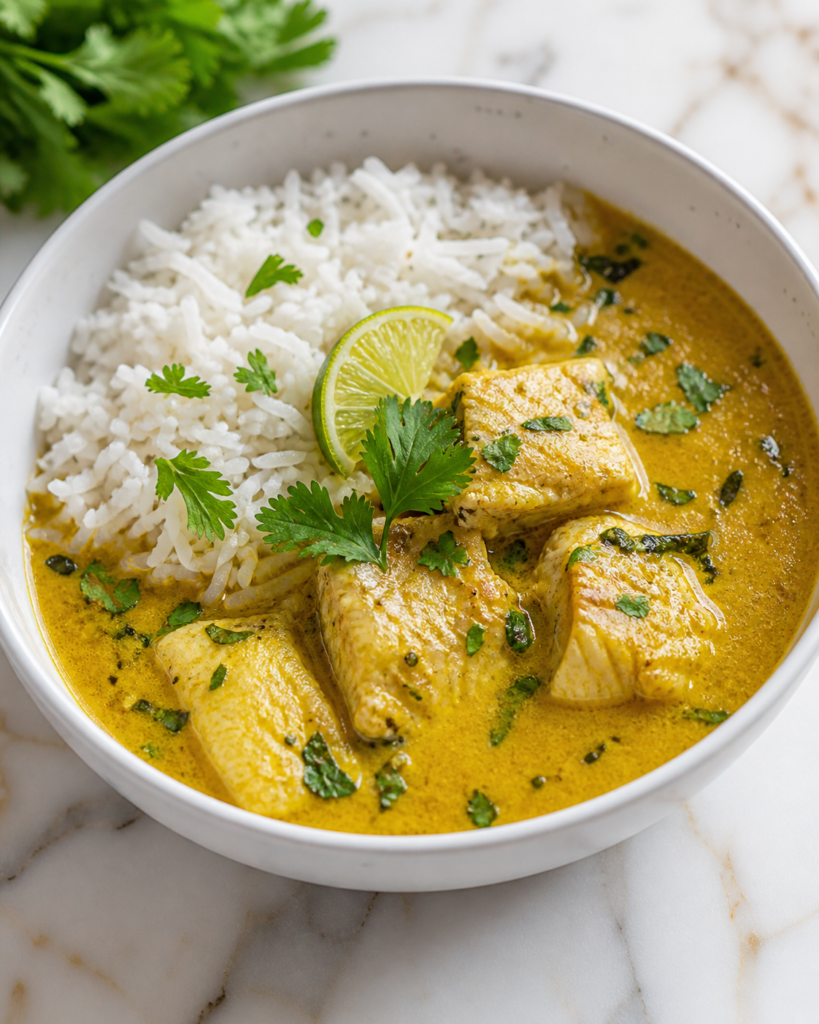
I make Goan fish curry with coconut when I want a meal that feels warm, bright, and comforting all at once. The sauce is creamy from coconut, tangy from tamarind, and full of gentle spice that makes the fish taste rich without feeling heavy.
This is the kind of curry I like to serve with plain rice because the sauce is the best part. It soaks into the rice and makes every bite flavorful, cozy, and satisfying. I love that it feels special enough for a weekend meal but still simple enough for a calm family dinner.

Why You’ll Love This Recipe
Goan fish curry with coconut is full of balanced flavor. The coconut milk makes the curry smooth and creamy, while tamarind adds a soft tang that keeps it from tasting too rich. The spices bring warmth, color, and depth without covering up the delicate flavor of the fish.
This recipe is also a lovely way to make fish feel more exciting for the family. The sauce is gentle enough to adjust for kids, and you can control the heat by using less chili. Served with rice, the curry becomes filling, comforting, and easy to enjoy.
You will also love how practical this dish can be. The sauce comes together in one pan, the fish cooks quickly, and most of the ingredients are pantry-friendly. Once you have the curry base ready, dinner moves fast and feels dependable every time.
Serves: 4 people
This recipe serves 4 people as a main dish when served with warm rice. Each person gets a generous piece of fish with plenty of coconut curry sauce for spooning over the rice. If you are serving it with extra sides like vegetables, flatbread, or salad, it can stretch a little further.
Ingredients You’ll Need
For the Fish
- 1 1/2 pounds firm white fish fillets, such as cod, halibut, snapper, tilapia, or haddock
- 1 tablespoon fresh lime juice
- 1/2 teaspoon turmeric powder
- 1/2 teaspoon kosher salt
For the Coconut Curry Sauce
- 2 tablespoons coconut oil or vegetable oil
- 1 medium yellow onion, finely chopped
- 3 garlic cloves, minced
- 1 tablespoon fresh ginger, grated
- 1 green chili, slit or finely chopped, optional
- 1 large tomato, finely chopped
- 1 tablespoon tomato paste
- 1 teaspoon ground coriander
- 1 teaspoon ground cumin
- 1/2 teaspoon turmeric powder
- 1/2 teaspoon paprika
- 1/4 teaspoon cayenne pepper, optional
- 1 can full-fat coconut milk, 13.5 ounces
- 1/2 cup water or fish stock
- 1 tablespoon tamarind paste
- 1 teaspoon brown sugar, optional
- 1 teaspoon kosher salt, plus more to taste
- 1/2 teaspoon black pepper
- 8 curry leaves, optional
- 1 tablespoon fresh lime juice, if needed
For Serving
- 3 cups cooked basmati rice or jasmine rice
- 2 tablespoons chopped fresh cilantro
- 1 lime, cut into wedges
- 1 small cucumber, thinly sliced
- Warm naan or flatbread, optional
Pro Tips
Use firm white fish so it holds together in the curry. Softer fish can break apart too quickly, especially once it simmers in the coconut sauce.
Marinate the fish briefly with lime juice, turmeric, and salt. This gives the fish gentle flavor before it goes into the curry and helps it taste bright and well-seasoned.
Do not boil the curry hard after adding the fish. A gentle simmer keeps the fish tender and helps it cook without falling apart.
Use full-fat coconut milk for the best sauce. It gives the curry a creamy texture and helps balance the tangy tamarind and warm spices.
Add tamarind slowly if you are new to the flavor. It is tangy and bold, so it is better to start with the measured amount and adjust after tasting.
Let the curry rest for a few minutes before serving. This gives the sauce time to settle and helps the fish absorb a little more flavor without overcooking.
Tools You’ll Need
- Large skillet or shallow Dutch oven
- Cutting board
- Sharp knife
- Mixing bowl
- Measuring cups
- Measuring spoons
- Wooden spoon or silicone spatula
- Microplane or grater for ginger
- Can opener
- Fish spatula or wide spoon
- Rice cooker or saucepan for rice
- Ladle
- Serving bowls
Substitutions and Variations
Use Another Fish
Cod, haddock, halibut, snapper, tilapia, or mahi mahi can all work in this curry. Choose a firm fish that will hold its shape while simmering in the coconut sauce.
Make It Milder
Leave out the green chili and cayenne pepper for a gentler family-friendly version. The curry will still have plenty of flavor from the coconut milk, tomato, ginger, garlic, and spices.
Try Shrimp Instead
Use peeled and deveined shrimp in place of the fish for a quicker version. Add the shrimp near the end and cook just until pink and firm so they stay tender.
Add Vegetables
Stir in spinach, green beans, bell peppers, zucchini, or cauliflower before adding the fish. This adds color and makes the curry more filling while keeping the coconut sauce at the center.
Make It Extra Creamy
Use a little less water or fish stock and add an extra splash of coconut milk. This gives the curry a richer texture that tastes wonderful over rice.
Make Ahead Tips
Goan fish curry with coconut is best when the fish is cooked fresh, but the sauce can be made ahead to save time. You can prepare the coconut curry base up to 2 days in advance, let it cool, and store it in an airtight container in the refrigerator. When you are ready to serve, warm the sauce gently, then add the marinated fish and simmer until tender.
You can also cut the onion, mince the garlic, grate the ginger, and measure the spices earlier in the day. Keep everything covered in the refrigerator so the final cooking feels simple and smooth. The fish can be marinated with lime juice, turmeric, and salt for about 15 to 20 minutes before cooking.
I do not recommend cooking the fish too far ahead if you want the best texture. Fish can become firm or dry when reheated, especially if it is simmered again. For meal prep, make the sauce ahead and add the fish fresh for the most tender result.
Instructions
Step 1: Marinate the Fish
Place the firm white fish fillets in a shallow bowl. Sprinkle them with fresh lime juice, turmeric powder, and kosher salt. Gently rub the seasoning over the fish and let it rest for 15 to 20 minutes while you prepare the curry base.
Step 2: Start the Aromatics
Heat coconut oil or vegetable oil in a large skillet or shallow Dutch oven over medium heat. Add the finely chopped onion and cook for 5 to 6 minutes, stirring often, until it becomes soft and lightly golden. This step builds the sweet, savory base of the curry.
Step 3: Add Garlic, Ginger, and Chili
Stir in the minced garlic, grated ginger, and green chili if using. Cook for 1 minute, just until fragrant. Keep the heat steady so the garlic does not burn and turn bitter.
Step 4: Cook the Tomato Base
Add the finely chopped tomato and tomato paste to the pan. Stir well and cook for 4 to 5 minutes, until the tomato softens and the mixture looks thick. The tomato paste should blend into the onion mixture and deepen the color of the sauce.
Step 5: Add the Spices
Sprinkle in the ground coriander, ground cumin, turmeric powder, paprika, cayenne pepper if using, kosher salt, and black pepper. Stir for 30 to 60 seconds so the spices warm in the oil and coat the tomato mixture. This helps the curry taste deeper and less raw.
Step 6: Pour in Coconut Milk
Add the full-fat coconut milk and water or fish stock. Stir slowly until the sauce looks smooth and creamy. Bring it to a gentle simmer, but do not let it boil hard.
Step 7: Add Tamarind and Curry Leaves
Stir in the tamarind paste, brown sugar if using, and curry leaves if you have them. Let the sauce simmer gently for 8 to 10 minutes so the flavors blend. Taste the sauce and adjust with more salt, tamarind, or lime juice if needed.
Step 8: Add the Fish
Gently slide the marinated fish pieces into the simmering coconut curry sauce. Spoon a little sauce over the top of the fish so each piece is coated. Keep the heat low to medium-low so the fish cooks gently.
Step 9: Simmer Until Tender
Cover the pan loosely and simmer the fish for 6 to 10 minutes, depending on the thickness of the fillets. The fish is done when it flakes easily with a fork and looks opaque in the center. Avoid stirring too much so the fish stays in nice pieces.
Step 10: Rest and Finish
Turn off the heat and let the curry rest for 3 to 5 minutes. Sprinkle with chopped fresh cilantro and add a little fresh lime juice if the sauce needs brightness. Serve warm with rice, cucumber slices, and lime wedges.
Serving Suggestions
Goan fish curry with coconut is wonderful served over warm basmati rice or jasmine rice. The rice soaks up the creamy, tangy sauce and makes the meal feel filling without needing much else.
Warm naan or flatbread is also a nice side for scooping up the coconut curry sauce. It is especially helpful if your family loves a saucy meal and does not want to leave anything behind in the bowl.
A simple cucumber salad works well beside this curry. The cool crunch balances the warm spices and creamy coconut milk, making the plate feel fresh and easy to enjoy.
You can serve the curry with steamed green beans, roasted cauliflower, or sautéed spinach for extra vegetables. These sides keep the meal colorful and help stretch the curry for a family dinner.
For a brighter finish, add extra lime wedges and fresh cilantro at the table. This lets everyone adjust their own bowl and gives the curry a fresh flavor right before eating.
Leftovers and Storage
Let leftover Goan fish curry with coconut cool before storing it. Place it in an airtight container and refrigerate for up to 2 days. Fish is delicate, so it is best to enjoy leftovers sooner rather than later.
To reheat, warm the curry gently in a covered skillet over low heat. Add a small splash of water, fish stock, or coconut milk if the sauce has thickened in the refrigerator. Avoid boiling the curry because high heat can make the fish tough and may cause the coconut sauce to separate.
Freezing is not the best choice once the fish has been added. The coconut sauce can become grainy, and the fish may turn soft after thawing. If you want a freezer option, freeze only the curry sauce before adding the fish, then thaw and cook fresh fish in the reheated sauce.
Nutrition and Benefits
- Good source of protein: Firm white fish adds lean protein to this curry while keeping the meal light and satisfying. It pairs beautifully with rice and vegetables for a balanced family dinner.
- Creamy without heavy dairy: Coconut milk gives the curry a rich, smooth texture without cream or butter. It makes the sauce comforting while still keeping the flavor bright.
- Full of warm spices: Coriander, cumin, turmeric, paprika, ginger, and garlic bring depth and color to the dish. These ingredients make the curry flavorful without needing a long cooking time.
- Easy to add vegetables: Spinach, green beans, bell peppers, zucchini, and cauliflower can all fit into the curry. This makes it simple to add more color and texture.
- Flexible for family tastes: You can make the curry mild, medium, or spicy depending on how much chili you use. Serving it with rice and cucumber helps soften the heat for younger eaters.
Recipe FAQ
Can I use frozen fish for Goan fish curry?
Yes, frozen fish works well if it is fully thawed before cooking. Thaw it overnight in the refrigerator, then pat it dry before marinating. Extra moisture can thin the sauce and make the fish harder to season. Choose firm fillets so they hold together while simmering.
What fish is best for this curry?
Firm white fish is the best choice for Goan fish curry with coconut. Cod, halibut, snapper, haddock, tilapia, and mahi mahi can all work well. Avoid very thin or delicate fillets if you want the pieces to stay whole. Thicker fillets are easier to simmer gently.
Can I make this curry without tamarind?
Yes, you can use fresh lime juice instead of tamarind if needed. Tamarind gives the curry its classic tangy flavor, but lime still adds brightness. Start with 1 tablespoon lime juice and add more to taste. The flavor will be slightly different but still delicious.
Is this curry spicy?
It can be mild or spicy depending on how much chili you add. For a family-friendly version, leave out the green chili and cayenne pepper. The curry will still have warmth from ginger, garlic, cumin, coriander, and paprika. You can serve chili flakes or sliced chilies on the side for adults.
Can I use light coconut milk?
Yes, but the sauce will be thinner and less creamy. Full-fat coconut milk gives the best texture and balances the tangy tamarind and spices. If using light coconut milk, simmer the sauce a little longer before adding the fish. Keep the heat gentle so the sauce stays smooth.
Can I add shrimp to this curry?
Yes, shrimp is a great addition or swap. Add peeled and deveined shrimp near the end of cooking and simmer just until pink and firm. Shrimp cooks quickly, so avoid leaving it in the sauce too long. You can also use a mix of fish and shrimp for a seafood curry.
Why did my fish break apart?
Fish can break if it is too delicate, overcooked, or stirred too much. Use firm fillets and slide them gently into the sauce. Once the fish is added, spoon sauce over the top instead of stirring often. Simmer on low heat and stop cooking as soon as the fish flakes easily.
A Coconut Fish Curry That Feels Like Home
Goan fish curry with coconut is a warm, flavorful meal that brings comfort without feeling heavy. The creamy coconut sauce, tender fish, tangy tamarind, and gentle spices come together in a way that feels both bright and soothing. It is simple enough for family dinner and special enough to serve with pride.
I love how this curry turns everyday ingredients into a cozy bowl that pairs perfectly with rice, cucumber, and fresh lime. The sauce can be made ahead, the spice level is easy to adjust, and the fish cooks quickly. It is a dependable recipe worth making whenever you want something homemade, comforting, and full of flavor.