I make croissant dough from scratch when I want a baking project that feels calm, slow, and truly rewarding. It is not the fastest recipe, but there is something special about turning simple ingredients like flour, butter, milk, yeast, and sugar into flaky homemade pastry dough.
This is the kind of recipe I like to make when I have a little extra time and want the kitchen to feel peaceful. The dough rests, chills, rolls, and folds, and each step builds those thin buttery layers that make croissants so tender and crisp.
It may sound fancy, but once you understand the process, it becomes much easier to trust.

Why You’ll Love This Recipe
Croissant dough from scratch is a wonderful recipe to learn because it teaches you how simple ingredients can become something beautiful with time and patience. The dough is soft and lightly sweet, while the butter layer creates flaky, golden layers when baked. It is the base for classic croissants, chocolate croissants, almond croissants, and many other homemade pastries.
You will also love how dependable this dough becomes once you follow the chilling times and keep the butter cold. The steps are simple, even though the full process takes time. It is a great weekend baking project, especially if you enjoy making something special for breakfast or brunch.
This recipe is also family-friendly because kids can help with simple parts like measuring ingredients, brushing flour from the counter, or watching the dough rise. They may not handle the rolling and folding, but they can still feel part of the process. Fresh homemade croissants are a treat everyone can enjoy together.
Serves: 12 people
This recipe makes enough croissant dough for about 12 standard croissants, depending on how large you cut and shape them. If you want smaller breakfast pastries, you can divide the dough into more pieces and make mini croissants. The dough can also be used for filled pastries, so the serving size is flexible based on how you shape it.
Ingredients You’ll Need
For the Dough
- 4 cups all-purpose flour, plus more for dusting
- 1/4 cup granulated sugar
- 2 1/4 teaspoons instant yeast, or 1 standard packet
- 2 teaspoons fine salt
- 1 cup whole milk, cold
- 1/4 cup warm water, about 100°F to 110°F
- 3 tablespoons unsalted butter, softened
For the Butter Block
- 1 cup unsalted European-style butter, cold but pliable
For Rolling and Shaping
- 1/4 cup all-purpose flour, for dusting the counter and rolling pin
For Baking Finished Croissants
- 1 large egg
- 1 tablespoon milk
Pro Tips
Keep the butter cold but flexible. It should bend slightly without cracking, because butter that is too hard can break into pieces and butter that is too soft can melt into the dough.
Do not rush the chilling times. Cold dough is much easier to roll, and it helps keep the butter in thin layers instead of blending into the dough.
Use light flour when rolling. Too much flour can make the dough dry, but a small dusting keeps it from sticking to the counter and rolling pin.
Roll gently and evenly. Pressing too hard can push butter out of the edges, so it is better to use steady pressure and turn the dough as needed.
Trim uneven edges before the final shaping. Clean edges help show the layers and make the croissants bake more evenly.
Give the dough time to proof before baking. Properly proofed croissants should look puffy and slightly jiggly, not tight or flat.
Tools You’ll Need
- Large mixing bowl
- Measuring cups
- Measuring spoons
- Kitchen scale, optional but helpful
- Rolling pin
- Parchment paper
- Plastic wrap
- Baking sheet
- Sharp knife or pizza cutter
- Pastry brush
- Small bowl
- Ruler or measuring tape
- Bench scraper, optional
- Stand mixer with dough hook, optional
- Refrigerator space for chilling dough
Substitutions and Variations
Use Bread Flour for More Chew
You can replace half of the all-purpose flour with bread flour if you want a slightly stronger dough. This gives the croissants a little more structure while still keeping them tender and flaky.
Try Plant-Based Butter Carefully
A firm plant-based butter can work, but it must stay cold and solid during rolling. Choose a high-fat baking-style option so the dough still creates layers.
Make It Slightly Sweeter
Add 1 to 2 extra tablespoons of sugar to the dough if you prefer a sweeter pastry. This works well if you plan to make chocolate croissants or breakfast pastries with fruit filling.
Use Active Dry Yeast
Active dry yeast can be used instead of instant yeast. Stir it into the warm water with a pinch of sugar first and let it sit for 5 to 10 minutes until foamy.
Turn It Into Filled Pastry Dough
Use the finished dough for chocolate croissants, ham and cheese croissants, almond pastries, or fruit-filled turnovers. The dough stays the same, but the fillings let you make it sweet or savory.
Make Ahead Tips
Croissant dough from scratch is one of the best baking projects to make ahead because the dough needs time to rest and chill. You can prepare the dough the day before, wrap it well, and let it rest in the refrigerator overnight before adding the butter block. This makes the process feel calmer and helps the dough develop better flavor.
You can also complete the rolling and folding steps ahead of time, then chill the laminated dough overnight before shaping. This is helpful if you want fresh croissants in the morning without doing every step at once. Keep the dough tightly wrapped so it does not dry out in the refrigerator.
Shaped croissants can also be frozen before the final proof. Place them on a parchment-lined baking sheet, freeze until firm, then move them to a freezer-safe bag or container. When you are ready to bake, thaw them in the refrigerator overnight, then let them proof at room temperature until puffy before brushing with egg wash and baking.
Instructions
Step 1: Mix the Dough
In a large mixing bowl, combine 4 cups all-purpose flour, 1/4 cup granulated sugar, 2 1/4 teaspoons instant yeast, and 2 teaspoons fine salt. Add 1 cup cold whole milk, 1/4 cup warm water, and 3 tablespoons softened unsalted butter. Mix until a rough dough forms, then knead by hand or with a dough hook for 4 to 6 minutes, until the dough feels smooth but not sticky.
Step 2: Chill the Dough
Shape the dough into a flat rectangle, wrap it tightly in plastic wrap, and place it in the refrigerator for at least 4 hours or overnight. A flat shape makes it easier to roll later. The dough should feel cold and firm before you add the butter block.
Step 3: Make the Butter Block
Place 1 cup cold but pliable European-style butter between two sheets of parchment paper. Use a rolling pin to pound and roll it into an even 7-by-7-inch square. Chill the butter block for 15 to 20 minutes if it feels too soft, but keep it flexible enough to bend without cracking.
Step 4: Lock the Butter Into the Dough
Roll the chilled dough into a 10-by-10-inch square on a lightly floured surface. Place the butter block in the center like a diamond, with the corners pointing toward the sides of the dough. Fold the dough corners over the butter so they meet in the middle, then pinch the seams closed to fully seal the butter inside.
Step 5: Roll and Fold the Dough
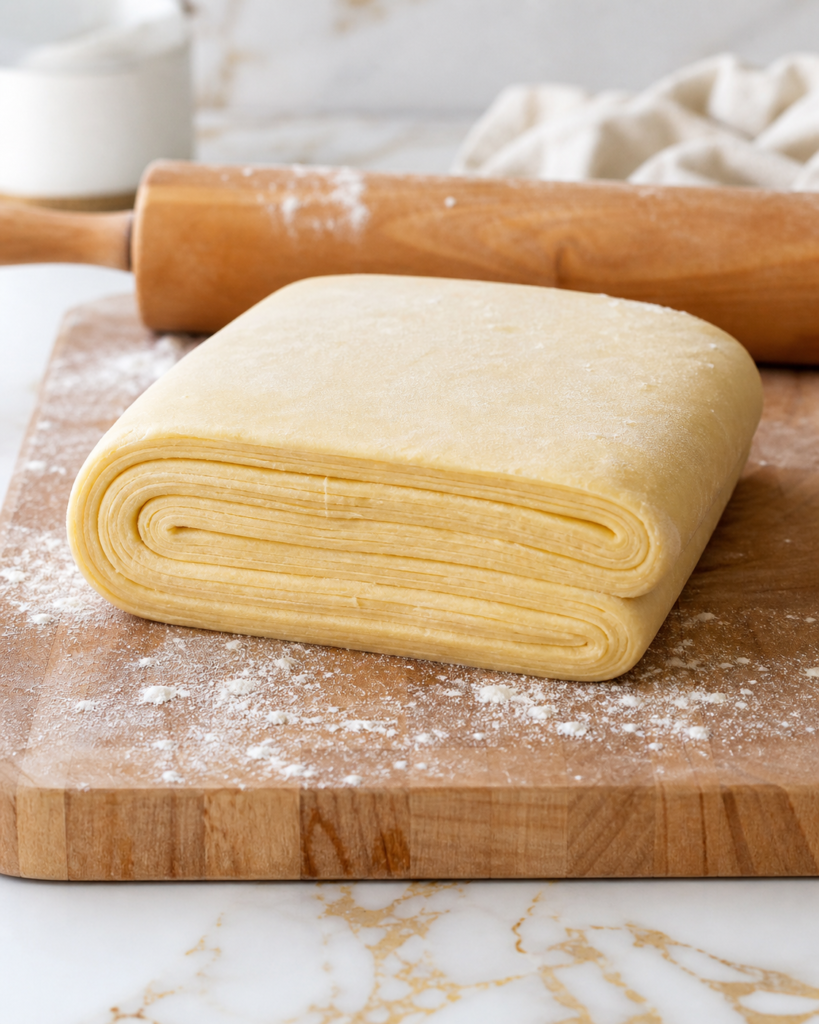
Lightly flour the counter and roll the dough into a long rectangle, about 8 by 20 inches. Fold the dough into thirds like a letter, brushing away extra flour as you fold. Wrap the dough and chill it for 30 to 45 minutes so the butter firms up again.
Step 6: Repeat the Folds
Repeat the rolling and folding process 2 more times, chilling the dough for 30 to 45 minutes between each fold. Roll gently and keep the edges as straight as you can. After the final fold, wrap the dough tightly and chill it for at least 1 hour, or overnight for easier shaping.
Step 7: Roll for Shaping
Roll the chilled laminated dough into a large rectangle, about 10 by 24 inches and about 1/4 inch thick. Trim the edges with a sharp knife or pizza cutter so the layers are clean and even. Try not to press down hard on the edges, because clean cuts help the croissants rise better.
Step 8: Cut the Triangles
Cut the dough into long triangles, about 4 inches wide at the base and 8 to 10 inches tall. Make a small 1/2-inch slit in the center of each triangle base. This helps the croissants spread slightly as they roll and gives them their classic curved shape.
Step 9: Shape the Croissants
Gently stretch each triangle just a little, then roll from the wide base toward the pointed tip. Place each croissant on a parchment-lined baking sheet with the tip tucked underneath. Curve the ends slightly inward if you want a traditional crescent shape.
Step 10: Proof the Croissants
Cover the shaped croissants loosely with plastic wrap or a clean kitchen towel. Let them proof at room temperature for 1 1/2 to 2 1/2 hours, until they look puffy, soft, and slightly jiggly when the pan is moved. Do not rush this step, because under-proofed croissants can leak butter and bake up dense.
Step 11: Brush and Bake
Preheat the oven to 400°F. Whisk together 1 large egg and 1 tablespoon milk, then gently brush the croissants with the egg wash. Bake for 18 to 22 minutes, until deeply golden brown and crisp on the outside.
Step 12: Cool Before Serving
Let the croissants cool on the baking sheet for 10 minutes before serving. The layers will continue to set as they cool, and the inside will stay tender and airy. Serve them warm or at room temperature.
Serving Suggestions
Fresh croissants are lovely with butter and jam for a simple breakfast. The flaky layers pair well with strawberry, raspberry, apricot, or orange marmalade.
You can serve them with scrambled eggs, fruit, and yogurt for a calm weekend brunch. This makes the meal feel special without needing many extra dishes.
For a savory option, slice the croissants and fill them with ham, cheese, turkey, or soft scrambled eggs. The buttery dough makes even simple fillings taste cozy and satisfying.
Croissants also work well with a warm drink like coffee, tea, or hot chocolate. This is especially nice for a slow morning or a family breakfast at the table.
If you are using the dough for pastries, add chocolate batons, almond filling, or a spoonful of fruit preserves before shaping. Keep the fillings modest so the dough can rise and bake evenly.
Leftovers and Storage
Homemade croissants taste best the day they are baked, when the outside is crisp and the inside is soft. Once they are fully cool, store leftovers in an airtight container or bag at room temperature for up to 2 days. Avoid refrigerating baked croissants, because the refrigerator can make them dry and firm.
To refresh leftover croissants, warm them in a 300°F oven for 5 to 8 minutes. This helps bring back some of the crisp texture and makes the butter flavor taste fresh again. A toaster oven also works well for one or two croissants.
Baked croissants can be frozen for up to 2 months. Let them cool completely, wrap each one tightly, and place them in a freezer-safe bag. Reheat from frozen in a 325°F oven until warmed through and lightly crisp.
Nutrition and Benefits
- Homemade control: Making croissant dough from scratch lets you choose the butter, flour, and ingredients you feel good using. It also helps you avoid extra fillers that may be found in some store-bought pastries.
- A satisfying baking skill: Learning laminated dough builds confidence in the kitchen. Once you understand the rolling, folding, and chilling steps, you can use the same method for many pastries.
- Comforting family treat: Croissants are rich and buttery, so they feel special when served for breakfast, brunch, or a holiday morning. They are a nice recipe to make when you want something homemade and memorable.
- Flexible sweet or savory base: This dough can become plain croissants, chocolate croissants, ham and cheese pastries, or fruit-filled treats. One dough gives you many serving options.
- Made for sharing: A batch of croissants is easy to serve to family, guests, or neighbors. The recipe makes enough for a small gathering while still freezing well for later.
Recipe FAQ
Can I make croissant dough without a stand mixer?
Yes, you can make croissant dough by hand. Mix the dough in a large bowl, then knead it on the counter until it becomes smooth and slightly elastic. It may take a few extra minutes by hand, but the dough does not need to be kneaded as long as bread dough. The rolling and folding steps are the most important part for flaky layers.
Why is my butter breaking inside the dough?
Butter usually breaks when it is too cold and firm compared to the dough. Let the dough sit for a few minutes at room temperature before rolling if it feels stiff. The butter should bend with the dough instead of cracking into pieces. Try to keep both the dough and butter at a similar cool, flexible texture.
Why is butter leaking while the croissants bake?
A little butter leakage can happen, but a lot often means the croissants were under-proofed or the butter got too warm during rolling. Make sure the shaped croissants look puffy before baking. Also keep the dough chilled between folds so the butter stays layered. Proper proofing helps the dough rise around the butter instead of pushing it out.
Can I use regular unsalted butter instead of European-style butter?
Yes, regular unsalted butter can work, but European-style butter usually gives better layers because it has a higher butterfat content. Regular butter has more water, which can make the dough a little harder to laminate. If using regular butter, keep it very cold but pliable. The croissants will still taste good, though the texture may be slightly less flaky.
How do I know when croissants are proofed enough?
The croissants should look noticeably puffy and soft. When you gently shake the baking sheet, they should have a slight jiggle. You may also see some layers separating near the edges. If they still look tight or small, they need more time.
Can I freeze croissant dough?
Yes, croissant dough freezes well after shaping. Freeze the shaped croissants on a baking sheet until firm, then transfer them to a freezer-safe bag or container. Thaw them in the refrigerator overnight before proofing. Once thawed, let them rise at room temperature until puffy, then brush and bake.
Why are my croissants dense instead of flaky?
Dense croissants usually come from warm butter, under-proofing, or rolling the dough too aggressively. Keep the dough cold between folds and give the shaped croissants enough time to rise. Roll with steady, gentle pressure so the layers stay intact. Baking at a hot temperature also helps create steam, lift, and crisp layers.
A Buttery Baking Project Worth the Time
Croissant dough from scratch is a slow, simple process that rewards patience with tender layers and a rich, buttery bite. It is the kind of recipe that makes a morning feel special, whether you serve the croissants plain, filled with chocolate, or tucked beside eggs and fruit for breakfast.
Once you learn the rhythm of chilling, rolling, and folding, the recipe feels much less intimidating. Homemade croissants are comforting, dependable, and worth making again when you want a cozy baking project that brings everyone to the kitchen.