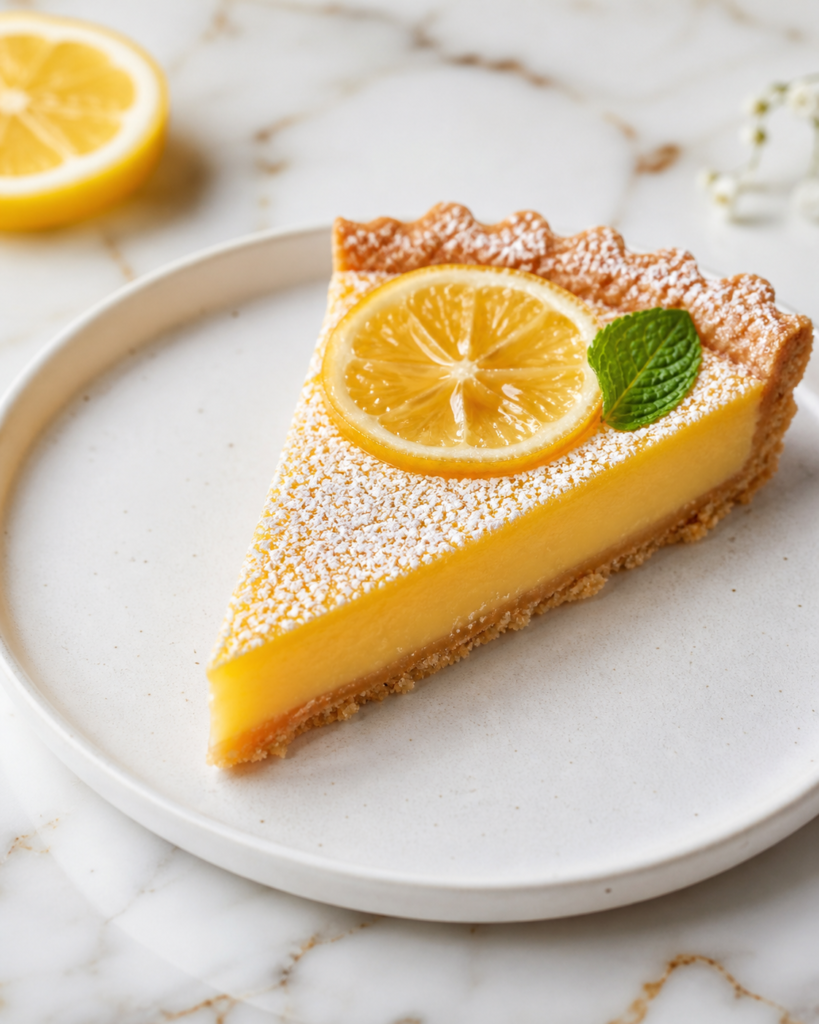
I make Almond Flour Lemon Tart when I want a dessert that feels bright, simple, and a little special without being too heavy. The crust has a tender, nutty flavor from almond flour, and the lemon filling is smooth, fresh, and just sweet enough.
This tart is the kind of dessert I like for spring lunches, family dinners, holidays, or quiet weekends when we want something homemade. It feels fancy on the plate, but the steps are very doable, and the flavor is the perfect mix of buttery, tangy, and sweet.

Why You’ll Love This Recipe
Almond Flour Lemon Tart has a lovely balance of textures. The crust is soft but sturdy, with a gentle nutty taste, and the lemon filling is creamy, bright, and smooth.
It is also a nice choice for families because the flavor is fresh without being too sharp. Kids who enjoy lemon bars often like this tart, especially with a little whipped cream or fresh berries on top.
This recipe is naturally gluten-free if you use certified gluten-free ingredients. It is a dependable dessert for gatherings because it can be made ahead, chilled, and sliced when you are ready to serve.
Serves: 8 people
This tart serves 8 people in neat slices. If you are serving it after a large meal, you can cut smaller slices and stretch it to 10 servings, especially with berries or whipped cream on the side.
Ingredients You’ll Need
For the Almond Flour Crust
- 2 cups blanched almond flour
- ¼ cup coconut flour
- ¼ cup granulated sugar
- ¼ teaspoon fine sea salt
- 6 tablespoons unsalted butter, melted and slightly cooled
- 1 large egg
- 1 teaspoon vanilla extract
- ½ teaspoon almond extract, optional
For the Lemon Filling
- 4 large eggs
- 3 large egg yolks
- ¾ cup granulated sugar
- ⅔ cup fresh lemon juice
- 1 tablespoon lemon zest
- ½ cup heavy cream
- ¼ teaspoon fine sea salt
- 3 tablespoons unsalted butter, melted and slightly cooled
For Serving
- 1 tablespoon powdered sugar, optional
- 1 cup fresh berries, optional
- ½ cup whipped cream, optional
- Extra lemon zest, optional
Blanched almond flour gives the crust its soft crumb and mild nutty flavor. It works better than almond meal because it has a finer texture and a lighter color.
Coconut flour helps absorb moisture and gives the crust a little more structure. A small amount goes a long way, so it is important not to add extra unless the dough truly needs it.
Butter, egg, and vanilla help bind the crust together. The melted butter gives richness, while the egg helps the crust hold its shape after baking.
Fresh lemon juice is best for the filling because it gives the tart a clean, bright flavor. Bottled lemon juice can taste flat or bitter, so fresh lemons are worth using here.
Lemon zest adds extra citrus flavor without adding more liquid. It makes the filling taste more fragrant and homemade.
Heavy cream softens the tartness of the lemon and gives the filling a smooth texture. It helps the tart set into a creamy slice instead of a sharp lemon bar texture.
Extra toppings are optional, but they make the tart feel finished. Powdered sugar, berries, whipped cream, and lemon zest all pair nicely with the almond crust and lemon filling.
Pro Tips
Use blanched almond flour, not coarse almond meal. A fine almond flour gives the crust a smoother texture and helps it press evenly into the tart pan.
Press the crust firmly into the pan. Use your fingers or the bottom of a measuring cup to make an even layer along the bottom and up the sides.
Do not skip chilling the crust if your kitchen is warm. A short chill helps the butter firm up, which can make the crust easier to bake neatly.
Use fresh lemon juice and fresh zest for the best flavor. Since lemon is the main taste in the filling, fresh citrus makes the tart brighter and more balanced.
Bake the tart until the center is just set with a slight wobble. It will continue to firm as it cools, and overbaking can make the filling crack or turn grainy.
Let the tart cool fully before slicing. A chilled tart cuts much more cleanly and gives the filling time to settle into the right texture.
Tools You’ll Need
- 9-inch tart pan with removable bottom
- Large mixing bowl
- Medium mixing bowl
- Whisk
- Silicone spatula
- Measuring cups
- Measuring spoons
- Microplane or fine grater
- Citrus juicer
- Small saucepan or microwave-safe bowl for melting butter
- Fork
- Parchment paper
- Pie weights or dried beans, optional
- Baking sheet
- Cooling rack
- Fine mesh sieve, optional
- Sharp knife
A tart pan with a removable bottom makes this dessert much easier to serve. It helps you lift the tart out cleanly so the edges stay pretty.
A baking sheet is helpful for moving the tart pan in and out of the oven. Tart pans with removable bottoms can be delicate, so placing one on a baking sheet gives extra support.
A microplane or fine grater is the best tool for lemon zest. It removes the bright yellow zest without taking too much of the bitter white pith.
A fine mesh sieve is optional, but it can make the filling extra smooth. Straining the lemon filling before pouring it into the crust removes bits of zest or egg that did not fully blend.
Pie weights or dried beans can help keep the crust flat while it par-bakes. If you do not have them, you can prick the crust well with a fork and watch for any puffing.
Substitutions and Variations
Make It Dairy-Free
Use melted coconut oil or a dairy-free butter substitute in the crust and filling. Replace the heavy cream with full-fat coconut milk for a creamy texture with a light coconut flavor.
Use Honey for a Softer Sweetness
Replace part of the granulated sugar in the filling with honey. Use ½ cup sugar and ¼ cup honey so the filling still sets well and keeps the lemon flavor clear.
Add a Berry Topping
Top the chilled tart with fresh raspberries, blueberries, or sliced strawberries before serving. The berries add color, freshness, and a sweet contrast to the tangy lemon filling.
Make It More Almond-Flavored
Add the optional almond extract to the crust for a stronger bakery-style flavor. Keep it to ½ teaspoon because almond extract can become too strong if you add too much.
Try a Lime Version
Use fresh lime juice and lime zest instead of lemon. The tart will taste a little softer and more tropical while keeping the same creamy citrus style.
Make Ahead Tips
Almond Flour Lemon Tart is a wonderful make-ahead dessert because it needs time to cool and chill before slicing. I like to bake it the day before serving so the filling has plenty of time to set and the flavors taste smooth and balanced.
You can prepare the almond flour crust up to 1 day ahead. Bake it, let it cool completely, then cover it loosely and keep it at room temperature until you are ready to add the filling.
The lemon filling can be whisked together shortly before baking, but I do not recommend storing the raw filling for too long. The lemon juice can affect the eggs as it sits, so it is best mixed and poured into the crust the same day.
Once baked, the full tart can be refrigerated for up to 2 days before serving. Keep it covered gently so the top stays smooth and does not pick up flavors from the refrigerator.
If you plan to add berries, whipped cream, powdered sugar, or extra lemon zest, wait until just before serving. This keeps the tart looking fresh and prevents toppings from softening the surface.
Instructions
Step 1: Prepare the Tart Pan
Preheat the oven to 350°F. Place a 9-inch tart pan with a removable bottom on a baking sheet so it is easier to move in and out of the oven.
Lightly grease the tart pan if needed. This helps the almond flour crust release cleanly once the tart has cooled.
Step 2: Mix the Almond Flour Crust
In a large mixing bowl, stir together the blanched almond flour, coconut flour, granulated sugar, and fine sea salt. Make sure there are no large clumps of almond flour before adding the wet ingredients.
Add the melted butter, egg, vanilla extract, and almond extract if using. Stir with a fork or spatula until the mixture looks like a soft, slightly crumbly dough.
Step 3: Press the Crust Into the Pan
Transfer the crust mixture into the prepared tart pan. Press it firmly across the bottom and up the sides in an even layer.
Use the bottom of a measuring cup to smooth the base if needed. Try to keep the edges the same thickness so the crust bakes evenly and does not brown too quickly in one spot.
Step 4: Chill and Prick the Crust
Place the tart pan in the refrigerator for 15 minutes if the dough feels very soft. This short chill helps the butter firm up and makes the crust hold its shape better.
After chilling, prick the bottom of the crust several times with a fork. This helps steam escape while the crust bakes.
Step 5: Par-Bake the Crust
Bake the crust at 350°F for 10 to 12 minutes, or until it looks lightly golden around the edges. If the center puffs up, gently press it down with the back of a spoon after baking.
Let the crust cool for 10 minutes while you make the filling. Keep the oven on at 350°F.
Step 6: Whisk the Lemon Filling
In a medium mixing bowl, whisk together the eggs, egg yolks, granulated sugar, fresh lemon juice, lemon zest, heavy cream, fine sea salt, and melted butter. Whisk until the mixture looks smooth and evenly blended.
For an extra silky filling, pour the mixture through a fine mesh sieve. This step is optional, but it helps remove any bits of egg or zest for a smoother tart.
Step 7: Fill the Crust
Carefully pour the lemon filling into the warm par-baked crust. Do not overfill the crust, and move slowly so the filling does not splash over the edges.
Keep the tart pan on the baking sheet for support. This makes it easier to transfer the tart to the oven without spilling the filling.
Step 8: Bake the Tart
Bake the tart at 350°F for 18 to 24 minutes. The edges should look set, and the center should have a slight wobble when the pan is gently moved.
Do not wait for the center to look completely firm in the oven. The filling will continue to set as it cools, and overbaking can cause cracks or a grainy texture.
Step 9: Cool and Chill
Remove the tart from the oven and place it on a cooling rack. Let it cool at room temperature for at least 1 hour.
Once cooled, refrigerate the tart for at least 2 hours before slicing. Chilling helps the filling firm up and makes each slice cleaner.
Step 10: Garnish and Serve
Before serving, dust the tart lightly with powdered sugar if desired. Add fresh berries, whipped cream, or extra lemon zest for a pretty finish.
Use a sharp knife to slice the tart into wedges. Wipe the knife between cuts if you want the cleanest slices.
Serving Suggestions
Serve Almond Flour Lemon Tart chilled with a small spoonful of whipped cream. The cream softens the bright lemon flavor and makes each bite feel smooth and gentle.
Fresh berries are a lovely topping for this tart. Raspberries, blueberries, blackberries, or sliced strawberries add color and natural sweetness.
For a simple afternoon treat, serve a slice with hot tea or coffee. The nutty almond crust and lemon filling pair nicely with warm drinks.
This tart also works well after a heavier meal because it tastes bright and fresh. A small slice feels satisfying without being too rich.
For brunch, serve it alongside fruit salad, yogurt, muffins, or a simple egg dish. It adds a sweet citrus finish without needing a large dessert spread.
If serving to kids, add a little whipped cream or a few berries on top. The extra sweetness helps balance the tangy lemon flavor.
Leftovers and Storage
Store leftover Almond Flour Lemon Tart in the refrigerator for up to 4 days. Cover it gently with plastic wrap or place it in an airtight container so the filling stays fresh.
The crust will soften slightly as it sits, but it should still taste tender and pleasant. For the best texture, enjoy the tart within the first 2 to 3 days.
Keep toppings separate whenever possible. Powdered sugar can dissolve into the filling, and berries can release juice if they sit on the tart too long.
This tart can be frozen, but the texture may change a little after thawing. If freezing, wrap individual slices tightly and place them in a freezer-safe container for up to 1 month.
Thaw frozen slices overnight in the refrigerator. Serve chilled, and add fresh toppings after thawing for the best look and flavor.
Avoid reheating this tart. It is meant to be served chilled or cool, and warming it can soften the filling too much.
Nutrition and Benefits
- Almond flour gives the crust a naturally nutty flavor and a tender texture. It also adds protein and healthy fats, which make the dessert feel a little more satisfying.
- Fresh lemon juice brings bright citrus flavor without needing artificial flavoring. It keeps the tart fresh, clean, and balanced.
- Eggs help the filling set into a smooth, creamy texture. They also add structure so the tart slices neatly after chilling.
- This tart is naturally gluten-free when made with certified gluten-free ingredients. It is a helpful dessert option for family gatherings where some guests avoid wheat.
- Serving the tart with fresh berries adds color, freshness, and natural sweetness. It also makes each slice feel lighter and more balanced.
Recipe FAQ
Can I use almond meal instead of almond flour?
Almond meal can work, but the crust will be more coarse and darker in color. Blanched almond flour gives the best soft, even texture. If using almond meal, press the crust firmly so it holds together well.
Why did my lemon filling crack?
The filling may crack if the tart is overbaked or cooled too quickly. Remove it from the oven when the edges are set and the center still has a slight wobble. Let it cool at room temperature before chilling.
Can I make this tart dairy-free?
Yes, you can use dairy-free butter or coconut oil in place of butter. Replace the heavy cream with full-fat coconut milk. The flavor will change slightly, but the tart will still be creamy and bright.
Can I use bottled lemon juice?
Fresh lemon juice is best for this tart. Bottled lemon juice can taste dull or bitter, and lemon is the main flavor here. Fresh juice and zest give the filling a cleaner, brighter taste.
How do I know when the tart is done?
The tart is done when the edges look set and the center jiggles slightly. It should not look loose or watery. The filling will continue to firm as it cools and chills.
Can I make this tart ahead for a holiday?
Yes, this is a great holiday dessert because it needs chilling time. Bake it 1 day ahead, refrigerate it, and add toppings just before serving. This makes the day of serving much easier.
Why is my almond flour crust crumbly?
The crust may be crumbly if it was not pressed firmly enough or if there was too much dry flour. Measure the almond flour and coconut flour carefully. Let the tart chill fully before slicing so the crust has time to set.
A Bright Lemon Treat for Sharing
Almond Flour Lemon Tart is simple enough for a weekend bake but pretty enough for a family gathering. The nutty crust, creamy lemon filling, and fresh citrus flavor make it feel light, comforting, and dependable every time.
It is a dessert worth making again because it can be prepared ahead and served straight from the fridge. With clean slices, bright flavor, and easy toppings, it brings a sweet homemade finish to any meal.