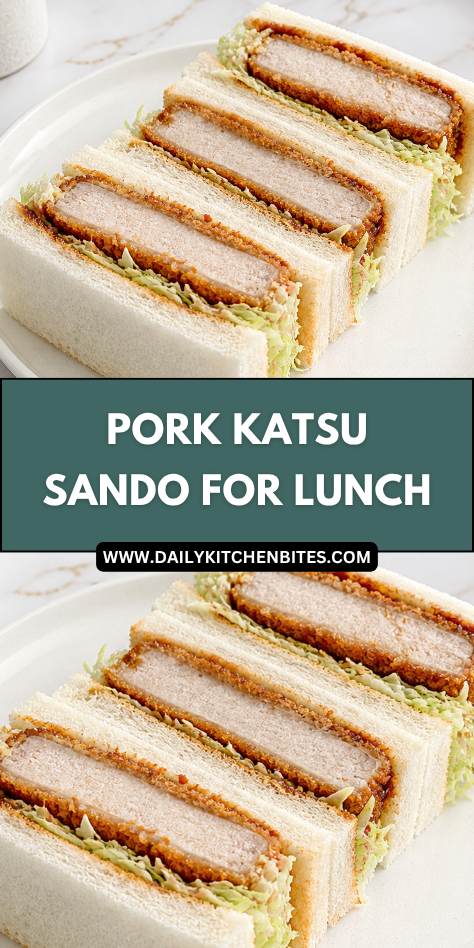
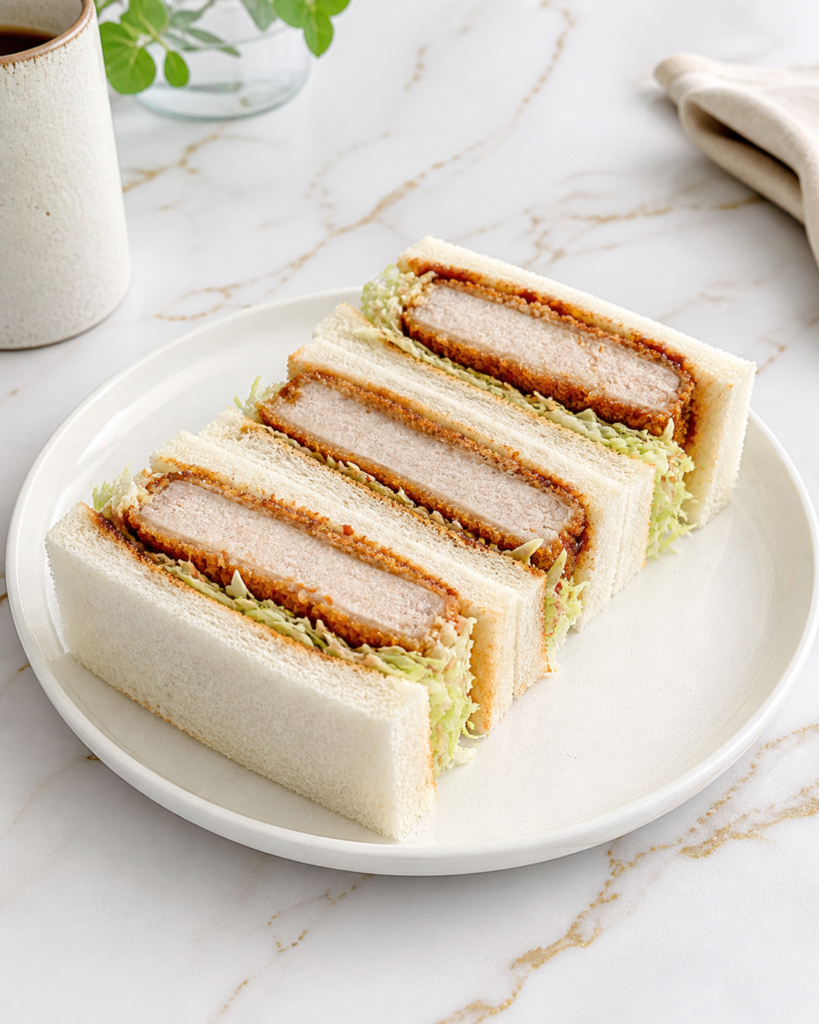
I make Pork Katsu Sando when I want a sandwich that feels crisp, tender, and deeply satisfying without being complicated. The pork cutlet gets coated in panko and fried until golden, then tucked between soft bread with tangy katsu sauce and crunchy cabbage.
This is the kind of sandwich that feels special but still works for a family lunch, weekend dinner, or fun homemade takeout night. I love the contrast of the juicy pork, fluffy bread, crisp coating, and sweet-savory sauce because every bite feels balanced and comforting.
Why You’ll Love This Recipe
Pork Katsu Sando is simple, hearty, and full of texture. The pork is tender inside, the panko crust is light and crunchy, and the soft sandwich bread keeps everything easy to bite into.
The flavor is also very family-friendly. Katsu sauce is sweet, tangy, and savory, so it gives the sandwich a bold taste without being spicy or too strong.
This recipe is a fun way to make lunch or dinner feel a little different. You can serve it with fries, fruit, salad, miso soup, or sliced vegetables, and it works just as well for adults as it does for kids.
Serves: 4 people
This recipe makes 4 generous sandwiches, each with one crispy pork cutlet. It is filling enough for lunch or dinner, especially when served with a simple side.
If you are feeding younger children, you can slice each sandwich into smaller halves or quarters. For bigger appetites, serve the sandwiches with extra cabbage, pickles, potato salad, or a warm bowl of soup.
Ingredients You’ll Need
For the Pork Katsu
- 4 boneless pork loin chops, about 4 to 5 ounces each
- 1 teaspoon kosher salt
- 1/2 teaspoon black pepper
- 1/2 teaspoon garlic powder
- 1/2 cup all-purpose flour
- 2 large eggs
- 1 tablespoon water
- 1 1/2 cups panko breadcrumbs
- 2 cups neutral oil, such as canola oil or vegetable oil, for frying
For the Katsu Sauce
- 1/4 cup ketchup
- 2 tablespoons Worcestershire sauce
- 1 tablespoon oyster sauce
- 1 tablespoon soy sauce
- 1 tablespoon honey or brown sugar
- 1 teaspoon Dijon mustard
- 1/2 teaspoon garlic powder
For the Sandwiches
- 8 slices soft white sandwich bread, milk bread, or shokupan
- 2 cups finely shredded green cabbage
- 2 tablespoons mayonnaise, preferably Japanese-style mayonnaise
- 1 teaspoon fresh lemon juice
- 1/4 teaspoon kosher salt
- 1 tablespoon unsalted butter, softened, optional
- 1 tablespoon extra mayonnaise, for spreading
- 1 teaspoon toasted sesame seeds, optional
- Pickles or sliced cucumbers, optional for serving
Pro Tips
Use pork loin chops that are close to the same thickness. This helps them cook evenly, so the crust turns golden while the pork stays juicy.
Pound the pork gently before breading it. A thin, even cutlet cooks quickly and fits better between slices of bread.
Season the pork before breading. Even though the sauce is flavorful, seasoning the meat itself keeps the sandwich from tasting flat.
Press the panko firmly onto the pork. This helps the breadcrumbs stick and gives the cutlet that light, crisp coating.
Keep the oil at a steady medium heat. If the oil is too hot, the outside will brown before the pork cooks through, and if it is too cool, the crust can turn greasy.
Let the fried pork rest on a wire rack instead of paper towels if you can. A rack keeps the bottom crisp while the cutlet cools slightly.
Shred the cabbage very thinly. Fine cabbage gives the sandwich crunch without making it hard to bite.
Trim the crusts if you want a classic katsu sando look. It is not required, but it does give the sandwich a neat, soft, café-style finish.
Tools You’ll Need
- Cutting board
- Sharp knife
- Meat mallet or rolling pin
- Plastic wrap or parchment paper
- Measuring cups
- Measuring spoons
- 3 shallow bowls
- Whisk or fork
- Large skillet or Dutch oven
- Tongs
- Instant-read thermometer
- Wire rack
- Baking sheet
- Small mixing bowl
- Medium mixing bowl
- Spatula or spoon
- Serrated knife
Substitutions and Variations
Use Chicken Instead
Use thin chicken cutlets instead of pork for a chicken katsu sando. The breading and sauce stay the same, but check the chicken carefully so it reaches 165°F in the center.
Make It Lighter
Bake or air fry the breaded pork instead of deep frying. The crust will not be quite as rich, but it can still turn crisp with a light spray of oil.
Change the Bread
Use milk bread, brioche, soft white sandwich bread, or even a soft roll. The bread should be tender enough to bite easily but sturdy enough to hold the cutlet and sauce.
Add More Crunch
Add sliced cucumbers, pickled onions, or extra shredded cabbage. These toppings keep the sandwich fresh and help balance the fried pork.
Make It Saucy
Spread extra katsu sauce on both sides of the bread or serve more on the side for dipping. This makes the sandwich richer and more flavorful while keeping the crispy pork as the main focus.
Make Ahead Tips
Pork Katsu Sando is best when the cutlets are freshly fried and still crisp, but you can prepare several parts ahead. The katsu sauce can be mixed up to 5 days in advance and stored in a covered jar in the refrigerator.
You can also shred the cabbage earlier in the day. Keep it in an airtight container with a paper towel to absorb extra moisture so it stays crisp and fresh.
The pork can be pounded and seasoned up to 1 day ahead. Store it covered in the refrigerator, then bread it close to cooking time for the best crust.
If you want to bread the pork ahead, place the coated cutlets on a parchment-lined tray and refrigerate them uncovered for up to 2 hours. This can actually help the panko stick better, but do not leave them too long or the coating may become damp.
For packed lunches, let the cutlet cool slightly before assembling the sandwich. This helps reduce steam, which keeps the bread from getting soggy.
Instructions
Step 1: Make the Katsu Sauce
In a small bowl, stir together the ketchup, Worcestershire sauce, oyster sauce, soy sauce, honey or brown sugar, Dijon mustard, and garlic powder. Mix until the sauce is smooth and glossy.
Taste the sauce and adjust it gently if needed. Add a little more honey for sweetness, a small splash of soy sauce for saltiness, or extra Worcestershire sauce for tang.
Step 2: Prepare the Cabbage
Place the finely shredded green cabbage in a medium bowl. Add the mayonnaise, fresh lemon juice, kosher salt, and toasted sesame seeds if using.
Toss gently until the cabbage is lightly coated. Keep it chilled while you prepare the pork so it stays crisp and cool.
Step 3: Pound the Pork
Place each boneless pork loin chop between two pieces of plastic wrap or parchment paper. Pound gently with a meat mallet or rolling pin until the pork is about 1/2 inch thick.
Try to make each cutlet an even thickness from edge to edge. This helps the pork cook quickly and evenly while the panko turns golden.
Step 4: Season the Pork
Pat the pork dry with paper towels. Season both sides with kosher salt, black pepper, and garlic powder.
Let the pork sit for about 5 minutes while you set up the breading station. This gives the seasoning a little time to settle into the meat.
Step 5: Set Up the Breading Station
Place the all-purpose flour in one shallow bowl. In a second shallow bowl, whisk the eggs with 1 tablespoon water.
Place the panko breadcrumbs in a third shallow bowl. Line the bowls up in this order: flour, egg, then panko.
Step 6: Bread the Cutlets
Coat each pork cutlet lightly in flour, shaking off the excess. Dip it into the egg mixture, letting any extra drip back into the bowl.
Press the cutlet firmly into the panko breadcrumbs on both sides. Make sure the pork is fully coated, especially around the edges.
Step 7: Heat the Oil
Pour the neutral oil into a large skillet or Dutch oven. Heat it over medium heat until it reaches about 340°F to 350°F.
If you do not have a thermometer, drop a few panko crumbs into the oil. They should sizzle right away and turn golden slowly, not burn instantly.
Step 8: Fry the Pork Katsu
Carefully lower the breaded pork cutlets into the hot oil, cooking in batches if needed. Fry for 3 to 4 minutes per side, or until golden brown and cooked through.
The pork should reach 145°F in the center. Transfer the cutlets to a wire rack set over a baking sheet so the crust stays crisp.
Step 9: Rest and Sauce the Cutlets
Let the pork rest for 3 to 5 minutes after frying. This helps the juices settle and keeps the meat tender when sliced or bitten into.
Brush or spoon katsu sauce over both sides of each cutlet. Use enough to coat the crust lightly without soaking it completely.
Step 10: Prepare the Bread
Lay out the soft sandwich bread, milk bread, or shokupan. Spread a thin layer of softened butter or mayonnaise on the inside of each slice if desired.
This light layer adds flavor and helps protect the bread from too much sauce. It also gives the sandwich a softer, richer bite.
Step 11: Assemble the Sandwiches
Place a sauced pork cutlet on 4 slices of bread. Add a small handful of dressed cabbage over each cutlet.
Top with the remaining bread slices and press down gently. Do not press too hard, or the crust may crack and the filling may slide out.
Step 12: Trim and Slice
For a classic look, trim the crusts from the sandwiches with a sharp serrated knife. This step is optional, but it gives the sando a neat café-style shape.
Slice each sandwich in half, either straight across or into rectangles. Serve right away while the pork is crisp and the bread is soft.
Serving Suggestions
Pork Katsu Sando is delicious with a simple side of fries or oven-baked potato wedges. The crispy potatoes match the crunchy pork and make the meal feel fun and filling.
A small cucumber salad is a fresh side that balances the fried cutlet. Thin cucumbers with rice vinegar, a pinch of sugar, and sesame seeds work especially well.
You can also serve the sandwich with miso soup for a warm and comforting meal. The light broth helps balance the rich pork and soft bread.
For lunch boxes, pack the sandwich with fruit, carrot sticks, snap peas, or sliced cucumbers. These fresh sides make the meal feel bright and easy to eat.
Pickles are also a great pairing because their tang cuts through the richness. Dill pickles, quick pickled onions, or Japanese pickles all work nicely.
For a heartier dinner, serve the sando with cabbage slaw and a small bowl of rice. It keeps the meal simple while making it more filling for bigger appetites.
Leftovers and Storage
Pork Katsu Sando is best enjoyed right after assembly because the pork is crisp and the bread is soft. Once stored, the crust will slowly soften from the sauce, cabbage, and moisture inside the sandwich.
If you have leftovers, store the pork cutlets separately from the bread, sauce, and cabbage whenever possible. Keep cooked cutlets in an airtight container in the refrigerator for up to 3 days.
Reheat pork katsu in a 375°F oven or air fryer for 6 to 10 minutes, or until hot and crisp again. Avoid microwaving if you want the panko coating to stay crunchy.
The cabbage mixture can be stored in the refrigerator for 1 day, though it will soften as it sits. For the freshest texture, dress only the amount of cabbage you plan to use.
Assembled sandwiches can be wrapped tightly and refrigerated for up to 1 day. They will still taste good, but the texture will be softer than freshly made.
Freezing assembled sandwiches is not recommended. You can freeze cooked, unsauced pork cutlets for up to 1 month, then reheat them in the oven and assemble fresh sandwiches.
Nutrition and Benefits
- Pork loin adds protein and makes the sandwich hearty and satisfying. Pounding it thin helps the cutlet cook quickly while staying tender.
- Panko breadcrumbs create a light, crisp coating that gives the sandwich its signature crunch. They fry up airier than regular breadcrumbs.
- Cabbage adds freshness, texture, and a little balance to the rich fried pork. Shredding it finely makes it easy to layer into the sandwich.
- Katsu sauce brings sweet, tangy, and savory flavor in a small amount. It helps tie together the pork, bread, and cabbage without needing many extra toppings.
- Making pork katsu sando at home lets you control the seasoning, sauce, and portion size. You can keep it simple for kids or add pickles, cucumbers, and extra sauce for more flavor.
Recipe FAQ
Can I use chicken instead of pork?
Yes, chicken cutlets work very well in this recipe. Pound them to an even thickness and bread them the same way. Cook chicken until it reaches 165°F in the center.
What bread is best for katsu sando?
Soft milk bread or shokupan is the classic choice because it is fluffy, tender, and slightly sweet. Soft white sandwich bread also works well. Avoid crusty bread because it can overpower the delicate crunch of the cutlet.
Can I bake the pork instead of frying it?
Yes, you can bake it, though the crust will be a little less rich. Spray the breaded pork with oil and bake at 425°F for about 15 to 20 minutes, flipping once. Cook until golden and the pork reaches 145°F.
How do I keep the pork crispy?
Let the fried pork rest on a wire rack instead of paper towels. Sauce it lightly, and assemble the sandwich close to serving time. Too much sauce or warm steam can soften the panko crust.
Can I make the katsu sauce ahead?
Yes, the sauce can be made up to 5 days ahead. Store it in a covered jar in the refrigerator and stir before using. The flavor may deepen a little as it sits.
What can I use instead of oyster sauce?
You can use hoisin sauce or a little extra Worcestershire sauce and soy sauce. The flavor will change slightly, but the sauce will still be sweet, tangy, and savory. For a vegetarian-style sauce, choose a mushroom-based oyster sauce.
Can I pack pork katsu sando for lunch?
Yes, but it is best if the cutlet is cooled slightly before assembly. Use a light amount of sauce and cabbage so the bread does not get too soft. Wrapping the sandwich snugly helps it hold together.
A Crispy Sandwich That Feels Special
Pork Katsu Sando is a warm, crunchy, and comforting sandwich that makes lunch or dinner feel a little more fun. The tender pork, crisp panko coating, soft bread, tangy sauce, and fresh cabbage come together in a way that feels simple but satisfying.
It is worth making again because it works for family meals, weekend lunches, or homemade takeout nights. Serve it fresh for the best crunch, keep the toppings flexible, and enjoy a sandwich that feels cozy, neat, and full of flavor.