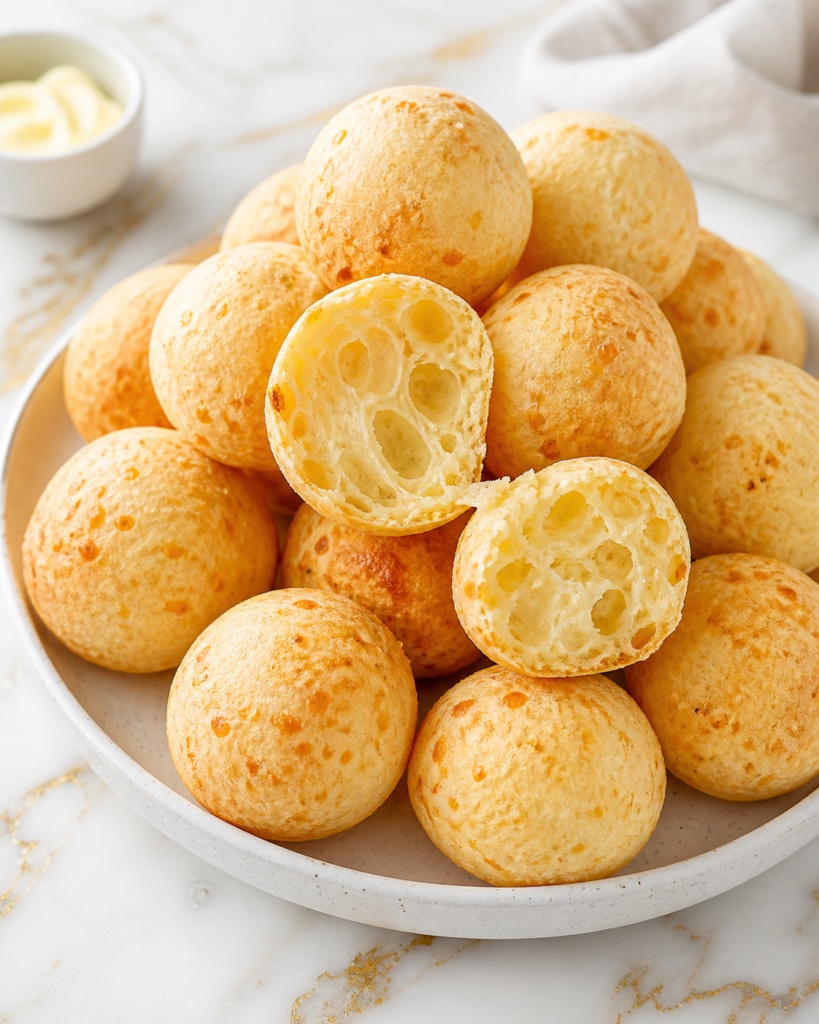
I make Pão de Queijo Brazilian Cheese Bread when I want something warm, chewy, cheesy, and easy to share. These little cheese breads bake up with golden tops, soft centers, and a stretchy texture that makes them feel comforting from the first bite.
This recipe is one of those simple snacks that disappears quickly in my house. It works for breakfast, lunch boxes, after-school snacks, soups, or family dinners, and I love that it is naturally gluten-free because it is made with tapioca flour instead of wheat flour.

Why You’ll Love This Recipe
Pão de Queijo Brazilian Cheese Bread is crisp on the outside, chewy in the middle, and full of cheesy flavor. The texture is different from regular bread, but that is what makes it so special and fun to eat.
It is also a great family recipe because the dough comes together with simple ingredients and bakes into small, snackable rolls. Kids love the cheesy pull, and adults love how well these little breads pair with coffee, soup, salad, eggs, or a cozy dinner.
This recipe is naturally gluten-free, which makes it helpful when serving guests with different needs. It does not taste like a substitute, though, because tapioca flour gives it the classic springy texture that pão de queijo is known for.
Serves: 8 people
This recipe makes about 24 small cheese breads, which serves 8 people with 3 pieces each. That is a nice amount for a family snack, brunch basket, or side dish with dinner.
If you are serving them to kids or setting them out for a party, you may want to double the batch. They are best warm from the oven, and people tend to reach for more than one.
Ingredients You’ll Need
- 2 cups tapioca flour, also called tapioca starch
- 1 cup whole milk
- 1/2 cup neutral oil, such as avocado oil, canola oil, or vegetable oil
- 1 teaspoon kosher salt
- 2 large eggs, room temperature
- 1 cup finely grated Parmesan cheese
- 1 cup shredded mozzarella cheese
- 1/2 cup shredded sharp cheddar cheese
- 1/4 teaspoon garlic powder, optional
- 1/8 teaspoon black pepper, optional
- 1 tablespoon finely chopped fresh parsley, optional
- Extra oil or nonstick spray, for greasing hands if needed
Pro Tips
Use tapioca flour, not regular flour or cornstarch. Tapioca flour is what gives pão de queijo its chewy, stretchy texture, and other flours will not create the same result.
Let the milk and oil mixture cool slightly before adding the eggs. If the dough is too hot, the eggs can scramble instead of blending smoothly into the dough.
Add the eggs one at a time and mix well after each addition. The dough may look slippery or separated at first, but it will come together as you keep mixing.
Use finely grated cheese for the best texture. Large shreds can work, but finer cheese melts more evenly into the dough and helps the bread bake up smoother.
Do not expect the dough to feel like regular bread dough. It will be sticky, stretchy, and thick, which is normal for tapioca-based cheese bread.
Lightly oil your hands before shaping the dough. This keeps the dough from sticking too much and makes it easier to roll into small balls.
Bake until the cheese breads are puffed and lightly golden. They should feel firm on the outside but still have a soft, chewy center when you bite into them.
Serve them warm whenever possible. Pão de queijo has the best texture fresh from the oven, when the outside is crisp and the inside is soft and cheesy.
Tools You’ll Need
- Medium saucepan
- Large mixing bowl
- Wooden spoon or sturdy spatula
- Measuring cups
- Measuring spoons
- Cheese grater
- Baking sheet
- Parchment paper
- Small cookie scoop, optional
- Cooling rack
- Pastry brush or oil spray, optional
Substitutions and Variations
Use Different Cheese
Try Monterey Jack, queso fresco, Gruyère, or a mild white cheddar in place of mozzarella or cheddar. Keep at least some Parmesan in the mix because it adds salty flavor and helps the cheese breads taste rich.
Make It Milder
Use mozzarella and mild cheddar for a softer cheese flavor. This version is great for kids or anyone who prefers a gentle, creamy bite.
Add Herbs
Stir in chopped parsley, chives, cilantro, or a small pinch of dried oregano. Herbs add freshness without changing the classic chewy cheese bread texture.
Add a Little Spice
Mix in a pinch of cayenne pepper, smoked paprika, or crushed red pepper flakes. Keep the amount small so the spice warms the bread without covering the cheesy flavor.
Make Mini Bites
Roll the dough into smaller balls and reduce the baking time slightly. Mini pão de queijo is perfect for lunch boxes, snack boards, parties, or serving with soup.
Make Ahead Tips
Pão de Queijo Brazilian Cheese Bread is best warm from the oven, but the dough is very make-ahead friendly. You can prepare the dough, shape it into balls, and chill it for several hours before baking.
For longer storage, shape the dough into balls and freeze them on a parchment-lined baking sheet until firm. Once frozen, move them to a freezer-safe bag or container and store them for up to 2 months.
When you are ready to bake, place the frozen cheese bread balls on a lined baking sheet and bake straight from the freezer. Add a few extra minutes to the baking time, and watch for puffed tops and light golden color.
You can also grate the cheeses ahead and store them in the refrigerator. This makes the dough come together more quickly when you want a fresh batch for breakfast, snack time, or dinner.
If the dough feels too firm after chilling, let it sit at room temperature for 10 to 15 minutes before shaping. Tapioca dough can tighten as it cools, but it softens again with a little time.
Instructions
Step 1: Preheat the Oven
Preheat the oven to 375°F. Line a baking sheet with parchment paper so the cheese breads do not stick.
Set the baking sheet aside while you prepare the dough. Having the pan ready makes it easier to shape and bake the rolls right away.
Step 2: Heat the Milk, Oil, and Salt
In a medium saucepan, combine the whole milk, neutral oil, and kosher salt. Warm the mixture over medium heat until it just begins to simmer around the edges.
Do not let it boil hard. You only need it hot enough to hydrate the tapioca flour and help form the stretchy dough.
Step 3: Add the Tapioca Flour
Place the tapioca flour in a large mixing bowl. Carefully pour the hot milk and oil mixture over the flour.
Stir with a wooden spoon or sturdy spatula until the mixture forms a thick, sticky dough. It may look uneven at first, but that is normal.
Step 4: Let the Dough Cool Slightly
Let the dough rest for 8 to 10 minutes before adding the eggs. It should still be warm, but not so hot that it cooks the eggs.
This cooling step helps protect the texture of the dough. If the eggs are added too soon, they can scramble and make the dough lumpy.
Step 5: Mix in the Eggs
Add the eggs one at a time, mixing well after each addition. The dough may look slippery or separated for a moment, but keep stirring.
After both eggs are mixed in, the dough should look thick, stretchy, and sticky. This texture is exactly what gives pão de queijo its chewy center.
Step 6: Add the Cheese and Seasonings
Stir in the finely grated Parmesan, shredded mozzarella, shredded sharp cheddar, garlic powder, black pepper, and parsley if using. Mix until the cheese is evenly spread through the dough.
The dough will be sticky and heavy. If it feels hard to mix by hand, use a stand mixer with a paddle attachment on low speed.
Step 7: Shape the Dough
Lightly oil your hands or use a small cookie scoop to portion the dough. Roll the dough into balls about 1 to 1 1/2 tablespoons each.
Place the dough balls on the prepared baking sheet, leaving about 1 1/2 inches of space between them. They will puff as they bake, but they do not spread like cookies.
Step 8: Bake Until Puffed
Bake for 18 to 22 minutes, or until the cheese breads are puffed, lightly golden, and firm on the outside. The tops may crack a little, which is normal.
Avoid opening the oven too early, because the rolls need steady heat to puff well. They should look round, golden, and slightly crisp when done.
Step 9: Cool Briefly
Remove the baking sheet from the oven and let the cheese breads cool for 3 to 5 minutes. They will be very hot inside because of the melted cheese and chewy center.
Move them to a cooling rack or serving basket. They are best served warm while the outside is crisp and the inside is soft.
Step 10: Serve Warm
Serve Pão de Queijo Brazilian Cheese Bread warm from the oven. The texture should be crisp on the outside, chewy in the middle, and full of melted cheese flavor.
If serving later, rewarm them before eating for the best texture. A few minutes in the oven can bring back their fresh-baked feel.
Serving Suggestions
Pão de Queijo Brazilian Cheese Bread is wonderful for breakfast with coffee, tea, fruit, or scrambled eggs. The warm, chewy texture makes it feel comforting without needing much else on the plate.
Serve it with soup for an easy family dinner side. It pairs especially well with tomato soup, chicken soup, vegetable soup, or black bean soup because the cheesy bread is perfect for dipping.
These little breads are also great in lunch boxes. Pack them with fruit, vegetables, boiled eggs, or deli meat for a simple meal that feels fun and filling.
For a snack board, serve pão de queijo with sliced fruit, olives, roasted nuts, cucumbers, and a mild dip. The small size makes them easy for kids and adults to grab.
You can also serve them as an appetizer before dinner. Keep them warm in a basket lined with a clean towel, and they will disappear quickly.
For a heartier snack, split warm cheese breads and tuck in a small slice of ham, turkey, or scrambled egg. They are not traditional sandwich rolls, but they make a delicious bite.
Leftovers and Storage
Store leftover Pão de Queijo Brazilian Cheese Bread in an airtight container at room temperature for 1 day or in the refrigerator for up to 4 days. Let them cool completely before storing so steam does not make them too soft.
To reheat, place them in a 350°F oven for 5 to 8 minutes. This helps bring back the crisp outside and warm, chewy center.
You can also reheat them in an air fryer at 325°F for 3 to 5 minutes. Watch closely because they can brown quickly once they are already baked.
The microwave works in a pinch, but the texture will be softer. Heat for 10 to 15 seconds at a time until warm.
For longer storage, freeze baked cheese breads in a freezer-safe bag for up to 2 months. Reheat from frozen in a 350°F oven for 8 to 12 minutes, or until hot in the center.
Nutrition and Benefits
- Tapioca flour makes this cheese bread naturally gluten-free. It creates the classic chewy texture without needing wheat flour.
- Cheese adds protein, calcium, and rich flavor. A mix of Parmesan, mozzarella, and cheddar gives the rolls a balance of salty, stretchy, and creamy.
- Eggs help bind the dough and give the cheese breads structure. They also add richness and help the rolls puff in the oven.
- Small portions make these easy to serve for snacks, breakfast, or sides. Kids can enjoy one or two, while adults can pair them with soup, salad, or coffee.
- Homemade pão de queijo lets you control the cheese, salt, and seasonings. You can keep them simple, add herbs, or make a mild batch for family meals.
Recipe FAQ
Is pão de queijo gluten-free?
Yes, traditional pão de queijo is made with tapioca flour, which is naturally gluten-free. This recipe does not use wheat flour. Always check the labels on your tapioca flour and cheese if you are cooking for someone with a serious allergy.
Can I use cassava flour instead of tapioca flour?
No, cassava flour and tapioca flour are not the same in this recipe. Tapioca flour creates the stretchy, chewy texture. Cassava flour is heavier and will not give the same classic result.
Why is my dough so sticky?
The dough is supposed to be sticky, stretchy, and thick. Tapioca flour behaves differently from regular flour, so it will not feel like normal bread dough. Lightly oil your hands or use a cookie scoop to make shaping easier.
Can I make pão de queijo in a blender?
Some versions are made with a thinner blender batter, but this recipe uses a thicker dough method. It gives a chewy, cheesy roll with a hearty texture. A stand mixer can help if stirring by hand feels difficult.
Can I freeze the dough before baking?
Yes, shaped dough balls freeze very well. Freeze them on a baking sheet first, then move them to a freezer-safe bag. Bake from frozen and add a few extra minutes to the baking time.
Why did my cheese bread deflate?
A little deflating after baking is normal. If they collapse a lot, they may have been underbaked or the oven may not have been hot enough. Bake until the outside feels firm and lightly golden.
What cheese is best for pão de queijo?
Parmesan gives salty flavor, while mozzarella adds stretch and cheddar adds richness. You can also use Brazilian queijo minas if you can find it. A mix of cheeses gives the best flavor and texture.
A Warm Cheesy Bite Everyone Reaches For
Pão de Queijo Brazilian Cheese Bread is simple, cozy, and full of the kind of chewy cheese texture that makes people come back for another piece. It works for breakfast, snacks, lunch boxes, soup nights, and family dinners without feeling fussy.
It is worth making again because the dough freezes well and bakes into warm, golden bites whenever you need them. With a crisp outside, soft center, and dependable cheesy flavor, this is a recipe that easily earns a regular spot in the kitchen.