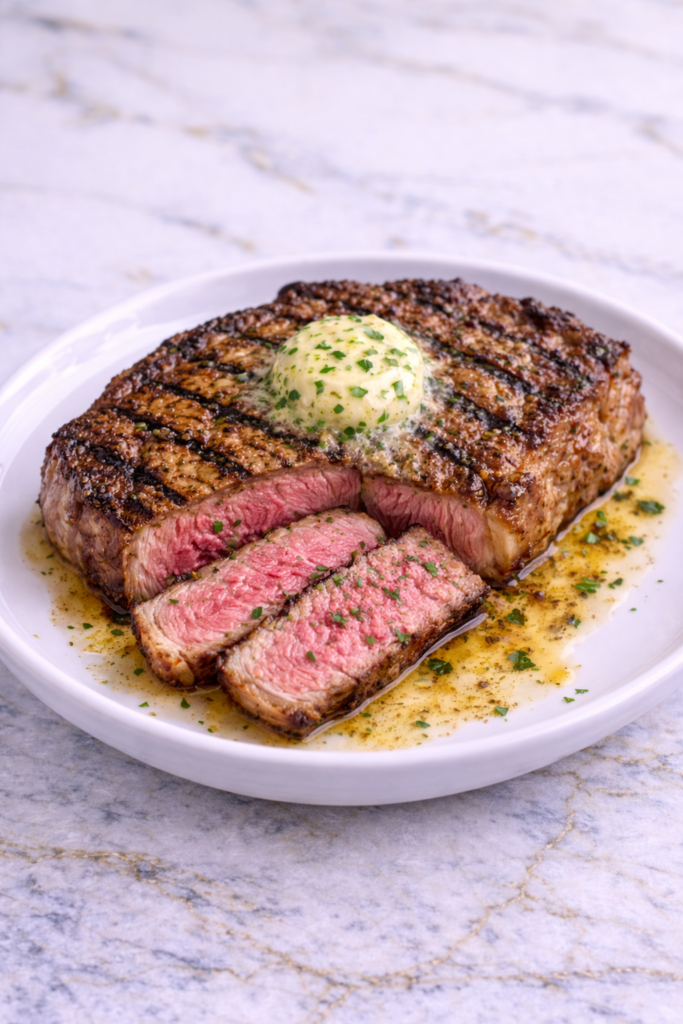
A ribeye steak from Texas Roadhouse is one of those meals that’s hard to replicate at home — or so most people think. That juicy, well-marbled cut with rich garlic butter melted right on top is something really special.
A lot of home cooks avoid cooking ribeye because they’re afraid of getting it wrong. I’ve made this in my own kitchen and the results were spot on.
This post walks you through every step so yours comes out juicy, flavorful, and cooked exactly the way you like it.
Why You’ll Love This Recipe
This ribeye steak is packed with bold, rich flavor thanks to its natural marbling and simple seasoning. The garlic butter adds an extra layer of richness, melting over the hot steak and enhancing every bite. It’s a steakhouse-quality experience made right at home.
Another reason to love this recipe is how approachable it is. You don’t need a grill or fancy equipment to achieve great results. A hot skillet and a few key steps are all it takes.
Families love this recipe because it feels special without being complicated. It’s perfect for celebrations, weekend dinners, or anytime you want to treat yourself to something delicious.
Serves: 2–4 people
This recipe works well for two large ribeye steaks or up to four smaller portions. It’s easy to scale depending on your needs. Perfect for both intimate dinners and family meals.
Ingredients You’ll Need
- 2 ribeye steaks (about 1–1½ inches thick)
- 2 tablespoons olive oil
- 1 teaspoon kosher salt
- ½ teaspoon freshly ground black pepper
- ½ teaspoon paprika
- ½ teaspoon garlic powder
- ½ teaspoon onion powder
Garlic Butter
- 3 tablespoons unsalted butter, softened
- 2 cloves garlic, minced
- ½ teaspoon chopped fresh parsley (optional)
- Pinch of salt
Pro Tips
Bring the steaks to room temperature before cooking. This helps them cook evenly.
Pat the steaks dry before seasoning. This helps create a better sear.
Use a cast iron skillet for the best crust. It retains heat well and cooks evenly.
Do not overcrowd the pan. Cook one or two steaks at a time if needed.
Let the steak rest after cooking to retain juices. This keeps it tender.
Add the garlic butter at the end so it melts perfectly over the hot steak.
Tools You’ll Need
- Cast iron skillet or heavy pan
- Tongs
- Spoon
- Meat thermometer (optional)
- Cutting board
Substitutions and Variations
You can use New York strip or sirloin if ribeye is not available. Each cut offers a slightly different texture.
For extra flavor, add fresh herbs like thyme or rosemary during cooking. This enhances aroma.
You can grill the steak instead of using a skillet. The method will vary slightly but still works well.
For a spicier version, add a pinch of cayenne pepper to the seasoning. This adds heat.
Use compound butter with additional herbs or spices for a different flavor profile.
Make Ahead Tips
This ribeye steak is best cooked fresh, but you can prepare several components ahead of time to make the process smoother. Season the steaks up to 24 hours in advance and store them covered in the refrigerator. This helps the seasoning penetrate and enhances flavor.
You can also prepare the garlic butter ahead of time and keep it refrigerated. Shape it into a small log using plastic wrap for easy slicing later. This makes it simple to add right before serving.
If you’re planning a larger meal, you can sear the steaks slightly under your desired doneness and finish them just before serving. This helps maintain juiciness and ensures everything is ready at the same time.
Instructions
Step 1: Bring Steaks to Room Temperature
Remove the ribeye steaks from the refrigerator and let them sit at room temperature for 30–45 minutes. This helps them cook evenly. Pat them dry with paper towels.
Step 2: Season the Steaks
Drizzle olive oil over both sides of the steaks. In a small bowl, mix the salt, pepper, paprika, garlic powder, and onion powder. Season the steaks generously on all sides.
Step 3: Preheat the Pan
Heat a cast iron skillet over medium-high heat until very hot. The pan should be nearly smoking. This is essential for creating a good sear.
Step 4: Sear the Steaks
Place the steaks in the hot skillet and cook for 3–4 minutes without moving them. This allows a crust to form. Flip and cook the other side for another 3–4 minutes.
Step 5: Add Butter (Optional Basting)
If desired, add a small amount of butter to the pan during the last minute of cooking. Spoon the melted butter over the steaks. This adds extra flavor and richness.
Step 6: Check Doneness
Use a meat thermometer to check internal temperature if needed. Aim for about 130°F for medium-rare or adjust to your preference. Cooking time may vary based on thickness.
Step 7: Rest the Steaks
Remove the steaks from the skillet and place them on a cutting board. Let them rest for 5–10 minutes. This allows the juices to redistribute.
Step 8: Add Garlic Butter
Top each steak with a slice of prepared garlic butter. Let it melt over the hot steak. This creates a rich and flavorful finish.
Serving Suggestions
Serve this ribeye steak with classic sides like mashed potatoes or baked potatoes. The creamy texture pairs perfectly with the rich steak. It creates a comforting and satisfying meal.
Roasted vegetables such as asparagus, broccoli, or carrots make a great addition. They add color and balance to the plate. This creates a well-rounded dish.
You can also serve the steak with a fresh salad and light vinaigrette. This helps cut through the richness. It adds a refreshing contrast.
For a steakhouse-style experience, pair it with creamed spinach or mac and cheese. These sides complement the bold flavors. It makes the meal feel extra special.
Add dinner rolls or garlic bread for a classic touch. These help soak up the juices and butter. It completes the meal.
For special occasions, serve with a glass of red wine. The flavors pair beautifully with the steak. It enhances the overall dining experience.
Leftovers and Storage
Store leftover ribeye steak in an airtight container in the refrigerator for up to 3 days. Allow it to cool completely before storing. Proper storage helps maintain quality.
When reheating, use low heat to avoid overcooking. Warm it gently in a skillet or oven with a bit of butter. This helps retain moisture.
Avoid microwaving if possible, as it can make the steak tough. Gentle reheating produces better results. Slice before reheating for even warming.
Leftover steak can also be used in salads, sandwiches, or wraps. This makes it versatile for additional meals. It’s a great way to reduce waste.
Freezing is possible, but the texture may change slightly. Wrap tightly and store for up to 1–2 months. Thaw in the refrigerator before reheating.
If the steak develops an off smell or texture, discard it. Always prioritize food safety. Proper handling is essential.
Nutrition and Benefits
- Ribeye steak is rich in high-quality protein, supporting muscle growth and repair. It’s a satisfying and nutrient-dense option.
- It provides essential nutrients like iron and vitamin B12. These support energy levels and overall health.
- The natural fats in ribeye contribute to its flavor and help keep it juicy. Moderation is key for balance.
- Cooking at home allows you to control seasoning and portion sizes. This helps create a more balanced meal.
- Pairing steak with vegetables can create a well-rounded dish. Balance is important for overall nutrition.
Recipe FAQ
What makes ribeye different from other cuts?
Ribeye has more marbling, which makes it more flavorful and juicy. The fat melts during cooking. This enhances taste and texture.
How do I get a perfect sear?
Use a very hot pan and avoid moving the steak too much. Patting the steak dry also helps. A good sear creates a flavorful crust.
How do I know when the steak is done?
Use a meat thermometer for accuracy. Medium-rare is about 130°F. Adjust based on your preference.
Can I grill this instead?
Yes, grilling works well for ribeye. Follow similar cooking times and temperatures. You can still add garlic butter at the end.
Why should I rest the steak?
Resting allows the juices to redistribute throughout the meat. This keeps the steak tender. Cutting too soon can cause juices to escape.
Can I use salted butter?
Yes, but adjust the added salt accordingly. This helps prevent over-seasoning. Taste and adjust as needed.
Can I add more seasoning?
Yes, you can customize the seasoning blend to your taste. Herbs and spices can enhance flavor. Keep it balanced.
A Steakhouse Favorite Made Simple at Home
Once you make this at home, it’s going to be hard to justify paying steakhouse prices for something you can pull off right in your own kitchen. The garlic butter takes it over the top and the ribeye stays juicy and full of flavor all the way through.
I love making this on special nights when I want dinner to feel memorable without a reservation. It pairs beautifully with any classic side and always looks and tastes impressive on the plate.
A great ribeye doesn’t have to be complicated. I hope this one becomes a favorite in your kitchen just like it has in mine.