
I make this Beef Cheeks in Red Wine when I want a meal that feels deeply comforting and worth the extra time. It’s one of those dishes that slowly fills the kitchen with rich, savory aroma as it cooks. By the time it’s ready, the meat is tender and full of flavor in a way that’s hard to match with quicker recipes.
I usually turn to this recipe on weekends or quieter days when I can let it cook low and slow. It’s become a favorite because it delivers such consistent results with simple ingredients. The combination of tender beef and a rich red wine sauce always feels like a complete and satisfying meal.
Why You’ll Love This Recipe
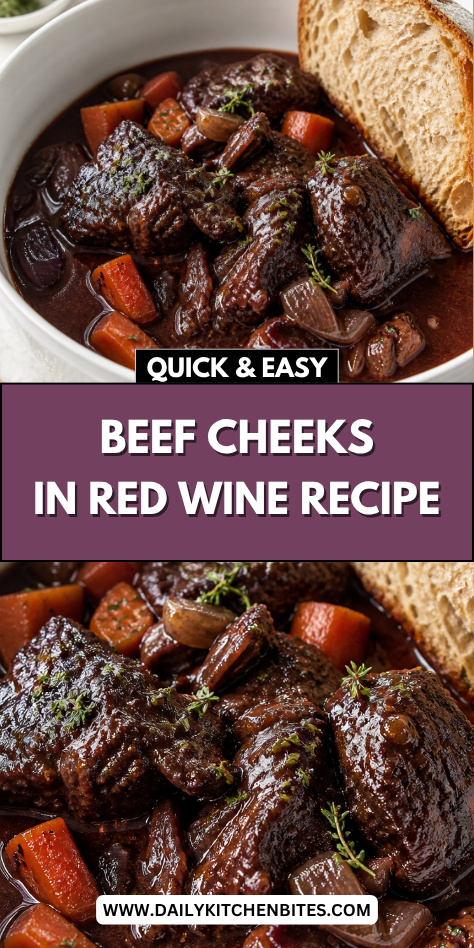
This Beef Cheeks in Red Wine recipe is all about deep, slow-developed flavor. The long cooking time allows the beef to become incredibly tender while the sauce thickens into something rich and balanced. Each bite feels hearty and comforting without being overly complicated.
Another reason this recipe stands out is how approachable it is despite its elegant feel. Most of the cooking time is hands-off, allowing you to focus on other things while it simmers. Beef Cheeks in Red Wine also pairs well with simple sides, making it a versatile option for family meals or special occasions.
Serves: 4 people
This recipe serves four people generously, with rich portions that are both filling and satisfying. It’s easy to scale up if you’re cooking for a larger group or want leftovers. The flavors deepen over time, so it’s just as enjoyable the next day.
Ingredients You’ll Need
For the beef:
- 2 pounds beef cheeks, trimmed
- 1 teaspoon salt
- ½ teaspoon black pepper
- 2 tablespoons olive oil
For the base:
- 1 small onion, chopped
- 2 carrots, chopped
- 2 celery stalks, chopped
- 3 cloves garlic, minced
For the sauce:
- 2 cups dry red wine
- 2 cups beef broth
- 2 tablespoons tomato paste
- 1 teaspoon fresh thyme (or ½ teaspoon dried)
- 1 bay leaf
Optional additions:
- 1 cup mushrooms, sliced
- Fresh parsley for garnish
Pro Tips
Trim excess fat and silver skin from the beef cheeks before cooking. This helps improve texture and keeps the sauce from becoming too greasy.
Sear the beef thoroughly before adding liquid. A good sear builds flavor and adds depth to the final dish.
Use a dry red wine that you would enjoy drinking. The quality of the wine has a direct impact on the flavor of the sauce.
Cook the dish low and slow for the best results. Rushing the process can prevent the meat from becoming fully tender.
Stir occasionally and check the liquid level during cooking. Add a bit more broth if needed to keep the meat partially submerged.
Let the dish rest briefly before serving. This allows the sauce to settle and thicken slightly.
Tools You’ll Need
- Large Dutch oven or heavy pot
- Tongs
- Cutting board
- Sharp knife
- Measuring cups and spoons
- Wooden spoon
Substitutions and Variations
Use Chuck Roast Instead
If beef cheeks are not available, chuck roast can be used as an alternative. It becomes tender when cooked slowly and absorbs the sauce well.
Make It Alcohol-Free
Replace the red wine with additional beef broth and a splash of balsamic vinegar. This keeps a rich flavor without using wine.
Add More Vegetables
Include mushrooms, potatoes, or parsnips for a heartier dish. These additions cook well in the sauce and add texture.
Try Different Herbs
Use rosemary or oregano instead of thyme for a slightly different flavor profile. Fresh herbs can also be used for a brighter taste.
Thicken the Sauce
If you prefer a thicker sauce, simmer uncovered for the last part of cooking. This helps reduce the liquid and concentrate the flavor.
Make Ahead Tips
This Beef Cheeks in Red Wine is an excellent recipe to prepare ahead of time because the flavors continue to develop as it rests. You can cook the entire dish a day in advance, allow it to cool, and store it in the refrigerator in a covered container. Reheating it the next day often results in an even richer and more balanced flavor.
If you prefer to break up the process, you can sear the beef and prepare the base ingredients ahead of time. Store them separately in the refrigerator until you’re ready to continue cooking. This makes the final cooking process feel much more manageable.
For longer storage, the fully cooked dish freezes very well. Portion it into airtight containers and freeze for up to two months. Thaw overnight in the refrigerator before reheating gently on the stovetop.
Instructions
Step 1: Prepare the Beef
Pat the beef cheeks dry with paper towels to remove excess moisture. Season them evenly with salt and black pepper on all sides. This helps create a good sear and builds the base flavor of the dish.
Step 2: Sear the Beef
Heat olive oil in a large Dutch oven over medium-high heat. Add the beef cheeks and sear them for about 3–4 minutes per side until a deep brown crust forms. Work in batches if needed to avoid overcrowding, then remove the beef and set aside.
Step 3: Cook the Vegetables
In the same pot, add the chopped onion, carrots, and celery. Cook for about 5–7 minutes, stirring occasionally, until softened and slightly browned. Add the minced garlic and cook for another 30 seconds until fragrant.
Step 4: Build the Base
Stir in the tomato paste and cook for 1–2 minutes to deepen its flavor. Pour in the red wine, scraping the bottom of the pot to loosen any browned bits. Let the wine simmer for about 5 minutes to reduce slightly.
Step 5: Add Liquid and Herbs
Pour in the beef broth and add the thyme and bay leaf. Stir to combine and bring the mixture to a gentle simmer. This creates the base for the rich braising liquid.
Step 6: Braise the Beef
Return the seared beef cheeks to the pot, making sure they are partially submerged in the liquid. Cover the pot and reduce the heat to low, or transfer it to a 325°F oven. Cook for 2 ½ to 3 hours, or until the meat is very tender and easily pulls apart with a fork.
Step 7: Finish the Sauce
Once the beef is tender, remove it from the pot and set aside. Simmer the sauce uncovered for 10–15 minutes to reduce and thicken slightly. Return the beef to the pot and spoon the sauce over the top before serving.
Serving Suggestions
Beef Cheeks in Red Wine pairs beautifully with creamy mashed potatoes, which help absorb the rich sauce and create a balanced plate. The softness of the potatoes complements the tender texture of the beef.
You can also serve it with polenta for a slightly different texture. The smooth, mild flavor of polenta works well with the deep, savory sauce.
For a lighter option, try serving it alongside roasted vegetables like carrots, parsnips, or green beans. These add color and freshness to the dish.
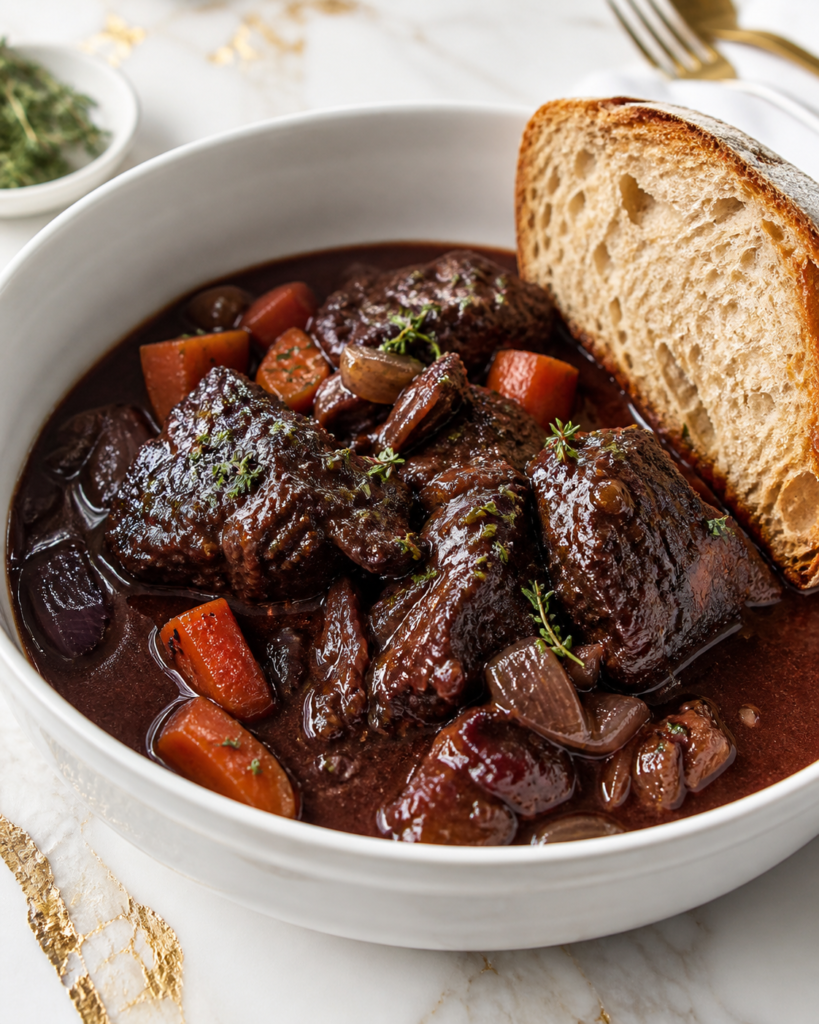
Crusty bread is another great addition, perfect for soaking up the sauce. It’s a simple way to make the meal feel complete without much extra effort.
If you want a more refined presentation, serve it with buttered noodles. They provide a neutral base that allows the flavors of the beef to stand out.
Leftovers and Storage
Leftovers of this Beef Cheeks in Red Wine store exceptionally well and often taste even better the next day. Allow the dish to cool completely before transferring it to an airtight container. It can be stored in the refrigerator for up to four days.
When reheating, warm it gently on the stovetop over low heat. Stir occasionally and add a small amount of broth if the sauce has thickened too much. This helps maintain the right consistency and prevents the dish from drying out.
The microwave can be used for convenience, but reheating slowly on the stove gives the best results. Covering the dish while reheating helps retain moisture.
For freezing, store in freezer-safe containers for up to two months. Thaw overnight in the refrigerator and reheat gently, stirring occasionally to keep the sauce smooth.
Nutrition and Benefits
- Beef cheeks are rich in collagen, which breaks down during slow cooking to create a tender texture. This also contributes to the richness of the sauce.
- This dish provides a good source of protein, helping support muscle health and overall nutrition. It’s a filling and satisfying option for a main meal.
- The vegetables in the base add vitamins, minerals, and natural flavor. They help balance the richness of the beef and sauce.
- Cooking with whole ingredients keeps the recipe simple and free from unnecessary additives. This makes it a wholesome choice for home cooking.
- The slow cooking process enhances flavor without requiring heavy seasoning. It allows the natural ingredients to shine.
Recipe FAQ
Can I make this in a slow cooker?
Yes, you can adapt this recipe for a slow cooker. Sear the beef and cook the vegetables first, then transfer everything to the slow cooker and cook on low for 6–8 hours. This method still produces tender and flavorful results.
What type of red wine should I use?
A dry red wine such as Cabernet Sauvignon, Merlot, or Pinot Noir works well. Choose a wine you enjoy drinking, as it directly affects the flavor of the dish. Avoid overly sweet wines.
How do I know when the beef is done?
The beef is ready when it becomes very tender and easily pulls apart with a fork. It should not feel tough or chewy. If needed, cook it a bit longer until it reaches this texture.
Can I make this without a Dutch oven?
Yes, any heavy pot with a tight-fitting lid will work. You can also use an oven-safe pot or a slow cooker. The key is maintaining low, steady heat.
Can I add potatoes to the dish?
Yes, you can add potatoes during the last hour of cooking. They will absorb the flavor of the sauce and make the dish more filling. Cut them into even pieces for even cooking.
How can I thicken the sauce more?
Simmer the sauce uncovered to reduce it further. You can also mash some of the cooked vegetables into the sauce for a thicker texture. Both methods work well without needing extra ingredients.
Is this recipe suitable for special occasions?
Yes, it’s a great choice for special meals because of its rich flavor and presentation. It feels elevated while still being made with simple ingredients. It’s also easy to prepare ahead, which makes hosting easier.
A Slow-Cooked Classic Worth the Time
Beef Cheeks in Red Wine is a dish that rewards patience with deep, comforting flavor and tender texture. It’s simple to prepare, yet it feels like something truly special when served. The slow cooking process allows every ingredient to come together in a rich and satisfying way.
This is the kind of recipe that becomes a reliable favorite over time. Whether you’re making it for a quiet dinner or a special gathering, it delivers consistent results you can count on. Having a dish like this in your rotation brings both comfort and confidence to your cooking.