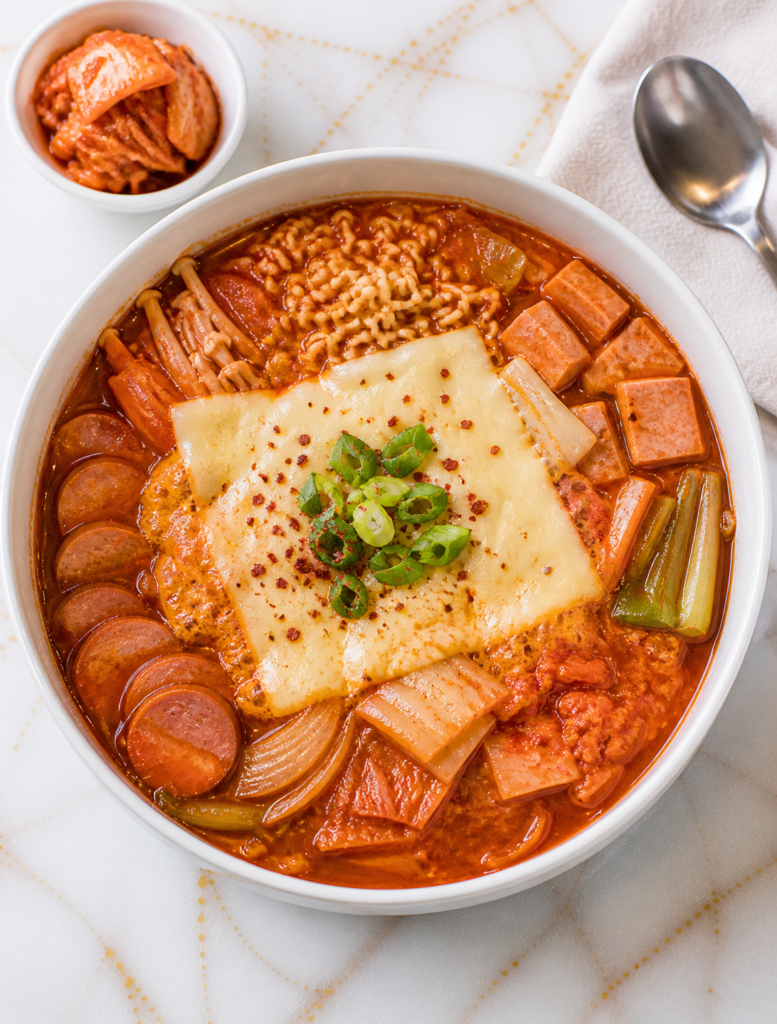
I like to make Budae Jjigae Army Stew when I want something warm, filling, and easy to share at the table. It’s one of those dishes that brings everything together in one pot, with a mix of flavors that feels both comforting and a little bold.
The combination might seem unusual at first, but it quickly becomes something you crave.
This dish has found its way into my regular rotation because it’s flexible and works with what I have on hand. It’s great for family meals or casual gatherings where everyone can serve themselves. Once it starts simmering, the aroma alone makes it hard to wait.

Why You’ll Love This Recipe
Budae Jjigae Army Stew offers a rich, layered flavor that comes from combining savory broth, tender ingredients, and a gentle kick of spice. The mix of meats, noodles, and vegetables creates a hearty meal that feels complete in one bowl. Each bite is a little different, which makes it enjoyable from start to finish.
It’s also a very practical recipe for home cooking. You can adjust the ingredients based on what you have, and it comes together in a single pot without complicated steps. That makes it a reliable option for busy days or relaxed weekends.
Serves: 4 to 5 people
This recipe serves four to five people comfortably, depending on portion size. It’s perfect for sharing, especially when served straight from the pot at the table. You can easily add more ingredients to stretch the meal for a larger group.
Ingredients You’ll Need
For the Broth:
- 4 cups chicken or beef broth
- 2 tablespoons gochujang (Korean chili paste)
- 1 tablespoon gochugaru (Korean chili flakes)
- 2 cloves garlic, minced
- 1 tablespoon soy sauce
For the Main Ingredients:
- 1 cup sliced spam or cooked sausage
- 1 cup sliced hot dogs
- 1 cup cooked bacon pieces
- 1 block firm tofu, sliced
- 1 cup kimchi, chopped
- 2 cups napa cabbage, chopped
For the Noodles and Extras:
- 1 pack instant ramen noodles (seasoning packet optional)
- 1 cup sliced mushrooms
- 2 green onions, chopped
- 2 slices American cheese
Pro Tips
Use a good-quality broth as the base for the stew. Since it carries most of the flavor, a rich broth makes a noticeable difference.
Adjust the spice level to your preference by changing the amount of gochujang and gochugaru. Start with less if you prefer a milder stew.
Arrange the ingredients neatly in the pot before adding the broth. This helps everything cook evenly and creates a more appealing presentation.
Add the noodles toward the end of cooking to prevent them from becoming too soft. This keeps their texture just right.
Let the stew simmer gently rather than boiling too hard. This allows the flavors to blend without overcooking the ingredients.
Serve the stew while it is hot and bubbling for the best experience. The texture and flavor are at their peak when freshly cooked.
Tools You’ll Need
- Large pot or shallow Korean-style pot
- Ladle
- Cutting board
- Knife
- Measuring cups and spoons
- Tongs
Substitutions and Variations
Use Different Meats
You can swap spam or hot dogs with ham, leftover cooked meat, or even ground beef. This keeps the dish flexible while maintaining its hearty feel.
Make It Vegetarian
Skip the meats and use tofu, mushrooms, and extra vegetables instead. Replace the broth with vegetable stock for a plant-based version.
Adjust the Spice Level
Use less chili paste and flakes for a milder stew, or add more for extra heat. This makes it easy to suit different preferences.
Add Rice Cakes
Include Korean rice cakes (tteok) for extra texture and substance. They absorb the broth and make the stew more filling.
Make It Lighter
Use less processed meat and add more vegetables like zucchini or spinach. This creates a lighter version while keeping the flavor balanced.
Make Ahead Tips
Budae Jjigae Army Stew can be partially prepared ahead to make cooking easier when you’re ready to serve. You can chop all the vegetables, slice the meats, and prepare the broth mixture up to a day in advance. Store everything separately in the refrigerator so the ingredients stay fresh and ready to use.
If you want to go further, you can even assemble the ingredients in the pot without the broth and refrigerate it for a few hours. When it’s time to cook, simply pour in the broth and bring it to a simmer. This helps save time and makes the cooking process feel more relaxed.
Instructions
Step 1: Prepare the Broth
In a bowl, combine the broth, gochujang, gochugaru, minced garlic, and soy sauce. Stir until the chili paste is fully dissolved and the mixture is smooth. This creates the flavorful base for the stew.
Step 2: Arrange the Ingredients
Place the sliced spam, hot dogs, bacon, tofu, kimchi, cabbage, and mushrooms neatly into a large pot. Try to spread them evenly so everything cooks at the same rate. This also helps the stew look more appealing when served.
Step 3: Add the Broth
Pour the prepared broth mixture over the arranged ingredients. Make sure most of the ingredients are submerged, but it’s fine if some sit slightly above the liquid. The steam will help cook everything evenly.
Step 4: Start Cooking
Place the pot over medium heat and bring the stew to a gentle simmer. Avoid boiling too rapidly, as this can make some ingredients overcook. Let it cook for about 10 to 15 minutes so the flavors begin to blend.
Step 5: Add the Noodles
Once the stew is simmering and the ingredients are partially cooked, add the ramen noodles. Gently press them into the broth so they soften evenly. Cook for another 3 to 5 minutes until the noodles are tender.
Step 6: Add Cheese and Green Onions
Place the slices of American cheese on top of the stew and sprinkle chopped green onions over everything. The cheese will melt into the broth, adding a creamy texture. Let it sit for a minute or two to soften.
Step 7: Adjust and Taste
Taste the broth and adjust seasoning if needed. You can add a little more soy sauce for saltiness or a bit of water if the flavor feels too strong. This step helps balance the final dish.
Step 8: Serve Immediately
Serve the stew hot, straight from the pot. Use a ladle to scoop out a mix of broth, noodles, and toppings into each bowl. It’s best enjoyed while still bubbling and fresh.
Serving Suggestions
Budae Jjigae is often served with a bowl of steamed white rice on the side. The rice helps balance the bold flavors and makes the meal more filling.
You can also include simple Korean side dishes like pickled vegetables or kimchi. These add freshness and contrast to the rich stew.
A light cucumber salad works well as a refreshing side. Its crisp texture complements the warm and hearty stew.
For a casual meal, serve the pot in the center of the table and let everyone help themselves. This makes the experience more interactive and relaxed.
If you want to add variety, offer extra toppings like sliced chili or additional green onions. This allows everyone to adjust their bowl to their taste.
Leftovers and Storage
Leftover Budae Jjigae can be stored in an airtight container in the refrigerator for up to 2 days. The flavors will continue to develop, though the noodles may soften further over time. For best results, store the noodles separately if possible.
To reheat, warm the stew gently on the stove over medium-low heat until heated through. Add a little water or broth if the liquid has reduced too much. Stir occasionally to ensure even heating.
Freezing is not recommended for this dish, as the noodles and tofu may lose their texture after thawing. It’s best enjoyed fresh or within a short time after cooking.
Nutrition and Benefits
- This dish provides a mix of protein from meats and tofu, helping to create a filling and satisfying meal. It’s a hearty option that works well for sharing.
- The addition of vegetables like cabbage and mushrooms brings fiber and essential nutrients. These ingredients help balance the richness of the broth.
- Kimchi contributes probiotics and a tangy flavor that enhances the overall dish. It also adds depth without needing extra seasoning.
- The broth-based cooking method allows flavors to develop without requiring excessive oil. This helps keep the dish balanced despite its richness.
- You can adjust ingredients to suit dietary needs, making it flexible for different preferences. This adaptability makes it practical for home cooking.
Recipe FAQ
Can I make this stew less spicy?
Yes, you can reduce the amount of gochujang and gochugaru to make it milder. You can also add a bit more broth to balance the heat. Adjusting gradually helps you reach the right level.
What type of pot should I use?
A wide, shallow pot works best because it allows the ingredients to cook evenly. A regular large pot will also work if that’s what you have. Just make sure everything fits comfortably.
Can I use different noodles?
Yes, you can substitute ramen with udon or other noodles. Keep in mind that cooking times may vary slightly. Add them toward the end to maintain the right texture.
Is the cheese necessary?
The cheese is optional but adds a creamy texture that blends well with the spicy broth. If you prefer, you can leave it out or replace it with another mild cheese. The stew will still be flavorful.
Can I prepare this for a group?
Yes, this recipe is great for serving a group. You can increase the ingredients and cook everything in a larger pot. Serving it family-style makes it easy and enjoyable.
How do I keep the noodles from getting too soft?
Add the noodles toward the end of cooking and avoid overcooking them. If storing leftovers, keep noodles separate if possible. This helps maintain a better texture.
Can I make this vegetarian?
Yes, you can skip the meats and use tofu, mushrooms, and vegetables. Replace the broth with vegetable stock and adjust seasoning as needed. It will still be rich and satisfying.
Conclusion
Budae Jjigae Army Stew is a comforting and flavorful dish that brings together a variety of ingredients in a simple, shared meal. It’s easy to prepare and offers a balance of textures and bold flavors that make it a dependable choice for both family dinners and casual gatherings.
With its flexibility and satisfying taste, it’s a recipe you can return to often. Whether you adjust the ingredients or keep it classic, it consistently delivers a warm and enjoyable meal experience.