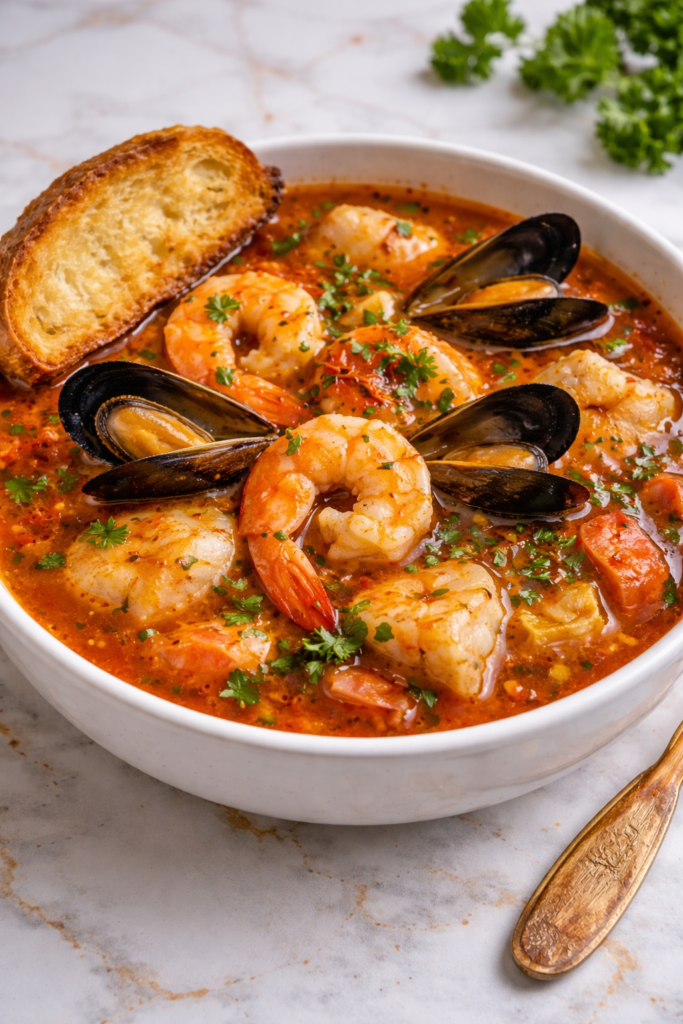
There is something special about a pot of Seafood Stew gently simmering on the stove. The rich broth, tender seafood, and aroma of garlic, herbs, and tomatoes make the whole kitchen feel warm and inviting. It is one of those meals that feels impressive enough for guests but simple enough to enjoy on a quiet family evening.
I love making this recipe when I want a comforting dinner that still feels fresh and vibrant. Each bowl is filled with layers of flavor and a variety of textures that make every bite interesting.
Served with crusty bread or a simple salad, it becomes the kind of meal everyone remembers and asks for again.
Why You’ll Love This Recipe
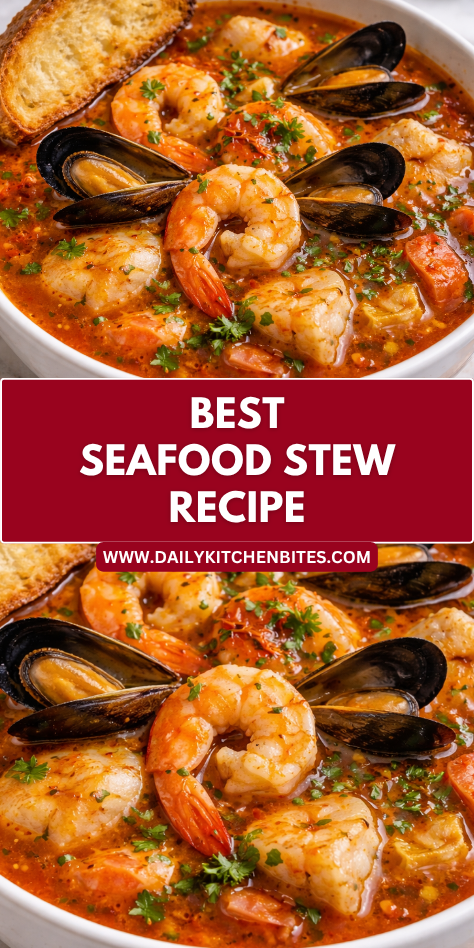
Seafood Stew is hearty, flavorful, and surprisingly easy to prepare. A savory tomato broth, tender fish, shrimp, and shellfish create a restaurant-style meal without complicated steps. It tastes rich and comforting while still feeling lighter than many cream-based dinners.
This recipe is also wonderfully flexible. You can use your favorite seafood, adjust the spice level, or add vegetables based on what you have available. That makes it practical for weeknights and special occasions alike.
Families appreciate that this stew feels special while still being approachable. Serve it with bread for dipping or spoon it over rice for a more filling meal. It is elegant enough for company and cozy enough for home.
Serves: 6 people
This recipe serves six generous portions as a main course. If paired with bread, salad, or rice, it can stretch even further. It is also easy to double for gatherings or holidays.
Ingredients You’ll Need
Seafood
- 1 pound large shrimp, peeled and deveined
- 1 pound firm white fish (cod, halibut, or haddock), cut into chunks
- 1 pound mussels or clams, scrubbed
- 1 tablespoon lemon juice
- 1/2 teaspoon salt
- 1/4 teaspoon black pepper
Stew Base
- 2 tablespoons olive oil
- 1 medium yellow onion, diced
- 1 fennel bulb, diced (optional)
- 3 celery stalks, diced
- 1 red bell pepper, diced
- 4 cloves garlic, minced
- 2 tablespoons tomato paste
- 1 (28-ounce) can crushed tomatoes
- 4 cups seafood stock, chicken broth, or vegetable broth
- 1/2 cup dry white wine (optional)
- 1 bay leaf
- 1 teaspoon dried oregano
- 1 teaspoon paprika
- 1/2 teaspoon red pepper flakes (optional)
- 1 teaspoon salt, or to taste
- 1/2 teaspoon black pepper
Finishing Ingredients
- 2 tablespoons chopped fresh parsley
- 1 tablespoon fresh lemon juice
- Extra olive oil for drizzling
Optional for Serving
- Crusty bread
- Cooked rice
- Lemon wedges
Pro Tips
- Add seafood in stages based on cooking time. Fish cooks quickly, shrimp cook even faster, and shellfish need just enough time to open fully. This prevents overcooking and keeps textures tender.
- Use the freshest seafood available for the best flavor. If buying frozen seafood, thaw it fully and pat dry before adding to the stew.
- Do not boil the stew aggressively once the seafood is added. Gentle simmering helps fish stay intact and shrimp remain juicy.
- Discard any mussels or clams that do not open after cooking. This is an important food safety step when using shellfish.
- Taste the broth before serving and finish with lemon juice. Bright acidity wakes up the flavors and balances the richness beautifully.
- Serve immediately once the seafood is cooked. Seafood is at its best when hot, tender, and freshly simmered.
Tools You’ll Need
- Large Dutch oven or heavy soup pot
- Cutting board
- Sharp knife
- Wooden spoon or spatula
- Measuring cups and spoons
- Ladle
- Small bowl for seafood prep
- Tongs or slotted spoon
- Can opener
Substitutions and Variations
If you cannot find mussels or clams, simply use more shrimp or fish. Scallops also make an excellent addition and cook quickly in the hot broth. Choose seafood that is fresh and accessible in your area.
Firm white fish such as cod, haddock, halibut, or snapper work best because they hold their shape while simmering. Salmon can also be used for a richer flavor, though it creates a different style of stew.
For a spicier version, increase the red pepper flakes or add diced jalapeño with the vegetables. A little heat pairs beautifully with tomatoes and seafood. Start small and adjust to your taste.
If you prefer a thicker broth, simmer the base uncovered a little longer before adding seafood. This reduces the liquid and concentrates the flavors. You can also stir in extra tomato paste.
Potatoes make a hearty addition if you want a more filling stew. Dice them small and simmer in the broth until tender before adding the seafood. This turns the dish into a satisfying one-pot meal.
For extra vegetables, add zucchini, spinach, kale, peas, or corn. These ingredients blend nicely into the broth and add color and texture. Add tender greens near the end of cooking.
If avoiding alcohol, simply replace the white wine with extra broth. The stew will still be rich and flavorful. A splash of lemon at the end helps replace brightness.
Fresh herbs such as basil, thyme, dill, or chives can be used in place of parsley. Herbs added at the end keep the flavors bright and lively. Choose what complements your meal best.
To make it dairy-free, no changes are needed because this recipe contains no dairy as written. That makes it a great option for many households. It still tastes rich and comforting thanks to the broth and seafood.
For children or picky eaters, use shrimp and fish only, skipping shellfish if preferred. Serving the stew over rice can make it more approachable and filling.
Make Ahead Tips
Seafood Stew can be partially prepared ahead to make dinner feel much easier. The best approach is to cook the broth base in advance, then add the seafood just before serving. This keeps the seafood tender and fresh while saving time later.
You can make the tomato broth up to two days ahead and store it in the refrigerator once cooled. Reheat it gently on the stove until hot before adding the fish, shrimp, and shellfish. The flavors often deepen nicely after resting overnight.
Vegetables can also be chopped the day before and kept refrigerated in airtight containers. This shortens prep time and makes the cooking process smoother on busy evenings. Having everything ready to go is especially helpful when serving guests.
If using frozen seafood, thaw it overnight in the refrigerator before cooking day. Pat it dry before adding to the stew so excess moisture does not dilute the broth.
Instructions
Step 1: Prepare the Seafood
Place 1 pound peeled and deveined shrimp and 1 pound firm white fish chunks in a bowl. Toss with 1 tablespoon lemon juice, 1/2 teaspoon salt, and 1/4 teaspoon black pepper. Set aside while you build the stew base.
Step 2: Sauté the Vegetables
Heat 2 tablespoons olive oil in a large Dutch oven or heavy pot over medium heat. Add 1 diced onion, 1 diced fennel bulb if using, 3 diced celery stalks, and 1 diced red bell pepper. Cook for 6 to 8 minutes until softened.
Step 3: Add Garlic and Tomato Paste
Stir in 4 minced garlic cloves and cook for 30 seconds until fragrant. Add 2 tablespoons tomato paste and cook for 1 minute, stirring constantly, to deepen the flavor.
Step 4: Build the Broth
Pour in 1/2 cup dry white wine if using and scrape any browned bits from the bottom of the pot. Add 1 can crushed tomatoes and 4 cups seafood stock, chicken broth, or vegetable broth.
Step 5: Season the Stew
Add 1 bay leaf, 1 teaspoon dried oregano, 1 teaspoon paprika, 1/2 teaspoon red pepper flakes if using, 1 teaspoon salt, and 1/2 teaspoon black pepper. Stir well and bring the mixture to a gentle simmer.
Step 6: Simmer the Base
Reduce heat to medium-low and simmer uncovered for 20 minutes. This allows the vegetables to soften fully and the broth to develop rich flavor.
Step 7: Add Shellfish
Add 1 pound scrubbed mussels or clams to the pot. Cover and cook for 5 to 7 minutes until the shells open. Discard any that remain closed.
Step 8: Add Fish and Shrimp
Gently add the seasoned fish chunks and shrimp to the simmering broth. Cook for 4 to 6 minutes, just until the fish flakes easily and the shrimp turn pink and opaque.
Step 9: Finish and Serve
Remove the bay leaf. Stir in 2 tablespoons chopped parsley and 1 tablespoon fresh lemon juice. Ladle into bowls, drizzle lightly with olive oil, and serve immediately.
Serving Suggestions
Serve Seafood Stew with warm crusty bread for dipping into the rich tomato broth. Bread makes the meal feel complete and helps soak up every flavorful spoonful.
A simple green salad with lemon vinaigrette pairs beautifully with the stew. The crisp freshness balances the warm savory broth and tender seafood.
For a heartier dinner, spoon the stew over cooked rice or creamy polenta. Both options absorb the broth nicely and stretch the meal for hungrier appetites.
Roasted vegetables such as asparagus, green beans, or zucchini make excellent sides. Their mild flavors complement the seafood without overpowering it.
For entertaining, offer lemon wedges, chopped herbs, and red pepper flakes at the table. Guests can customize their bowls to taste.
Seafood Stew also works well as a cozy weekend meal served in large bowls with napkins and plenty of bread. It feels generous and welcoming.
Leftovers and Storage
Store leftover Seafood Stew in an airtight container in the refrigerator for up to 2 days. Because seafood is delicate, it is best enjoyed sooner rather than later for the freshest texture and flavor. Let the stew cool before refrigerating.
Reheat gently on the stovetop over low heat until just warmed through. Avoid boiling, as this can make shrimp rubbery and fish dry or broken apart. Stir carefully to keep seafood pieces intact.
Microwave reheating works for single servings, but use short intervals and lower power if possible. Stop once hot to prevent overcooking the seafood.
Freezing is possible for the broth base before seafood is added. Once seafood has been cooked in the stew, freezing may affect texture. For best results, freeze only the broth portion and add fresh seafood when reheating later.
If you know you will have leftovers, consider reserving some broth separately and cooking only the amount of seafood needed for the first meal.
Nutrition and Benefits
- Seafood provides lean protein that helps make this stew filling without feeling heavy. Protein also supports muscle maintenance and lasting satisfaction.
- Fish and shellfish can offer important nutrients such as omega-3 fats, selenium, iodine, and vitamin B12 depending on the varieties used.
- Tomatoes, peppers, celery, and onion add vitamins, antioxidants, and natural flavor while keeping the dish colorful and wholesome.
- Because the broth is tomato-based rather than cream-based, this meal can feel lighter while still tasting rich and comforting.
- Making Seafood Stew at home lets you control the sodium, spice level, and ingredient quality while creating a special meal with simple steps.
Recipe FAQ
What fish works best for Seafood Stew?
Firm white fish such as cod, haddock, halibut, or snapper work very well. They hold their shape during simmering and absorb flavor nicely. Avoid delicate fish that may fall apart quickly.
Can I use frozen seafood?
Yes, frozen seafood is a practical option. Thaw it overnight in the refrigerator and pat dry before cooking. This helps maintain the best texture.
How do I know when shrimp are cooked?
Shrimp are done when they turn pink and opaque with a gentle curl. This usually takes only a few minutes in hot broth. Remove from heat promptly to avoid toughness.
What if my mussels or clams do not open?
Discard any shellfish that remain closed after cooking. Open shells indicate they cooked properly. This is an important food safety practice.
Can I make this stew spicy?
Absolutely. Add more red pepper flakes, cayenne, or diced jalapeño to the broth. Increase gradually so the heat stays balanced.
Can I make Seafood Stew without wine?
Yes, simply replace the wine with extra broth. The stew will still be flavorful and delicious. A squeeze of lemon at the end adds brightness.
Is Seafood Stew good for entertaining?
Yes, it is excellent for guests because it feels impressive and can be served straight from the pot. Prepare the broth ahead and add seafood just before serving for the best results.
A Cozy Coastal Dinner Worth Making Again
Seafood Stew is the kind of meal that feels both comforting and special, making it a wonderful recipe to keep in regular rotation. With a flavorful broth, simple steps, and dependable results, it brings warmth to the table with very little fuss.
Each bowl offers tender seafood, rich tomato flavor, and the kind of satisfying comfort that makes dinner memorable. Whether for family night or sharing with guests, this is a recipe worth making again and again.