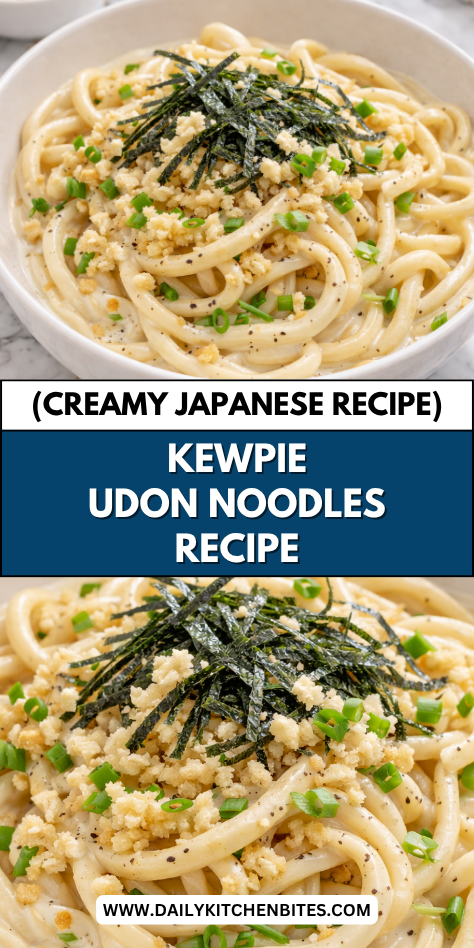
Udon noodles are already thick, chewy, and satisfying on their own, but adding Kewpie mayo to the sauce creates something that feels completely new and deeply comforting.
That creamy, umami-rich coating clings to every noodle in a way that makes each bite incredibly satisfying.
A lot of people are familiar with udon in a broth but haven’t tried it prepared this way yet. I made this in my own kitchen and it came together faster than I expected with a flavor that really stuck with me.
This post walks you through every step so yours comes out creamy, hearty, and full of that distinct Japanese comfort food feeling.
Why You’ll Love This Recipe
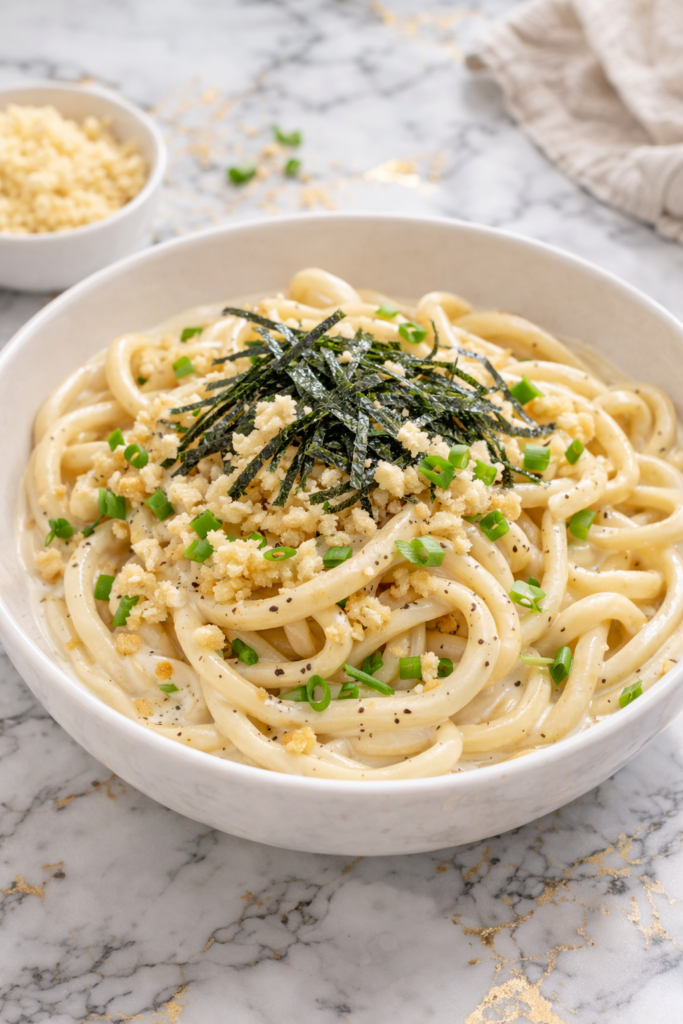
This Kewpie Udon Noodles dish delivers a creamy, savory flavor that perfectly coats the chewy noodles. The sauce is rich without being overwhelming, creating a balanced and satisfying meal. It’s a comforting recipe that feels both simple and unique.
Another reason to love this recipe is how quick and adaptable it is. You can have it ready in under 20 minutes, and it’s easy to customize with different proteins or vegetables. It’s perfect for busy days when you still want something homemade.
Serves: 2–3 people
This recipe serves two to three people as a main dish, depending on portion size. It can easily be doubled for larger meals or adjusted based on your needs. It’s flexible and great for both small and family meals.
Ingredients You’ll Need
For the Noodles:
- 2 packs udon noodles (fresh or frozen)
- Water for boiling
For the Sauce:
- 1/3 cup Kewpie mayonnaise
- 2 tbsp soy sauce
- 1 tsp sesame oil
- 2 cloves garlic, minced
- 1/4 tsp black pepper
Optional Add-Ins:
- 1/2 cup cooked chicken, shrimp, or tofu
- 1/2 cup vegetables (spinach, mushrooms, or broccoli)
- 1/4 cup green onions, sliced
- 1/2 tsp chili oil or chili flakes
Pro Tips
Use fresh or frozen udon noodles for the best texture. They are thicker and chewier than dried noodles. This makes the dish more authentic and satisfying.
Cook the noodles just until tender to avoid overcooking. Overcooked noodles can become too soft and lose their chewiness. Proper timing helps maintain texture.
Mix the sauce ingredients thoroughly before adding to the pan. This ensures even flavor distribution. It also makes the cooking process smoother.
Cook garlic briefly to release its flavor without burning it. Burnt garlic can become bitter. A quick sauté is all you need.
Add the Kewpie mayonnaise over low heat to maintain a smooth texture. High heat can cause it to separate. Gentle cooking keeps the sauce creamy.
Reserve a bit of noodle water to adjust the sauce consistency if needed. This helps create a silky finish. It’s a useful trick for perfect texture.
Tools You’ll Need
- Medium pot
- Large skillet or pan
- Tongs or chopsticks
- Cutting board
- Knife
- Measuring spoons
Substitutions and Variations
If you don’t have udon noodles, you can use spaghetti or ramen as a substitute. The texture will differ slightly but still works well. It’s a flexible option.
You can replace Kewpie mayonnaise with regular mayonnaise and a splash of rice vinegar. This helps mimic the tangy flavor. It’s an easy swap.
For a vegetarian version, skip meat and add tofu or extra vegetables. This keeps the dish hearty and balanced. It’s simple to adapt.
Adding protein like chicken, shrimp, or beef can make the dish more filling. These options pair well with the creamy sauce. It turns it into a complete meal.
For a spicy variation, add chili oil, sriracha, or red pepper flakes. This creates a bold contrast to the creamy base. Adjust to your taste.
Make Ahead Tips
These Kewpie Udon Noodles are best enjoyed fresh, but you can still prepare parts of the dish ahead to save time. You can mince the garlic, slice the vegetables, and cook any protein in advance. Store everything in separate airtight containers in the refrigerator until ready to use.
If you plan to cook the noodles ahead of time, rinse them under cold water after boiling and toss lightly with oil. This prevents them from sticking together. Store them in the refrigerator for up to one day.
The sauce can also be mixed ahead and kept chilled until needed. This allows the flavors to blend while making the cooking process quicker. Just give it a quick stir before using.
For the best texture and flavor, combine everything just before serving. This ensures the noodles stay chewy and the sauce remains creamy. Fresh assembly makes a noticeable difference.
Instructions
Step 1: Boil the Noodles
Bring a pot of water to a boil and cook the udon noodles according to package instructions. Stir gently to separate them. Once tender, drain and set aside.
Step 2: Prepare the Sauce
In a small bowl, mix together Kewpie mayonnaise, soy sauce, sesame oil, minced garlic, and black pepper. Stir until smooth and well combined. Set aside.
Step 3: Heat the Pan
Place a large skillet over medium heat and add a small amount of oil if needed. Allow it to warm up before adding ingredients. This ensures even cooking.
Step 4: Cook Protein and Vegetables
If using optional protein or vegetables, add them to the pan and cook until heated through or tender. Stir occasionally to prevent sticking. Remove and set aside if needed.
Step 5: Combine Noodles and Sauce
Reduce the heat to low and add the cooked noodles to the skillet. Pour the sauce over the noodles and toss gently to coat evenly. Keep the heat low to maintain a creamy texture.
Step 6: Adjust Consistency
If the sauce feels too thick, add a small amount of reserved noodle water. Toss until the sauce becomes smooth and coats the noodles evenly. This creates a silky finish.
Step 7: Add Final Ingredients
Return any cooked protein and vegetables to the pan and mix everything together. Cook for another minute until heated through. Stir gently to combine.
Step 8: Serve
Transfer the noodles to serving bowls and garnish with green onions or chili flakes if desired. Serve immediately while warm and creamy. This ensures the best texture.
Serving Suggestions
These udon noodles are satisfying enough to serve as a main dish on their own. The creamy sauce and chewy noodles create a complete and comforting meal. It’s perfect for lunch or dinner.
Pair them with a light side salad for a balanced meal. The freshness of the salad complements the richness of the noodles. This creates a well-rounded plate.
You can also serve them alongside grilled or roasted proteins. This adds variety and makes the meal more filling. It’s a great option for family dinners.
For a casual setting, serve the noodles in individual bowls with toppings like green onions or chili oil. This allows everyone to customize their dish. It adds a fun element to the meal.
They also pair well with simple side dishes like steamed vegetables or miso soup. These additions complement the flavors without overpowering them. It makes the meal feel complete.
Leftovers and Storage
Store leftover udon noodles in an airtight container in the refrigerator for up to two days. Allow them to cool completely before storing. Proper storage helps maintain flavor and texture.
When reheating, add a small amount of water or broth to loosen the sauce. Heat gently on the stove or in the microwave, stirring occasionally. This helps restore the creamy consistency.
Avoid reheating on high heat, as this can cause the sauce to separate. Gentle reheating works best. Taking your time helps maintain quality.
Freezing is not recommended for this dish, as the texture of the noodles and sauce may change. Fresh preparation provides the best results. It ensures the most enjoyable experience.
For best flavor, try to enjoy leftovers as soon as possible. Freshly made noodles will always have the best texture. Proper handling helps extend their quality.
Nutrition and Benefits
- Udon noodles provide carbohydrates that offer energy and help make the dish filling. They are a comforting and satisfying base.
- Kewpie mayonnaise adds richness and enhances the flavor of the sauce. Using it in moderation helps maintain balance.
- Garlic contributes flavor and contains antioxidants that support overall health. It adds both taste and nutritional value.
- Adding vegetables increases fiber and essential nutrients. This helps create a more balanced meal.
- Including protein like chicken, shrimp, or tofu makes the dish more complete. It supports a well-rounded diet.
Recipe FAQ
Can I use dried udon noodles?
Yes, dried udon noodles can be used, but fresh or frozen will give the best texture. Cook according to package instructions. The dish will still turn out delicious.
Can I substitute regular mayonnaise?
Yes, but the flavor will be slightly different. Adding a bit of rice vinegar or lemon juice can help mimic the tanginess. It’s a simple adjustment.
How do I prevent the sauce from separating?
Keep the heat low when adding the sauce and avoid boiling. Stir gently to combine. This helps maintain a smooth consistency.
Can I make this dish spicy?
Yes, adding chili oil, sriracha, or red pepper flakes will increase the heat. This pairs well with the creamy sauce. Adjust to your preference.
What vegetables work best in this recipe?
Spinach, mushrooms, broccoli, or bell peppers all work well. They add color and texture. Choose based on what you have.
Can I add cheese to this dish?
Yes, adding a small amount of cheese can create an even creamier texture. It blends well with the sauce. It’s a fun variation.
Is this recipe kid-friendly?
Yes, the creamy texture and mild flavor make it appealing to kids. You can adjust seasonings to keep it simple. It’s a great family meal.
A Creamy Noodle Dish You’ll Want Again and Again
Once you make udon this way, it’s going to become your first thought whenever you want something warm, filling, and a little out of the ordinary on a weeknight.
The Kewpie mayo transforms the sauce into something silky and rich that coats every thick noodle perfectly without feeling heavy.
I love making this when I want a bowl of something comforting that comes together without a lot of ingredients or cleanup.
It satisfies in a deep, quiet way that only a really good noodle dish can. Simple, creamy, and worth making again and again. I hope it becomes a regular in your weeknight dinner rotation.