Prime rib feels like one of those roasts you only trust a restaurant to get right, mostly because the cut is expensive and the margin for error feels small.
But slow-roasting is actually one of the more forgiving methods — the oven does most of the work, and the results are hard to argue with.
I’ve made this enough times to work out the details that actually matter. This walks you through everything so you can pull it off confidently at home.
Why You’ll Love This Recipe
This prime rib recipe delivers a perfectly seasoned crust with a tender, juicy interior that’s cooked evenly from edge to center. The slow-roasting method ensures consistent results while allowing the natural flavors of the beef to shine. It’s rich, satisfying, and deeply comforting.
Despite its impressive presentation, this recipe is surprisingly approachable. With a few simple ingredients and careful timing, you can create a dish that feels both elegant and manageable. It’s ideal for cooks who want to make something special without unnecessary complexity.
Families love this recipe because it brings everyone together. It’s perfect for holidays, celebrations, or any meal where you want to create lasting memories. Plus, leftovers can be just as delicious, making it a practical choice as well.
Serves: 6–8 people
This recipe is designed for a large roast that comfortably feeds a family or small gathering. The generous portions make it perfect for special occasions. You can adjust the size of the roast depending on your needs.
Ingredients You’ll Need
- 1 (5–7 pound) bone-in prime rib roast
- 2 tablespoons kosher salt
- 1 tablespoon freshly ground black pepper
- 2 tablespoons olive oil
- 4 tablespoons unsalted butter, softened
- 4 garlic cloves, minced
- 1 tablespoon fresh rosemary, finely chopped
- 1 tablespoon fresh thyme, finely chopped
- 1 teaspoon paprika
- 1 teaspoon onion powder
Pro Tips
Bring the roast to room temperature before cooking. This helps it cook evenly and prevents a cold center.
Season the meat generously and allow it to rest before roasting. This enhances flavor and helps form a better crust.
Use a meat thermometer to monitor doneness accurately. This is the most reliable way to achieve your desired level of doneness.
Cook the roast slowly at a low temperature for even results. This prevents overcooking the outer layers.
Let the meat rest after roasting to allow juices to redistribute. This step is essential for a juicy final result.
Sear at the end or beginning for a flavorful crust. This adds texture and enhances the overall presentation.
Tools You’ll Need
- Roasting pan with rack
- Meat thermometer
- Cutting board
- Sharp carving knife
- Mixing bowl
- Spoon or spatula
- Aluminum foil
Substitutions and Variations
If a bone-in roast is not available, you can use a boneless prime rib. The cooking method remains the same, though cooking time may vary slightly.
You can adjust the herbs based on your preference. Sage or oregano can be used in place of rosemary or thyme for a different flavor profile.
For a garlic-forward version, increase the amount of minced garlic or add roasted garlic to the butter mixture. This creates a deeper, richer flavor.
If you prefer a simpler seasoning, stick to salt, pepper, and butter. The quality of the beef will still shine through.
For a smoky twist, finish the roast on a grill or add a touch of smoked paprika. This adds another layer of depth to the dish.
Make Ahead Tips
Preparing prime rib ahead of time can make hosting much more relaxed and enjoyable. You can season the roast with salt, pepper, and herbs up to 24 hours in advance, then store it uncovered in the refrigerator. This dry brining process enhances flavor and helps create a better crust during roasting.
You can also prepare the herb butter mixture ahead and store it in the refrigerator. Let it soften slightly before spreading it over the roast. Having this ready saves time on the day of cooking.
If needed, you can roast the meat earlier in the day and gently reheat it before serving. Keep it loosely covered with foil and warm it in a low oven to preserve moisture. Always allow it to rest again before carving.
Instructions
Step 1: Prepare the Roast
Remove the prime rib from the refrigerator and let it sit at room temperature for 1–2 hours. Pat it dry with paper towels to remove excess moisture. This step helps ensure even cooking and a better crust.
Step 2: Season the Meat
In a small bowl, combine the softened butter, minced garlic, rosemary, thyme, paprika, and onion powder. Rub the roast with olive oil, then coat it evenly with the butter mixture. Season generously with kosher salt and black pepper on all sides.
Step 3: Preheat the Oven
Preheat your oven to 250°F and position a rack in the center. Place the roast on a rack inside a roasting pan, bone-side down. This setup allows for even air circulation during cooking.
Step 4: Slow Roast
Insert a meat thermometer into the thickest part of the roast. Roast the meat slowly until it reaches your desired internal temperature. For medium-rare, aim for about 120–125°F before resting.
Step 5: Rest the Roast
Remove the roast from the oven and tent it loosely with aluminum foil. Let it rest for at least 20–30 minutes. During this time, the internal temperature will continue to rise slightly.
Step 6: Sear for Crust
Increase the oven temperature to 500°F. Return the roast to the oven for 5–10 minutes to develop a deep, golden-brown crust. Keep a close eye to prevent over-browning.
Step 7: Final Rest
Remove the roast again and let it rest for an additional 10 minutes. This ensures the juices are fully redistributed. Proper resting is key to a juicy result.
Step 8: Carve and Serve
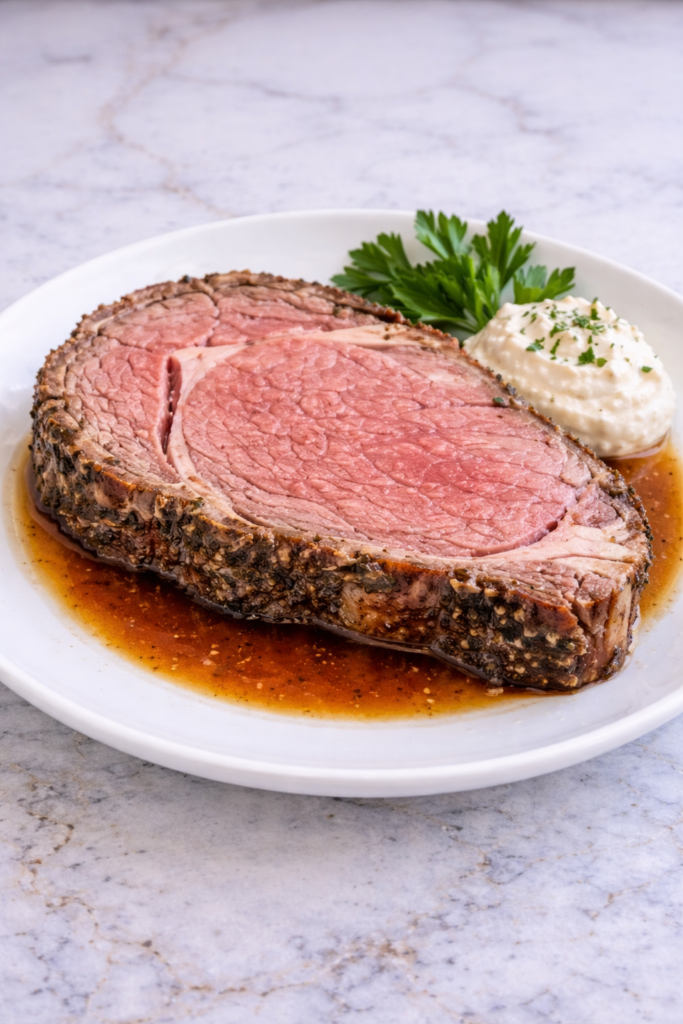
Transfer the roast to a cutting board and slice against the grain. Serve immediately with your favorite sides. Each slice should be tender, juicy, and full of flavor.
Serving Suggestions
Prime rib pairs beautifully with classic steakhouse sides like mashed potatoes or potatoes au gratin. The creamy textures complement the richness of the meat. This combination creates a comforting and satisfying meal.
Serve it alongside creamed spinach or roasted vegetables for balance. The freshness and slight bitterness of greens help cut through the richness. This keeps the plate well-rounded.
A side of horseradish sauce or au jus enhances the flavor even further. These additions bring a tangy or savory contrast that pairs perfectly with the beef. They are traditional accompaniments for a reason.
For a holiday meal, pair it with warm dinner rolls or crusty bread. This allows you to enjoy every bit of the juices. It also adds a comforting element to the meal.
A simple green salad with a light vinaigrette can brighten the plate. The acidity helps balance the richness of the roast. It’s a great way to round out the meal.
For beverages, serve with sparkling water or a refreshing non-alcoholic drink. The clean flavors help balance the richness of the dish. It completes the dining experience.
Leftovers and Storage
Allow leftover prime rib to cool completely before storing. Wrap it tightly or place it in an airtight container and refrigerate for up to 3–4 days. Proper storage helps maintain its flavor and texture.
To reheat, use a low-temperature oven set around 275°F. Add a bit of broth or au jus to keep the meat moist. Cover with foil and heat gently until warmed through.
Avoid reheating at high temperatures, as this can overcook the meat. Gentle reheating preserves its tenderness. Taking your time makes a noticeable difference.
Leftover prime rib can be used in a variety of dishes. Slice it thin for sandwiches, dice it for hash, or add it to soups. This makes it a versatile option for future meals.
Freezing is possible, though the texture may change slightly. Wrap tightly and freeze for up to 2 months. Thaw in the refrigerator before reheating.
If the meat develops an off smell or texture, it’s best to discard it. Always prioritize food safety when storing leftovers. Freshness is key for enjoying this dish.
Nutrition and Benefits
- Prime rib is a rich source of high-quality protein, which supports muscle growth and repair. It’s a satisfying and filling main dish.
- It contains essential nutrients like iron and zinc, which are important for energy and immune health. These nutrients are naturally present in red meat.
- The fat content contributes to flavor and satiety, helping you feel full after a meal. Enjoying it in moderation can be part of a balanced diet.
- Fresh herbs like rosemary and thyme provide antioxidants and natural flavor. They enhance the dish without adding extra calories.
- Preparing this dish at home allows you to control seasoning and portion sizes. This helps you enjoy a rich meal more mindfully.
Recipe FAQ
What is the best doneness for prime rib?
Medium-rare is the most popular choice because it keeps the meat tender and juicy. This typically means an internal temperature of about 130–135°F after resting. However, you can adjust based on personal preference.
How long should I cook prime rib?
Cooking time depends on the size of the roast and your desired doneness. A general guideline is about 20–25 minutes per pound at low temperature. Always rely on a meat thermometer for accuracy.
Do I need to sear the roast?
Searing is not required but highly recommended. It creates a flavorful crust and enhances the overall texture. You can sear before or after roasting.
Why is my prime rib tough?
Toughness can result from overcooking or not allowing the meat to rest. Using a thermometer and proper resting time helps prevent this. Slow roasting also contributes to tenderness.
Can I cook prime rib without a rack?
Yes, but a rack helps with even air circulation. If you don’t have one, you can place the roast on a bed of vegetables. This keeps it elevated and adds flavor.
Should I cover the roast while cooking?
It’s best to cook prime rib uncovered. This allows the exterior to develop a crust. Covering is only recommended during resting or reheating.
Can I use dried herbs instead of fresh?
Yes, dried herbs can be used if fresh are not available. Use smaller amounts, as dried herbs are more concentrated. They still provide great flavor.
A Show-Stopping Meal Worth the Effort
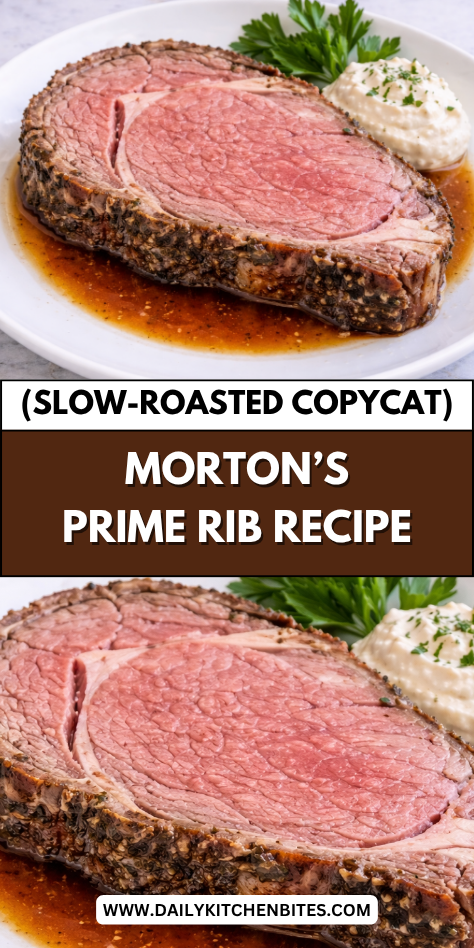
This Morton’s Prime Rib (Slow-Roasted Copycat Recipe) brings timeless flavor and elegance to your table
With its tender texture and rich seasoning, it’s a dish that turns any meal into a memorable occasion. It’s a rewarding recipe that delivers both comfort and celebration in every slice.