Filet mignon is the cut people save for special occasions, mostly because it feels too easy to mess up at home.
The good news is that it’s actually one of the more forgiving steaks once you understand the heat and the timing. Butter-basting is what gives it that rich, restaurant finish — and it’s simpler than it sounds.
This walks you through the whole process so you can serve a steakhouse-quality filet without leaving your kitchen.

Why You’ll Love This Recipe
This filet mignon recipe focuses on simple techniques that bring out the best in the meat. With a hot sear and a rich butter-basting method, you get a beautifully caramelized crust and a tender, juicy center. It’s the kind of dish that feels luxurious without being complicated.
Another reason this recipe stands out is its reliability. Once you understand the timing and temperature, it becomes easy to achieve consistent results every time. Whether you prefer rare or medium, this method adapts well to your preference.
Families appreciate this recipe because it feels like a restaurant-quality meal made right at home. It pairs easily with classic sides and can be scaled for different occasions. From quiet dinners to celebrations, it always delivers.
Serves: 2–4 people
This recipe is ideal for a small family dinner or an intimate gathering. Each filet is individually portioned, making it easy to serve and customize doneness. You can easily cook additional filets in batches if needed.
Ingredients You’ll Need
- 2–4 filet mignon steaks (6–8 oz each, about 1.5–2 inches thick)
- 1 ½ teaspoons kosher salt
- 1 teaspoon freshly ground black pepper
- 2 tablespoons high-smoke-point oil (such as avocado oil)
- 4 tablespoons unsalted butter
- 3 garlic cloves, smashed
- 2 sprigs fresh thyme
- 1 sprig fresh rosemary (optional)
- 1 tablespoon fresh parsley, finely chopped (for garnish)
Pro Tips
Bring the steaks to room temperature before cooking. This helps them cook evenly and prevents a cold center.
Pat the steaks dry thoroughly before seasoning. Removing surface moisture is key to achieving a proper sear.
Use a heavy pan like cast iron for the best crust. It retains heat well and distributes it evenly.
Avoid overcrowding the pan when cooking multiple steaks. Cook in batches if needed to maintain high heat.
Continuously baste the steaks with butter for added flavor and moisture. This step creates that signature steakhouse finish.
Let the steaks rest after cooking to allow juices to redistribute. This keeps them tender and juicy when sliced.
Tools You’ll Need
- Cast iron skillet or heavy-bottom pan
- Tongs
- Meat thermometer
- Spoon for basting
- Cutting board
- Sharp knife
- Paper towels
Substitutions and Variations
If filet mignon is not available, you can use tenderloin medallions as an alternative. They offer a similar tenderness, though slightly smaller in size.
For a different flavor profile, try using herb-infused butter or garlic butter blends. This adds another layer of richness without changing the technique.
You can substitute rosemary with other herbs like sage or omit it entirely if preferred. The thyme and garlic alone provide plenty of flavor.
If you prefer grilling, you can sear the steaks on a grill and finish them with butter basting in a pan. This adds a subtle smoky flavor while keeping the classic finish.
For a lighter option, reduce the butter slightly and rely more on seasoning and herbs. The steak will still be flavorful while feeling less rich.
Make Ahead Tips
You can season the filet mignon with salt and pepper up to 24 hours in advance and store it uncovered in the refrigerator. This dry brining technique enhances the flavor and helps create a better crust during cooking. Before cooking, allow the steaks to sit at room temperature for 30–45 minutes for even results.
If you want to streamline the cooking process, prepare the butter, garlic, and herbs ahead of time. Keep them together in a small container so everything is ready once the pan is hot. This makes the cooking process smooth and stress-free.
For special occasions, you can sear the steaks briefly ahead of time and finish them just before serving. This method helps manage timing when preparing multiple dishes. Always allow time for resting after the final cook to maintain tenderness.
Instructions
Step 1: Prepare the Steaks
Remove the filet mignon from the refrigerator and pat them dry thoroughly with paper towels. Season all sides evenly with kosher salt and freshly ground black pepper. Let them sit at room temperature for 30–45 minutes before cooking.
Step 2: Heat the Pan
Place a cast iron skillet over high heat and allow it to become very hot. Add the oil and swirl to coat the surface evenly. The oil should shimmer, indicating it’s ready for searing.
Step 3: Sear the First Side
Carefully place the steaks in the hot pan and press them gently to ensure full contact. Let them sear undisturbed for about 3–4 minutes until a deep golden crust forms. Avoid moving them too soon to achieve the best sear.
Step 4: Flip and Add Butter
Using tongs, flip the steaks and immediately add the butter, smashed garlic cloves, thyme, and rosemary. As the butter melts, tilt the pan slightly to pool it on one side. This sets up the basting process.
Step 5: Butter-Baste the Steaks
Using a spoon, continuously baste the steaks with the melted butter and aromatics for 2–3 minutes. This step adds flavor while helping cook the steaks evenly. Keep the heat controlled so the butter does not burn.
Step 6: Check Doneness
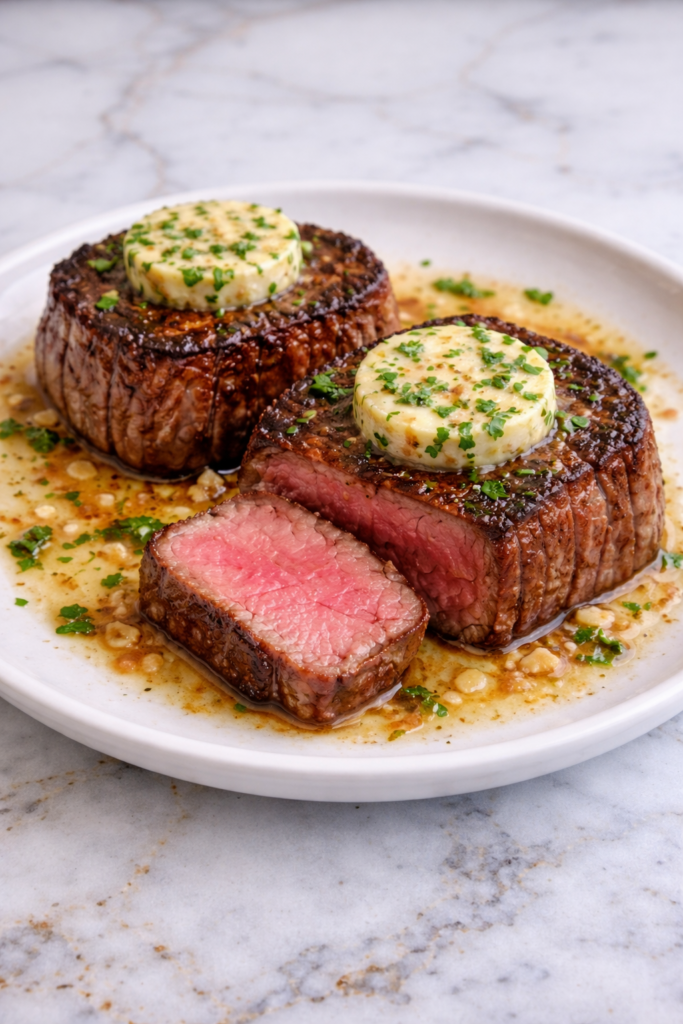
Use a meat thermometer to check the internal temperature of the steaks. Aim for 125°F for rare, 130–135°F for medium-rare, or adjust to your preference. For thicker cuts, you can finish them briefly in the oven if needed.
Step 7: Rest the Steaks
Transfer the steaks to a cutting board and let them rest for 5–10 minutes. This allows the juices to redistribute throughout the meat. Skipping this step can result in a less juicy steak.
Step 8: Serve and Garnish
Slice the filet if desired or serve whole. Spoon some of the remaining butter and herbs over the top. Garnish with fresh parsley and serve immediately.
Serving Suggestions
Filet mignon pairs beautifully with creamy mashed potatoes or a classic baked potato. The richness of the steak complements the smooth, comforting texture of the potatoes. This combination creates a classic steakhouse-style meal at home.
For a lighter option, serve it with roasted asparagus or green beans. The fresh, slightly crisp vegetables balance the richness of the butter-basted steak. It keeps the meal feeling well-rounded.
A simple side salad with a tangy vinaigrette adds brightness to the plate. The acidity helps cut through the richness of the meat. This creates a more balanced dining experience.
You can also pair the steak with sautéed mushrooms or caramelized onions. These additions enhance the savory depth of the dish. They bring a restaurant-quality touch to your table.
For special occasions, consider serving with a glass of red wine or a non-alcoholic alternative like sparkling juice. The pairing elevates the overall experience. It makes the meal feel even more memorable.
Crusty bread is a great addition for soaking up any leftover butter and juices. It adds texture and ensures nothing goes to waste. This simple side is always appreciated.
Leftovers and Storage
Allow any leftover filet mignon to cool completely before storing. Place it in an airtight container and refrigerate for up to 3 days. Proper storage helps maintain both flavor and texture.
To reheat, use low heat to avoid overcooking the steak. Warm it gently in a skillet with a bit of butter or in a low-temperature oven. This helps preserve its tenderness.
You can also slice leftovers thinly and use them in sandwiches, wraps, or salads. This is a great way to repurpose the steak into a new meal. It keeps things interesting while minimizing waste.
Avoid microwaving if possible, as it can make the steak tough. If you do use a microwave, heat in short intervals and monitor closely. Gentle reheating is key.
Freezing cooked filet mignon is possible but may affect texture slightly. If freezing, wrap it tightly and use within one month. Thaw in the refrigerator before reheating.
Nutrition and Benefits
- Filet mignon is a high-quality source of protein, supporting muscle growth and overall health. It provides essential amino acids needed by the body.
- It contains important nutrients such as iron and zinc, which support energy levels and immune function. These nutrients are especially beneficial in balanced diets.
- This cut of beef is naturally leaner than many other steak cuts. It offers rich flavor while containing less fat compared to ribeye.
- Fresh herbs like thyme and rosemary add antioxidants and natural flavor. They enhance the dish without adding extra calories.
- Cooking at home allows you to control portion sizes and ingredients. This makes it easier to enjoy a rich meal in a balanced way.
Recipe FAQ
How do I get a perfect crust on filet mignon?
A hot pan and dry surface are essential for a good crust. Pat the steaks dry and avoid moving them too soon after placing them in the pan. Letting them sear undisturbed creates that golden exterior.
What is the best doneness for filet mignon?
Medium-rare is often preferred because it highlights the tenderness of the cut. This is typically around 130–135°F. However, you can cook it to your personal preference.
Can I cook filet mignon in the oven only?
Yes, but searing first adds significant flavor and texture. The combination of searing and butter-basting creates the best results. Oven-only methods may not develop the same crust.
Why is resting the steak important?
Resting allows the juices to redistribute throughout the meat. Cutting too soon causes the juices to run out. This step ensures a more tender and flavorful steak.
Can I use a different oil?
Yes, any high-smoke-point oil like canola or grapeseed oil works well. Avoid oils with low smoke points, as they can burn. This helps maintain a clean flavor.
How do I know when to flip the steak?
Flip the steak when it releases easily from the pan and has formed a crust. This usually takes about 3–4 minutes. Avoid flipping too frequently.
Can I make this recipe without butter?
Yes, but butter adds richness and depth of flavor. You can substitute with oil or a dairy-free alternative. The result will still be good but slightly less indulgent.
A Steakhouse Favorite Made Right at Home
This Morton’s Filet Mignon (Tender Butter-Basted Copycat) brings elegance and comfort together in one unforgettable dish.
It delivers rich flavor, tender texture, and a restaurant-quality experience without leaving your kitchen.
Perfect for special occasions or meaningful family dinners, it’s a recipe that always feels worth making.